
Last updated November 15, 2026
 Wrought iron
 Wood & steel frame
 Farm & ranch
 Sliding driveway gates
 LiftMaster operators
Free on-site gate assessment - hinges, posts, and your LiftMaster or Nice gate operator checked before anything is quoted
The assessment is free and the quote is the invoice.
Get your free estimateGate Repair Maintenance Schedule: What to Do and When
Most gate maintenance advice gets one thing backwards. It tells you to lubricate everything on a regular calendar, and that’s exactly how you shorten the life of key components. Lubricant applied on the wrong interval traps desert grit against bearings instead of flushing it out, and grit is the thing that grinds a gate to a halt. What actually works is a schedule built around three variables: your gate type, your drive system, and what Spring Valley’s climate throws at metal and motors over a year. This guide lays out that schedule section by section, so you know what to check yourself, what to leave to a technician, and when to plan a replacement rather than a repair.
Quick Answer
A working gate maintenance schedule runs on three tracks: monthly owner checks (visual inspection, sensor cleaning, manual release test), twice-yearly technician service (tension calibration, board diagnostics, bearing inspection), and seasonal triggers tied to Spring Valley weather – a post-summer-heat inspection, a post-dust-storm cleaning, and a post-wet-season hardware check. Sliding, swing, and overhead gates each wear differently and need their own intervals within that framework.
Styles & brands we work with
- Wrought iron
- Wood & steel frame
- Farm & ranch
- Sliding driveway gates
- LiftMaster operators
Table of Contents
- Why Generic Maintenance Calendars Fail in Spring Valley
- Sliding Gate Maintenance: The Wear Cycle
- Swing Gate Maintenance: Hinges, Arms, and Operators
- Overhead Gate Maintenance: Track and Counterbalance
- Spring Valley Seasonal Triggers: Heat, Dust, and Wet Season
- Owner Tasks vs. Technician Tasks
- Component Lifespan Benchmarks
- Building a Maintenance Log a Technician Can Use
Why Generic Maintenance Calendars Fail in Spring Valley
A quarterly checklist written for a temperate climate assumes mild temperature swings, regular rainfall that rinses dust off moving parts, and humidity that keeps seals pliable. Spring Valley gives you almost none of that. Summer heat bakes lubricant into a gummy film that then collects fine dust, and the daily thermal expansion and contraction of steel and aluminum works fasteners loose in a way that coastal or northern climates rarely see. When a gate here starts to drag, it’s usually not one failed part. It’s three small things – a dried seal, a loosened bolt, a dust-clogged sensor – compounding over one hot season.
That’s why a maintenance schedule for Spring Valley has to be sequenced around local conditions rather than the calendar alone. The order matters as much as the interval. Cleaning a gate before you lubricate it is obvious; cleaning it before the heat peaks, so grit doesn’t get baked into the bearing races, is the step most guides skip. The same applies to operator boards: dust that settles on a control board in a dry climate becomes conductive when the brief wet season arrives, which is why a pre-wet-season check catches faults that would otherwise show up as mystery intermittent failures in the middle of a rainy week.
If your gate is already showing symptoms – stalling, reversing, or running slow – a maintenance schedule is now a gate repair question first. Get it healthy, then put it on a schedule.
Sliding Gate Maintenance: The Wear Cycle
Sliding gates fail in a predictable order: rollers first, then track, then operator. The rollers carry the full weight of the gate and take the brunt of dust and grit. When a roller seizes, the gate drags, the operator works harder, and the motor or board becomes the next casualty. Catching it at the roller stage is the difference between a straightforward fix and an operator replacement.
Here’s the sliding gate schedule we recommend:
- Monthly: Look at the track for debris, leaves, and grit. Sweep it clear. Watch the gate travel the full length and listen for grinding or a rhythmic bump.
- Every three months: Check each roller for free rotation by hand with the operator disengaged. Wipe the track and apply a dry-film lubricant – not grease, which collects dust in this climate.
- Twice yearly: Inspect the rack and pinion for wear and proper mesh with the operator gear. Check all track anchors and gate-frame bolts for loosening from thermal cycling.
- Annually: A technician checks roller bearing condition, operator current draw, limit-switch accuracy, and the safety reverse system under load.
Sliding gates on heavier commercial operators, including BFT and Viking units common on multi-unit properties, hold up better than light residential hardware but are less forgiving of a dragging roller – the operator will simply force through it and wear the gear faster. Weight, travel distance, and daily cycle count all compress this schedule. A gate that cycles twenty times a day needs the twice-yearly inspection more like every four months.
Swing Gate Maintenance: Hinges, Arms, and Operators
Swing gates put their stress on hinges and, on automated gates, on the arm or actuator that pushes the leaf. Hinge wear on a swing gate shows up as sag at the latch side, which then misaligns the gate and forces the operator to work against a leaf that’s no longer square. It’s a slow failure and easy to miss until the operator starts straining or the gate stops latching cleanly.
The swing gate schedule looks like this:
- Monthly: Open and close the gate by hand with the operator disengaged. It should swing freely with light effort. A stiff swing is the first sign of hinge wear or a bound arm.
- Every three months: Lubricate hinges with a small amount of appropriate lubricant – sparingly, since excess attracts dust. Check the arm or actuator mounting bolts for tightness.
- Twice yearly: Test the safety edges and photo-eye sensors by interrupting the path and confirming the gate reverses. Check the control board enclosure for dust buildup and the seals for cracks.
- Annually: Technician inspection of hinge bushing wear, arm condition, operator torque settings, and battery backup performance.
Swing gates on Ghost Controls and Linear operators are common on residential properties here, and their failure points are usually in the arm and the board rather than the leaf itself. The critical rule: never force a bound swing gate with the operator running. That’s how a small hinge problem becomes a stripped arm.
Overhead Gate Maintenance: Track and Counterbalance
Overhead gates – the vertical-lift and cantilever types used at commercial entries and some residential properties – have the most demanding maintenance profile of the three types. The counterbalance system carries a huge load, and any drift in the balance translates directly into strain on the operator and the track. This is also the gate type where a maintenance lapse poses a genuine safety concern, because a counterbalance failure can drop a gate panel without warning.
For overhead gates:
- Monthly: Run the gate through a full cycle and watch for track misalignment, binding, or uneven travel. Check the tracks for debris.
- Every three months: Inspect rollers and guide wheels for wear and free rotation. Check the counterbalance system for smooth operation – do not attempt to adjust counterbalance tension yourself.
- Twice yearly: Lubricate the track and rollers with a dry-film product. Inspect all track brackets and anchors.
- Annually: A technician must inspect and calibrate the counterbalance, check the track alignment under load, and verify the safety reverse system.
Safety note: counterbalance systems on overhead gates store enormous energy and are dangerous to adjust. If you suspect the balance is off – the gate drops fast, slows, or won’t hold position – stop using it and call a trained technician. This is not a component to adjust on your own.
Spring Valley Seasonal Triggers: Heat, Dust, and Wet Season
Beyond the regular intervals, three local seasonal triggers should reset your schedule each year. These are what national maintenance guides miss entirely because they’re written for a generic climate.
After summer heat peaks: This is when you inspect for thermal damage and looseness. Lubricant applied in spring has likely cooked into a gummy residue by late summer, and fasteners that expanded and contracted daily all season may have backed off. Clean and re-lubricate moving parts, check all bolts, and inspect the operator enclosure for heat-related seal degradation. Gate systems in Spring Valley see interior enclosure temperatures far above ambient, so a mid-summer and post-summer inspection is worth more here than any single quarterly visit.
After a dust storm: Dust is the enemy of bearings, tracks, and sensor eyes. After a major dust event, sweep and wipe the track, clean the photo-eye lenses on both sides, and check that the operator enclosure intake is clear. Don’t re-lubricate immediately – clean first, then decide whether the existing lubricant film needs refreshing. Adding lubricant on top of dust is worse than leaving it alone.
After the wet season: The brief wet period is when you catch water intrusion early. Check the operator board enclosure seals, look for water pooling at the base of posts, and test all safety systems because moisture is a common cause of sensor and board faults. A gate that worked all dry season and suddenly acts up after rain is usually telling you about a seal, not a motor.
Owner Tasks vs. Technician Tasks
The clearest way to keep your gate healthy is to divide the work by what’s safe and practical to do yourself versus what needs a trained eye. Overloading yourself with the wrong tasks is how homeowners create new problems – over-lubrication, misadjusted sensors, and forced operators being the most common.
Owner-performed tasks:
- Visual inspection of the gate, track, and hardware for damage or debris.
- Cleaning sensor eyes and photo-eye lenses with a soft cloth.
- Sweeping debris from the track.
- Testing the manual release mechanism to confirm the gate can be operated by hand in an emergency.
- Testing the safety reverse by interrupting the sensor path.
- Recording anything unusual in a maintenance log.
Technician-performed tasks:
- Tension calibration on swing and overhead gate operators.
- Control board diagnostics, including current-draw and limit-switch accuracy testing.
- Roller bearing and hinge bushing inspection under load.
- Track alignment and counterbalance calibration on overhead gates.
- Full safety-system validation, including the reverse function under load.
- Any electrical work on the operator or power run.
Electrical components and counterbalance systems are the two areas where a mistake can cause injury. If your gate needs electric gate repair, leave the motor, board, and wiring to a technician. The manual checks above are the ones that catch problems early enough to keep them small.
Component Lifespan Benchmarks
Knowing roughly how long each part lasts lets you plan a replacement instead of reacting to a failure. These benchmarks assume a gate maintained on the schedule above in the Spring Valley climate – neglected gates will fall short of these numbers, often dramatically.
- Sliding gate rollers: 3 to 5 years under heavy use, longer on lightly used residential gates.
- Track: 8 to 12 years, with wear concentrated at the high-traffic section.
- Swing gate hinges and bushings: 5 to 8 years before sag becomes a problem.
- Operator gear and arm: 8 to 12 years on quality hardware; light residential brands run shorter under heavy cycles.
- Control board: 8 to 10 years, shorter if the enclosure takes on dust or moisture.
- Safety sensors and photo eyes: 5 to 7 years before failure rate climbs.
- Battery backup: 3 to 5 years before it stops holding enough charge to run a cycle.
These are ranges, not promises – daily cycle count pushes everything toward the short end. The point is to catch a part in the “planning” window rather than the “failed” window, because a planned replacement is almost always cheaper and less disruptive than an emergency one. On commercial operators like FAAC and DoorKing units, where the cost of downtime is high, it’s worth tracking cycles and replacing proactively at the benchmark rather than waiting for a failure. The same logic applies across the nine brands we work on, though a light-duty residential operator will always need more attention than a heavy commercial one.
Building a Maintenance Log a Technician Can Use
A maintenance log that says “gate serviced, all good” helps no one. The log that actually speeds up a diagnosis when something goes wrong records the specific things a technician needs to isolate a fault quickly. Build yours around these entries:
- Date and cycle count (if available): Daily-cycle operators often display a count; recording it tells us how much wear the gate has actually seen.
- What was done: Not “serviced” – “cleaned track, lubricated rollers, tested reverse, replaced left photo-eye.”
- Symptoms observed: “Gate slows near the end of travel” or “reverses mid-close intermittently” – the more specific, the better.
- Weather context: Note whether a problem appeared after a dust storm, a heat wave, or wet weather. In this climate that single note often points straight to the cause.
- Parts replaced and their date: This is how you track component age against the benchmarks above.
- Any changes to the setup: New code, new remotes, a sensor moved, a utility outage – anything that could affect behavior.
When a technician arrives with this log, the diagnostic window narrows considerably. Instead of starting from scratch, we can see what’s been ruled out and where the failing part sits on its lifespan curve. It’s the difference between a quick fix and a long, expensive process of elimination. A well-kept log is one of the cheapest maintenance tools there is, and it’s the one almost nobody uses.
Common Mistakes to Avoid
- Over-lubricating. More lubricant is not better. In a dusty climate, excess grease traps grit against bearings and accelerates wear. Apply sparingly and clean before re-applying.
- Skipping the post-summer-heat inspection. Spring Valley’s summer is hard on lubricants and fasteners. A gate that gets a full inspection after the heat peaks will catch problems the quarterly calendar misses.
- Forcing a dragging gate with the operator. If the gate is slow or binding, don’t keep cycling it. The operator will force through the resistance and fail faster than the part that was actually the problem.
- Cleaning the sensors only when the gate fails. Clean photo-eye lenses on a schedule. Dust on the lens is the most common cause of “gate won’t close” calls here.
- Adjusting counterbalance or tension yourself. These systems store dangerous energy. Adjusting them without training is a genuine safety risk, not a maintenance shortcut.
- Ignoring the manual release. Test it on a schedule. A gate with a seized release cannot be operated by hand in an emergency, which is exactly when you need it.
- Keeping no log. Without a record of symptoms and parts, every repair diagnosis starts from zero, and small patterns that point to a root cause get lost.
See the difference
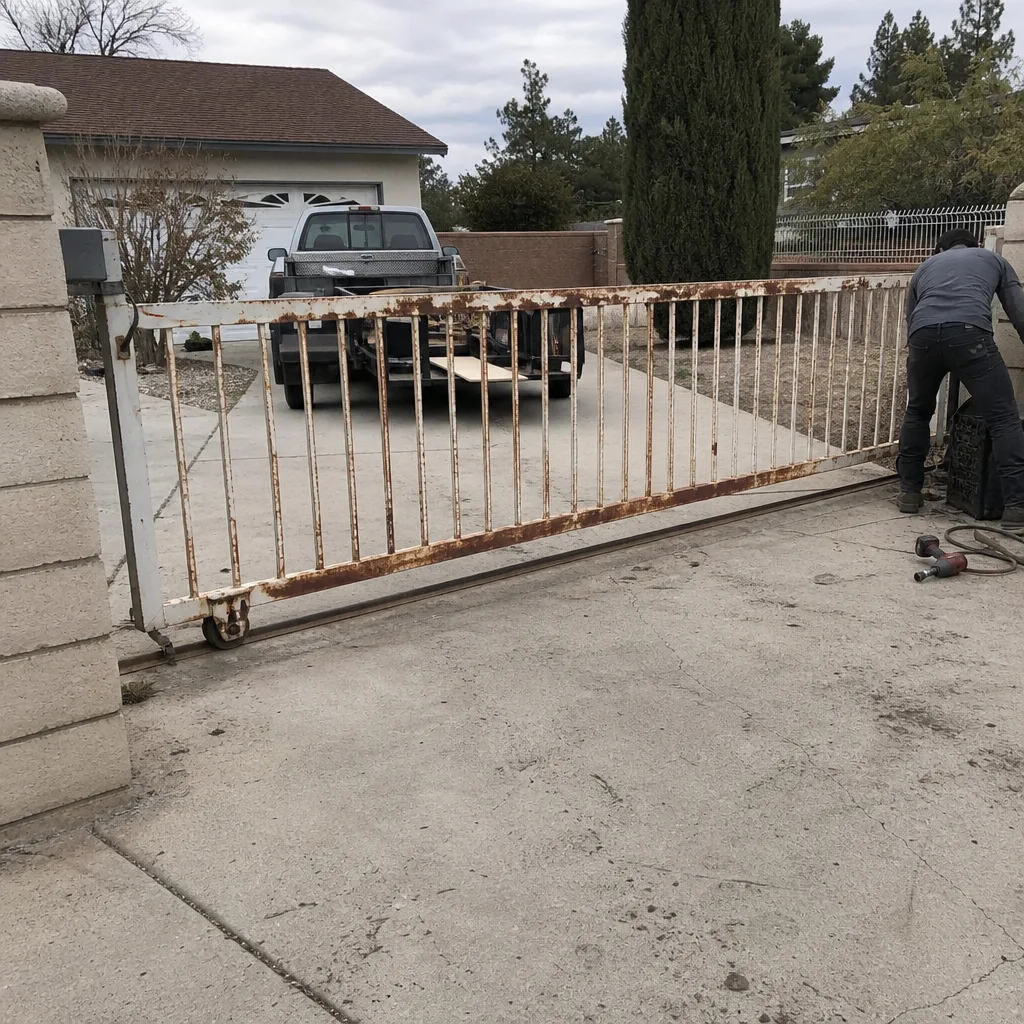 Before
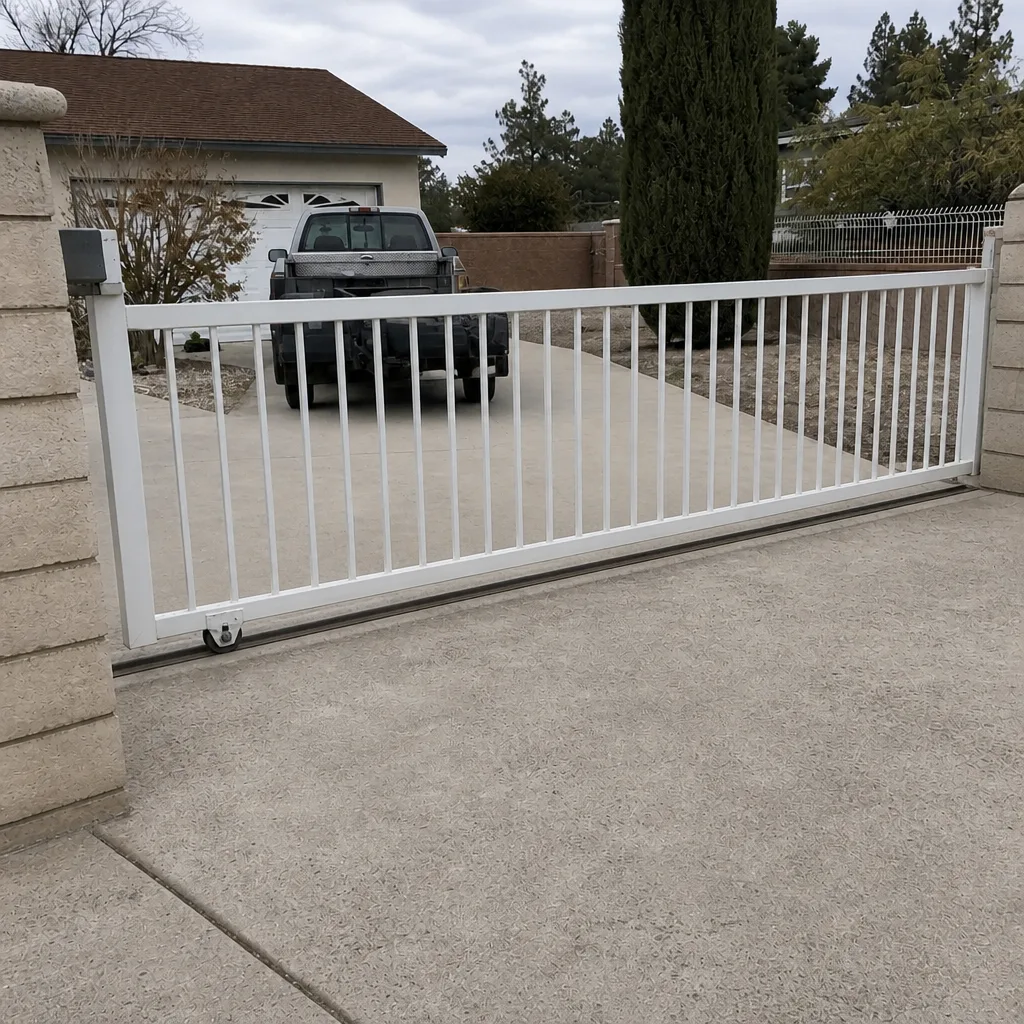 After
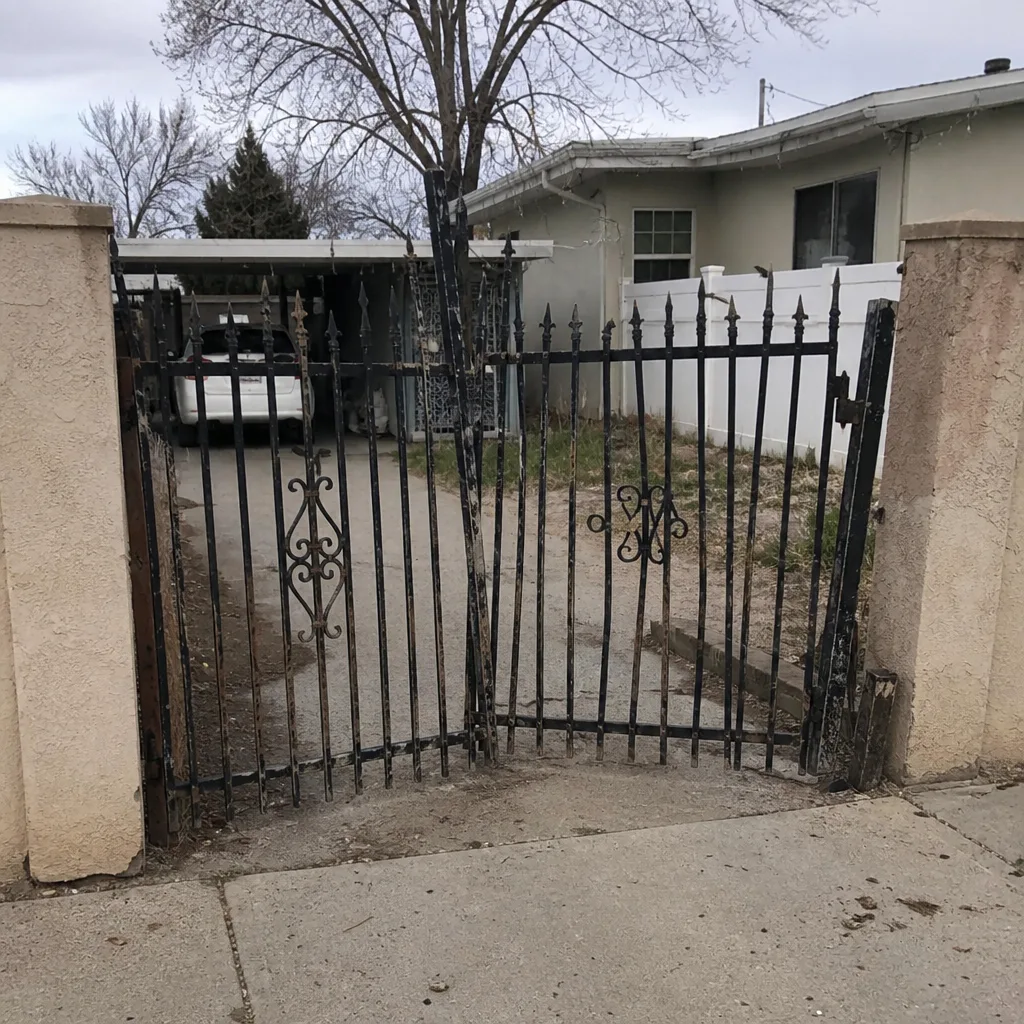 Before
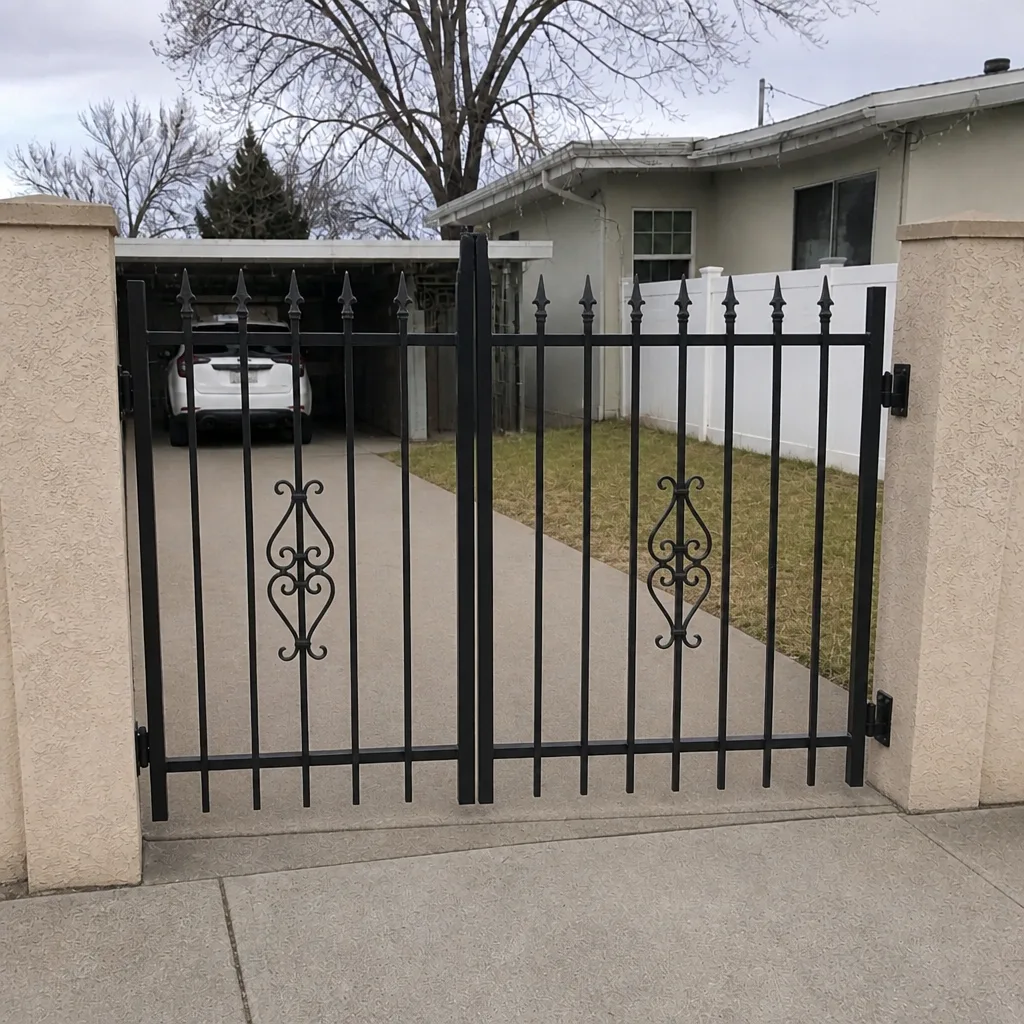 After
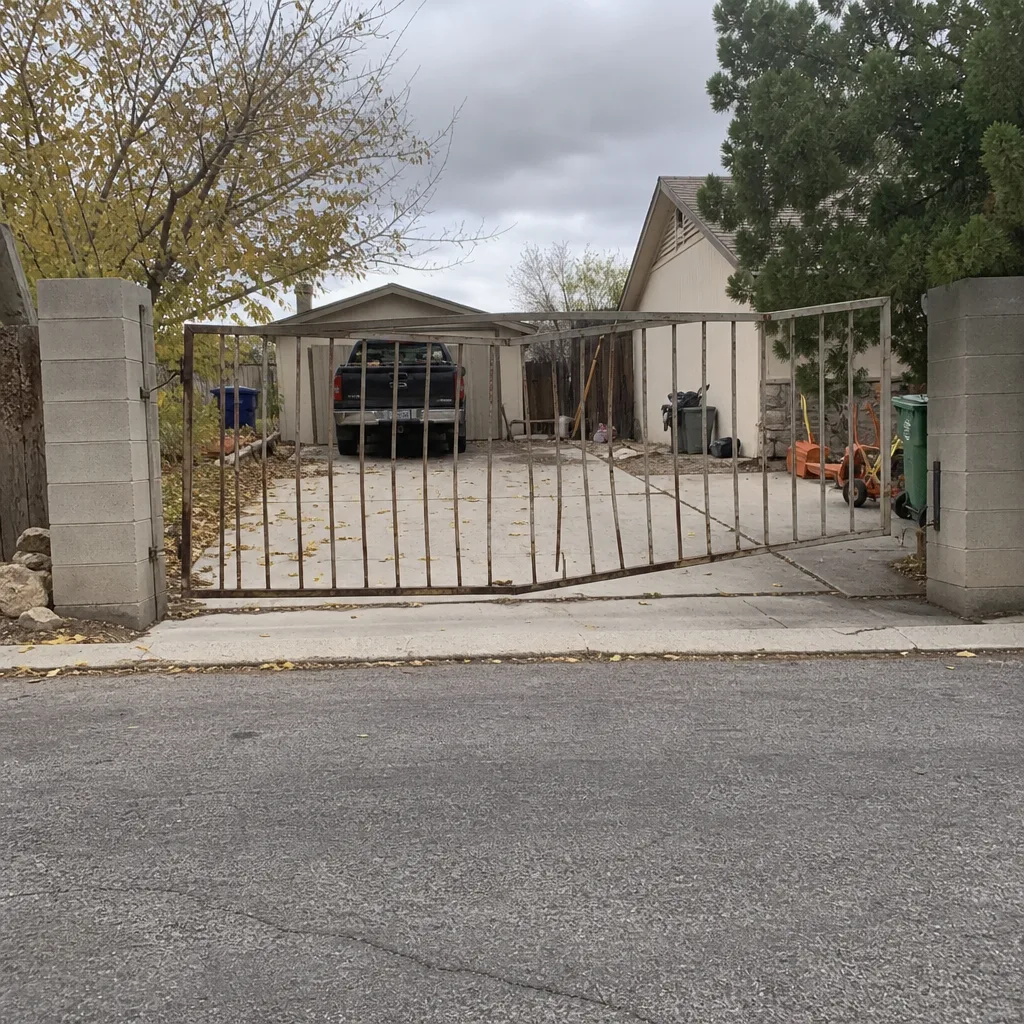 Before
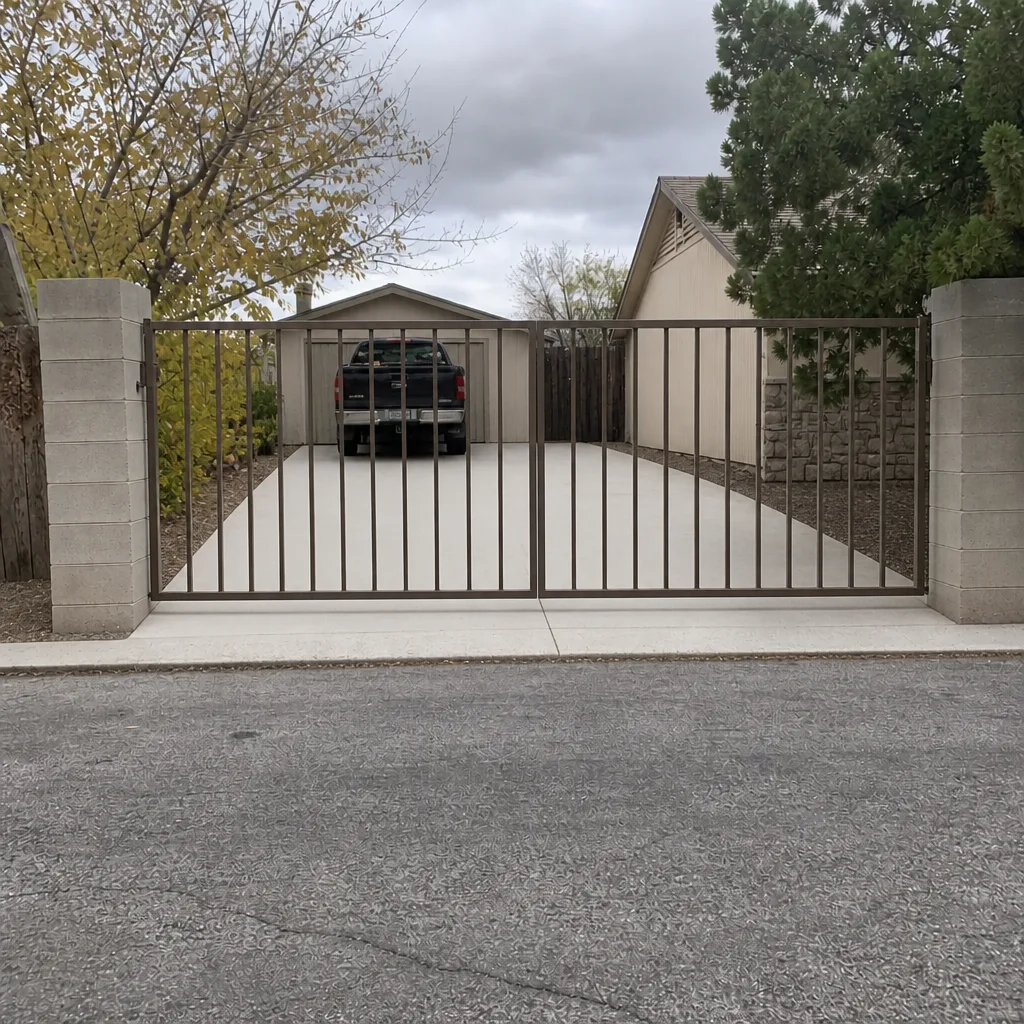 After
When to Call a Professional
Call a technician when the gate is slow, binding, or reversing intermittently; when a sensor fault won’t clear after cleaning; when the operator trips a breaker or shows no power; when the counterbalance or tension feels off; or when hinges, rollers, or the track show visible wear and you’re not sure whether to repair or replace. Any electrical work on the operator or power supply belongs to a technician, and any counterbalance adjustment on an overhead gate must be done by a trained professional – those systems can fail dangerously. If you’re already on a maintenance schedule, a technician visit is also the right time to ask the questions the log can’t answer, such as whether a part is near the end of its lifespan. Gate Repair Spring Valley offers free estimates in Spring Valley – call (844) 420-8518. We answer 24/7. Fast dispatch from 7am to 7pm, Sunday through Friday. Our technicians have up to 11 years of experience.
Frequently Asked Questions
A residential gate should get a full technician service twice a year, with owner checks monthly and seasonal inspections after the summer heat, after dust storms, and after the wet season. Commercial gates on heavy daily cycles should be serviced more frequently – every three to four months. Call (844) 420-8518 for a free estimate on setting up a service visit.
You can lubricate hinges, rollers, and the track yourself, but do it sparingly and only after cleaning the surfaces. Over-lubrication traps dust in this climate and causes more wear than no lubricant at all. Tension calibration and bearing inspection should be left to a technician. Call (844) 420-8518 for an exact quote – estimates are free.
Check the photo-eye sensors first – nine times out of ten a gate that opens but won’t close has dirty or misaligned sensors. Wipe both lenses clean and confirm nothing is blocking the path. If the fault doesn’t clear, call (844) 420-8518 for a diagnostic visit.
If the gate is under its component lifespan benchmarks and the problem is a single part – a roller, a sensor, a hinge, an arm – repair is usually the right call. If multiple parts are near the end of their lifespan, or the frame itself is compromised, replacement becomes more economical. A technician can assess this in one visit. Call (844) 420-8518 for a free estimate.
Yes. Heat accelerates lubricant breakdown, loosens fasteners through daily thermal cycling, and stresses enclosure seals on the operator. A gate maintained on a climate-aware schedule lasts longer here than a gate on a generic calendar. Our technicians have up to 11 years of experience with these conditions.
We work on nine major gate brands, including LiftMaster, FAAC, BFT, Linear, Viking, Ghost Controls, DoorKing, Elite, and Mighty Mule. That covers everything from a light residential Ghost Controls driveway gate to a heavy commercial FAAC or DoorKing entry. Electric, manual, residential, or commercial – if it’s a gate, it’s our lane. If you’re not sure of your brand, check the operator enclosure label and call (844) 420-8518.
The Bottom Line
A gate maintenance schedule should be built around your gate type and local conditions, not a calendar you copied from a generic guide. Sliding gates need roller attention first; swing gates need hinge and arm checks; overhead gates demand counterbalance care that only a technician should handle. Around those intervals, sequence your Spring Valley seasonal triggers – post-summer-heat, post-dust-storm, post-wet-season – and keep a maintenance log that records specifics, not generalities. Do the owner checks yourself, leave the tension, board, and bearing work to a technician, and you’ll catch small problems before they become expensive ones.
If you’re due for a technician visit or something isn’t operating right, Gate Repair Spring Valley covers repair, electric gate repair, and full installation across the valley. Call (844) 420-8518 for a free estimate.
Written by the team at Gate Repair Spring Valley.