
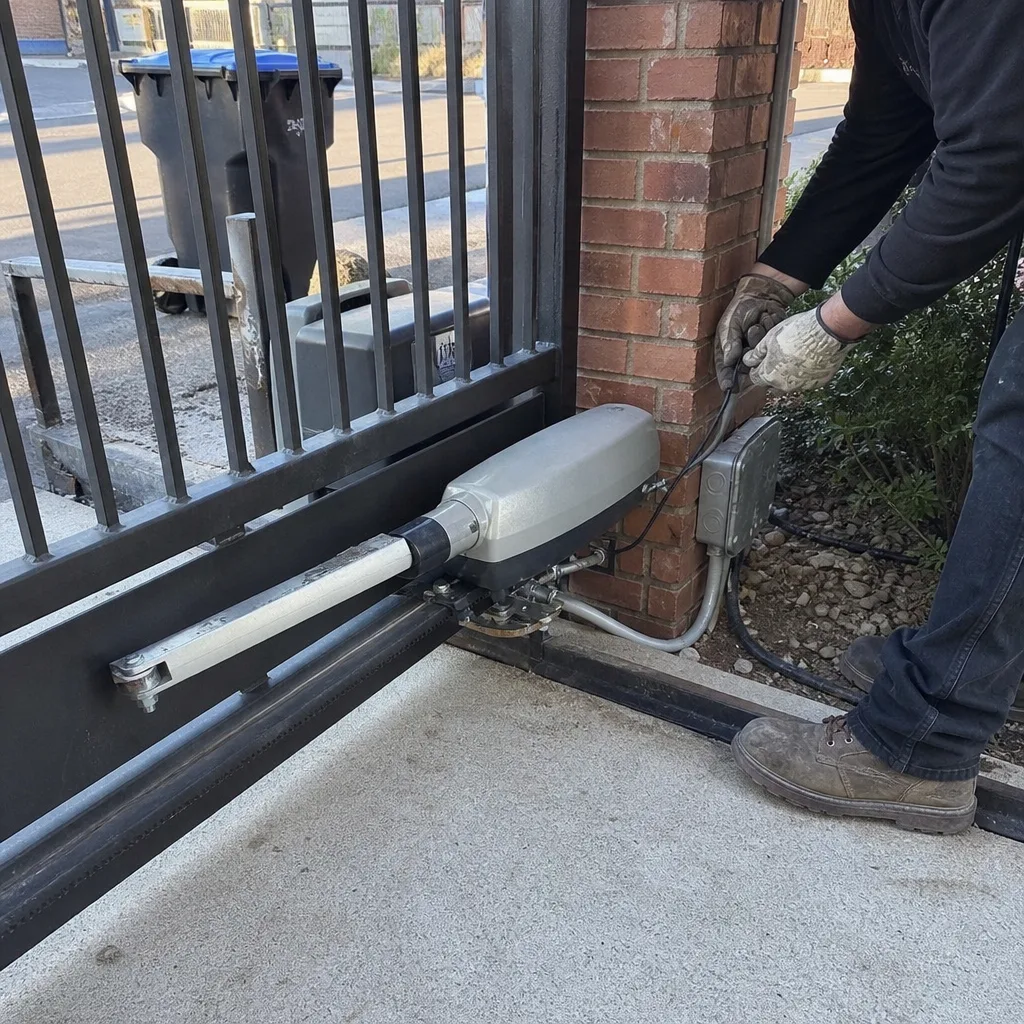
Last updated November 15, 2026
 Wrought iron
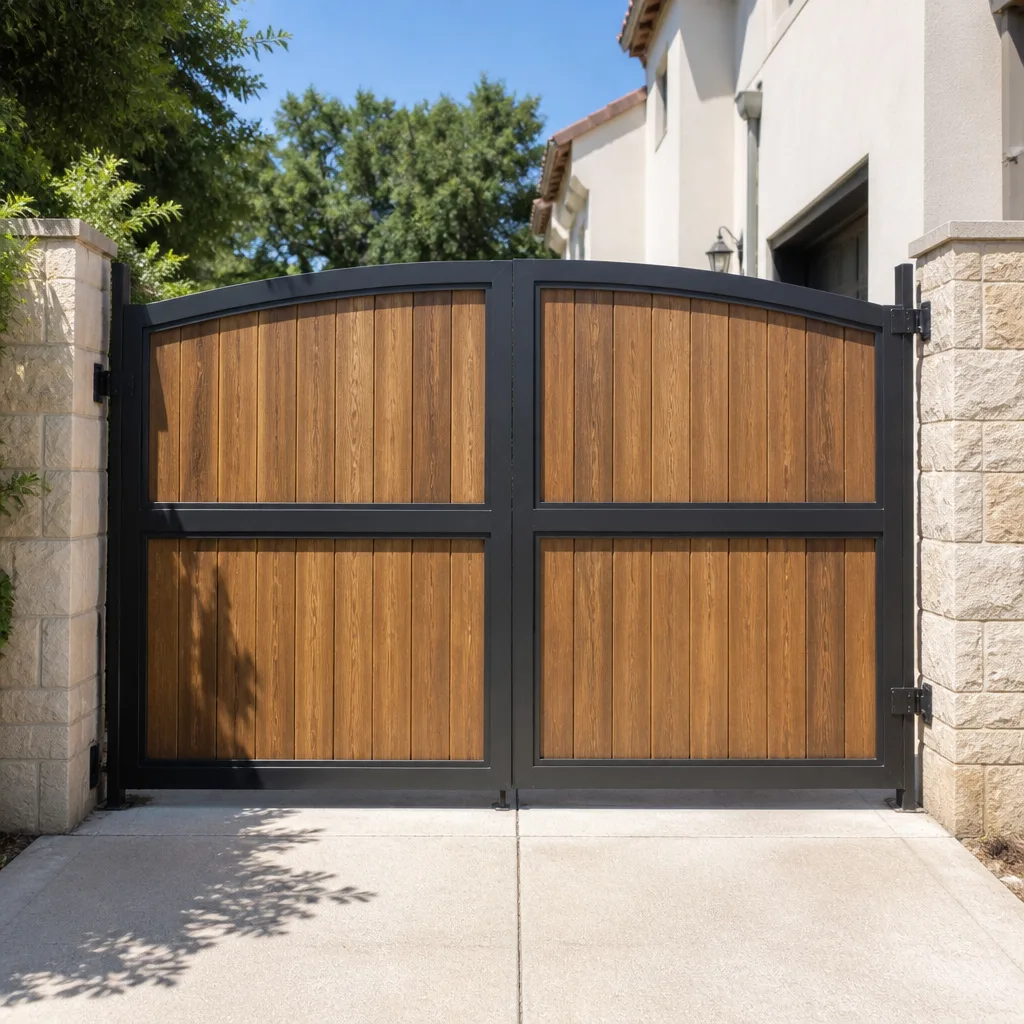 Wood & steel frame
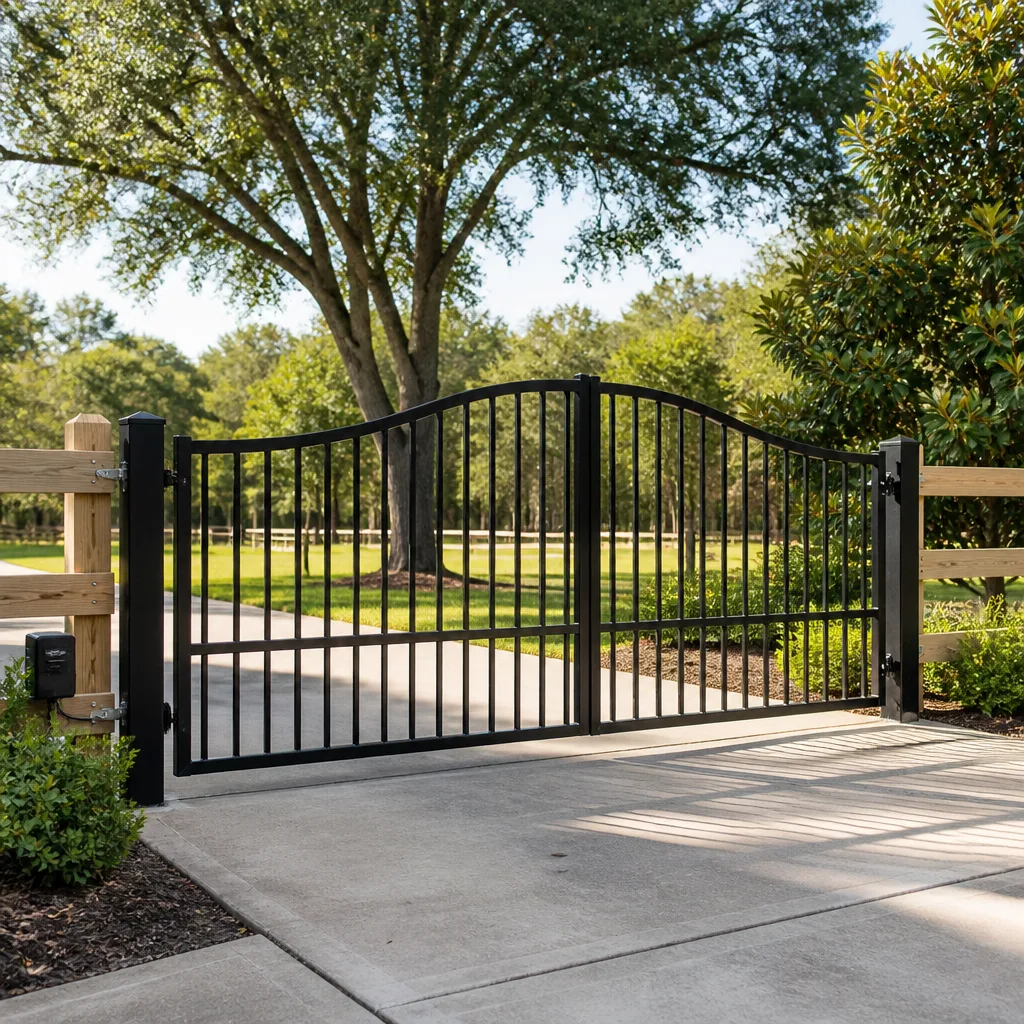 Farm & ranch
 Sliding driveway gates
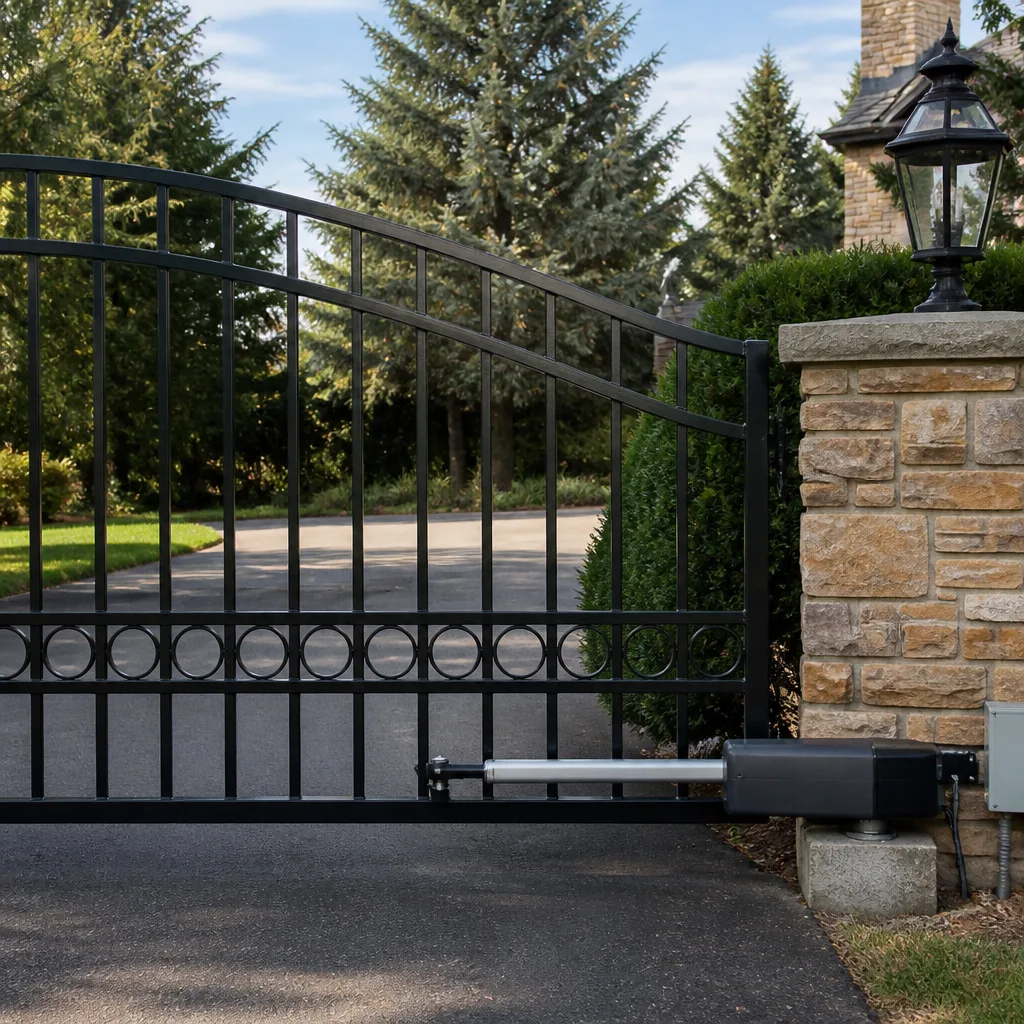 LiftMaster operators
Free on-site gate assessment - hinges, posts, and your LiftMaster or Nice gate operator checked before anything is quoted
The assessment is free and the quote is the invoice.
Get your free estimateGate Repair Maintenance Checklist for Spring Valley Homeowners
Lubricating a gate hinge with the wrong product in 115°F heat doesn’t protect it. It accelerates wear. Most general-purpose lubricants stay tacky in the desert sun, and tacky grease catches the fine dust that blows through Spring Valley all year. That dust mixes with the grease and turns into a grinding paste inside the joint, wearing the hinge faster than if you’d left it dry. The same principle applies to every moving part on your gate: rollers, tracks, latches, limit switches. A national maintenance checklist written for a mild climate will quietly steer you wrong here. This guide is calibrated for Spring Valley’s heat, UV load, and dust, so your gate stays aligned, closes reliably, and doesn’t turn into a weekend emergency.
Quick Answer
A gate in Spring Valley needs inspection roughly every three months and lubrication every two to three months with a dry-film or high-temperature-rated product, because heat and dust degrade hardware faster here than in temperate climates. Check hinges, rollers, the track, limit switches, and safety sensors on each pass, test the gate’s balance and auto-reverse monthly, and leave motor wiring, springless operator adjustments, and any sensor rewiring to a trained technician. Homeowners can handle cleaning and lubrication safely; anything involving the operator’s power supply or a heavy panel that could drop is a professional job.
Styles & brands we work with
- Wrought iron
- Wood & steel frame
- Farm & ranch
- Sliding driveway gates
- LiftMaster operators
Table of Contents
- Which Lubricants Survive Spring Valley Heat
- How Often Each Gate Component Needs Attention in a Desert Climate
- The 10-Minute Visual Inspection That Catches Most Problems Early
- How to Test Gate Balance and Auto-Reverse Safely
- Homeowner Tasks vs. Professional-Only Tasks
- Electric and Automated Gate Checks
- A Seasonal Calendar for Spring Valley Gates
- Common Mistakes to Avoid
Which Lubricants Survive Spring Valley Heat
The single biggest maintenance error we see on gates in Spring Valley is the wrong lubricant. Walk into any hardware store and you’ll find shelves of general-purpose grease, silicone spray, and “all-weather” lubricants. Most of them are formulated for climates where 90°F is a hot day. In Spring Valley, a metal gate on a west-facing wall can reach surface temperatures well above ambient, and a lubricant that flows nicely at 70°F can thin out and run off by mid-afternoon, or worse, turn gummy and trap dust.
Here’s the practical split:
- Rated for heat: Dry-film PTFE or molybdenum-disulfide sprays, high-temperature lithium complex grease (rated for continuous service well above 300°F), and synthetic spray lubricants labeled specifically for high-temperature use. These stay where you put them, resist thinning, and don’t build a sticky film that grabs dust.
- Fails in desert heat: Standard white lithium grease (thins and migrates), generic WD-40 as a standalone lubricant (it’s a solvent and light oil, not a durable film), silicone sprays that evaporate quickly, and any product labeled “all-purpose” without a temperature rating on the can.
- Worst choice: Heavy axle grease or bearing grease meant for low-speed farm equipment. It works into every crevice, holds dust like a magnet, and turns hinges into a grinding paste within weeks.
For hinges and pivot points, a dry-film PTFE spray applied in a thin coat and allowed to cure is the safest choice in Spring Valley. For roller tracks and chain drives, a high-temperature synthetic grease applied sparingly works. The key is sparingly: excess lubricant always attracts dust, and in this climate dust is constant. If you can see the grease after you apply it, you’ve used too much. When we service gates across Spring Valley, the difference between a hinge that’s lasted and one that’s seized often comes down to nothing more than the right product applied correctly.
How Often Each Gate Component Needs Attention in a Desert Climate
A gate in a temperate climate can go six months between inspections. In Spring Valley, three months is a safer interval, and some components need monthly eyes. Heat cycles expand and contract metal, dust works into every joint, and UV degrades rubber and plastic parts faster than most homeowners expect. Here’s how the schedule compares:
- Hinges and pivot points: Inspect monthly, lubricate every two to three months. In a mild climate, quarterly lubrication is often fine. Here, the combination of heat and dust means lubricant breaks down or gets contaminated faster.
- Rollers and track (sliding gates): Inspect monthly for debris and roller wear; clean the track every two months. Desert dust settles on the track and grinds into the rollers.
- Limit switches: Test monthly as part of your auto-reverse check. Heat and vibration can shift them out of adjustment.
- Safety sensors (photoelectric and edge): Test monthly; clean lenses every month because dust films over them. In a temperate climate quarterly is often enough.
- Operator motor and control board: Visual inspection quarterly; professional service annually. Heat is hard on capacitors and control boards, and dust clogs cooling vents.
- Battery backup (if equipped): Test quarterly; replace per the operator manufacturer’s guidance. Heat shortens battery life.
- Latch, strike, and lock hardware: Inspect quarterly, lubricate lightly. Metal expands in the heat and can bind.
- Gate frame and posts: Inspect for rust and footing stability every six months. UV degrades paint and powder coat, opening the door to corrosion.
The compressed schedule isn’t marketing scare tactics. It reflects the actual load this environment puts on hardware. When we get calls for electric gate repair in Spring Valley, a surprising share of failures trace back to a component that would have been caught by a quarterly visual check: a dust-clogged sensor, a limit switch that shifted a quarter inch, or a hinge that seized because the lubricant dried out in the summer heat.
The 10-Minute Visual Inspection That Catches Most Problems Early
You don’t need tools or training to catch most developing gate problems. A ten-minute walk-around with your eyes and hands will surface the majority of issues before they become failures. Do this monthly, ideally in the morning before the gate has heated up. Here’s the sequence:
- Walk the full travel path. Look at the ground where the gate swings or slides. Fresh scrape marks, grooves in concrete, or debris piles mean the gate is dragging or the track is fouled.
- Look at the hinges and rollers. Rust streaks, worn metal, or dark grease trails running down from a hinge all signal a problem. A hinge that’s weeping lubricant is a hinge that’s too hot or overloaded.
- Check the gate for sag. Stand back and sight along the top rail. A gate that has dropped on one side will show a visible tilt. Sag usually means hinge wear or a loosening post.
- Push the gate by hand (manual gates only, and only if it’s safe to do so). It should move smoothly through the full arc with light effort. Binding, grinding, or a hard spot means something’s wrong.
- Inspect the posts and footings. Any crack in the concrete around a post, any wobble when you push firmly, or any gap between the post and the footing needs attention.
- Check the operator housing and wiring. Look for dust buildup on vents, cracked conduit, exposed wire, or insect nests. Don’t open the housing; visual only.
- Clean and sight the safety sensors. Dust films over the lenses in a week in Spring Valley. Wipe them with a soft cloth and confirm they’re aimed at each other.
- Listen. Run the gate once. Any new squeal, grind, or rattle is a signal. A healthy gate has a consistent, quiet sound.
This walk-around is not a substitute for professional service, but it’s the reason so many minor issues get caught before they compound. In our experience across Spring Valley, most failed gates we see had visible warning signs for weeks before the call came in.
How to Test Gate Balance and Auto-Reverse Safely
Balance and auto-reverse testing are the two checks homeowners most often skip, and they’re also the two most likely to reveal a problem before it becomes dangerous. Both can be done safely without specialized tools, but there are hard limits on what you should touch.
Testing balance on a swing gate: Disconnect the operator (most have a manual release lever or key). Move the gate by hand to roughly 45 degrees open and let go. A well-balanced gate should stay where you put it or drift slowly. If it swings hard in either direction, the hinges or the operator’s arm geometry needs attention. A heavy gate that closes on its own is a serious hazard, especially near a driveway where a child or pet might be in the path.
Testing balance on a sliding gate: With the operator disengaged, push the gate along the track by hand from fully open to fully closed. It should move with light, consistent effort. Any hard spot, binding, or noise means a roller, track, or alignment problem.
Testing auto-reverse: With the gate closed and the operator engaged, start the gate opening. While it’s moving, press lightly on the leading edge or, for gates with photoelectric sensors, break the beam with your hand. The gate must stop and reverse immediately. If it doesn’t, stop using the operator and call a technician. Auto-reverse failure is the most common safety defect on automated gates, and it’s the one you cannot afford to ignore.
What you should not do: adjust limit switches, disassemble the operator, or attempt to adjust a heavy gate’s hinge geometry. A gate panel that swings unexpectedly or a springless sliding gate that leaves its track can cause serious injury. Those adjustments are a job for a trained technician, and we’d rather you called than tried to fix it yourself. If your gate is a FAAC or BFT system and auto-reverse is failing, that’s a call, not a DIY project.
Homeowner Tasks vs. Professional-Only Tasks
Knowing which maintenance tasks you can safely do yourself and which will void a warranty or create liability is more important than any single check. Here’s the split we give every customer in Spring Valley:
Safe for homeowners:
- Cleaning the track and sensors
- Applying dry-film or high-temperature lubricant to hinges, rollers, and latches
- Visual inspection of posts, footings, wiring conduit, and operator housing
- Testing balance and auto-reverse as described above
- Clearing debris from the gate’s travel path
- Tightening visible bolts on manual gate hardware (not operator hardware)
Professional-only:
- Any work inside the operator housing, including limit switch adjustment and control board service
- Wiring, conduit, and sensor replacement
- Hinge replacement on heavy gates and any gate that requires lifting the panel
- Post, footing, or track realignment
- Adjusting the operator arm or drive chain
- Any work on the gate’s power supply
The reasoning isn’t just liability. Modern operators from brands like Linear and Viking have firmware and sensor tolerances that are easy to disturb. A homeowner who opens an operator housing to “just adjust the limit switch” can void the manufacturer’s warranty and, more importantly, disable the safety system without knowing it. If your gate is a Gate Repair Spring Valley customer’s automated system and you’re unsure whether a task is safe, call and ask. We’d rather answer a quick question than repair a gate that was damaged by a well-intentioned attempt.
Electric and Automated Gate Checks
Automated gates in Spring Valley face a harder life than manual ones. The operator runs in the heat, its control board sits in an enclosure that absorbs afternoon sun, and dust finds its way into vents, fans, and sensor housings. For gate repair on automated systems, the checks you can do yourself are limited but valuable.
- Monthly: Wipe sensor lenses. Test auto-reverse. Run the gate through a full open-close cycle and listen for changes. Check that the manual release works (test with the power off).
- Quarterly: Inspect the exterior of the operator housing for dust buildup, cracked seals, and insect nests. Check the battery backup (if equipped) per the operator manual. Confirm that any warning signs or safety placards are still legible.
- Annually: Have a gate specialist service the operator. This typically includes checking torque, testing the control board, verifying sensor alignment and range, inspecting wiring and conduit, and confirming the auto-reverse and entrapment protection systems function per the manufacturer’s spec.
If your gate is a Ghost Controls or Mighty Mule residential system, the annual service is straightforward and quick. If it’s a DoorKing or BFT commercial-grade operator on an HOA or multi-unit property, the annual service is more involved, and skipping it is how a small control board issue turns into a full operator replacement. We’re fluent in all of these systems, including LiftMaster, FAAC, Linear, and Elite, so the diagnostic isn’t a guessing game. For more on the Spring Valley gate systems we see most often, that page covers the local install base.
A Seasonal Calendar for Spring Valley Gates
Spring Valley’s seasons are milder than most of the country, but gate maintenance still follows a useful rhythm. Here’s a calendar that works:
- Late winter / early spring: Deep clean. Hose down the track, brush out hinges, inspect the full gate for rust and UV damage, and touch up any paint or powder coat that’s failed. Spring is also a good time to schedule the annual operator service.
- Late spring / early summer: Switch to your high-temperature lubricant if you haven’t already. Check the battery backup. Verify sensor alignment. The pre-summer check catches anything that winter’s cool nights may have loosened.
- Mid-summer: Monthly inspections matter most here. Heat stress peaks, and dust is at its worst. Clean sensors, check lubricant on hinges, and listen for new noises on every cycle.
- Fall: Inspect for wind damage and dust intrusion. Clean the operator housing. Check that footings and posts haven’t shifted over the summer.
- Early winter: Test the full system for cold-weather performance. Confirm auto-reverse and balance. If your gate has any battery backup, confirm it’s healthy before the coldest nights.
The order matters less than the consistency. A gate in Spring Valley that gets a proper inspection four times a year will outlast one that gets an annual deep clean and nothing in between.
Common Mistakes to Avoid
- Using generic “all-purpose” lubricant. It thins in the heat and attracts dust. In Spring Valley, that turns into grinding paste inside every hinge within weeks. Use a dry-film PTFE or high-temperature synthetic instead.
- Skipping the monthly sensor wipe. Desert dust films over photoelectric lenses fast, and a dusty sensor is the single most common cause of a gate that “randomly” reverses or refuses to close.
- Assuming auto-reverse will always work. Auto-reverse failure is silent. The gate still opens and closes, so the homeowner thinks everything is fine. Test it monthly.
- Over-lubricating. More grease doesn’t mean more protection. Excess lubricant is a dust trap. A thin, even coat is right; a visible blob is too much.
- Opening the operator housing to “just check.” Every opening risks disturbing limit switches, sensor wiring, or the control board. On brands like Viking or Linear, that can void the warranty and quietly disable safety features.
- Ignoring small footing cracks. In Spring Valley’s soil, a hairline crack around a post can widen quickly during summer heat. A loose footing is a falling-gate hazard, not a cosmetic issue.
- Running the gate after a new noise appears. A grinding, squealing, or rattling gate is telling you something. Running it repeatedly while a hinge is seizing or a roller is failing can turn a small repair into a bigger one.
When to Call a Professional
Some things are homeowner maintenance. Some are a call. Call us when your gate fails auto-reverse, when a hinge or roller needs replacement on a heavy panel, when the operator housing needs service, when a post or footing has shifted, when sensor wiring is damaged, or when the gate is making a new noise you can’t identify. Also call if your gate has been sitting unused for months and you’re not sure of its condition; a first-service inspection is worthwhile before regular use resumes. Our technicians have up to 11 years of experience, we’re fluent in the nine major gate brands, and we handle both residential and commercial systems. Gate Repair Spring Valley offers free estimates in Spring Valley. Call (844) 420-8518.
See the difference
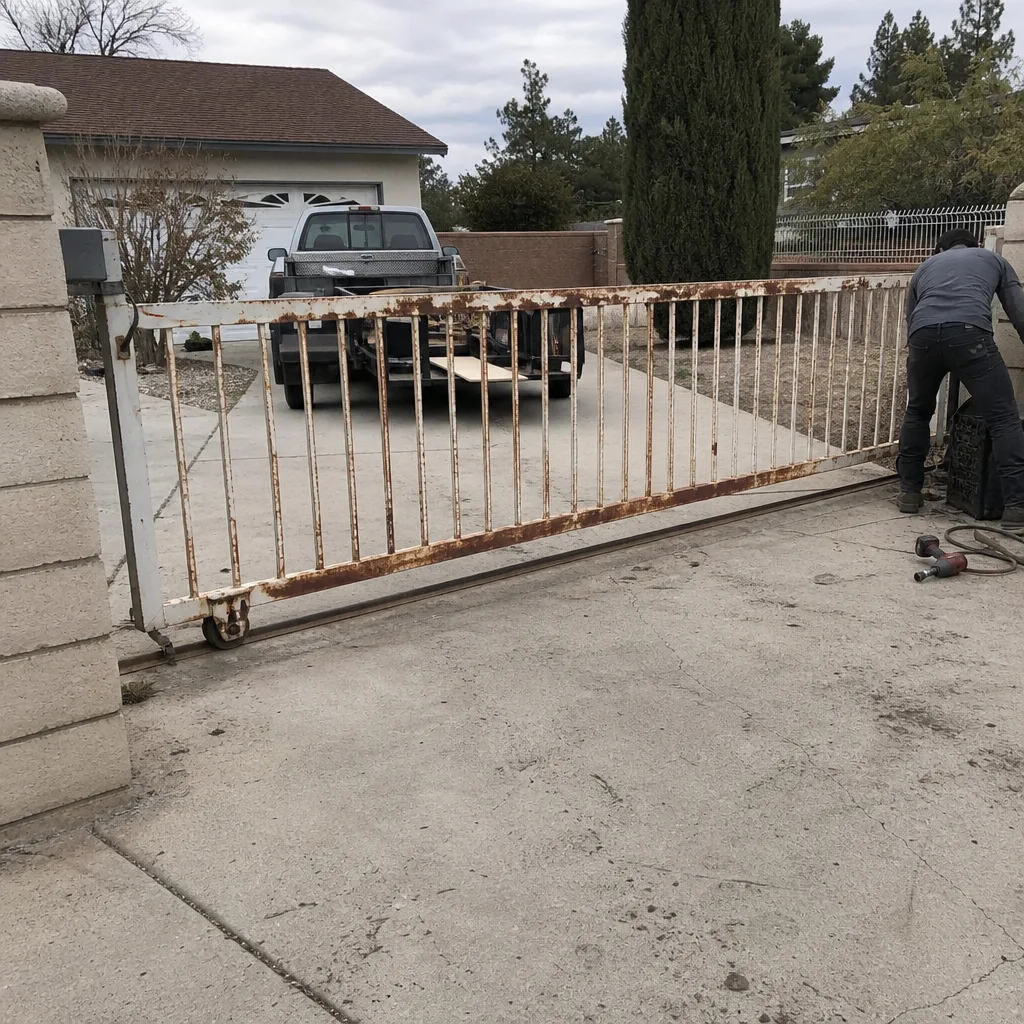 Before
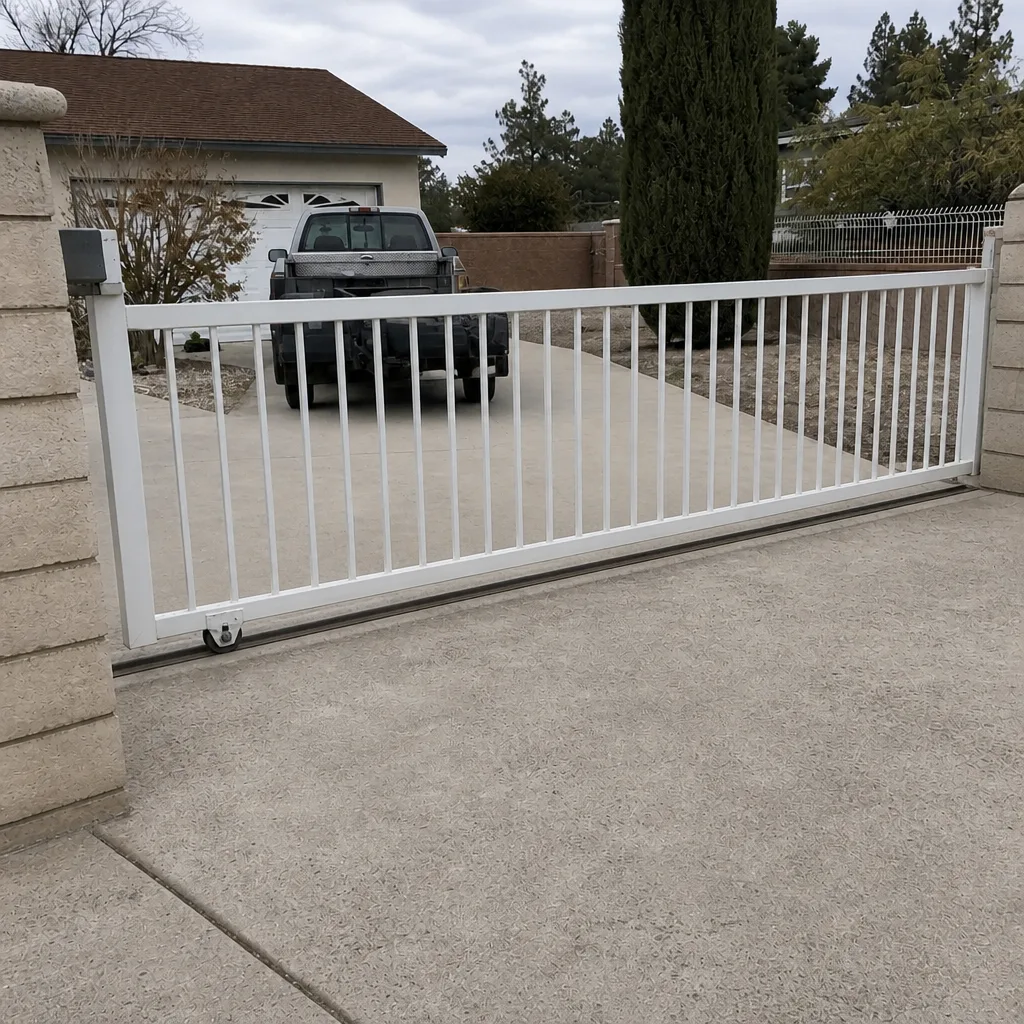 After
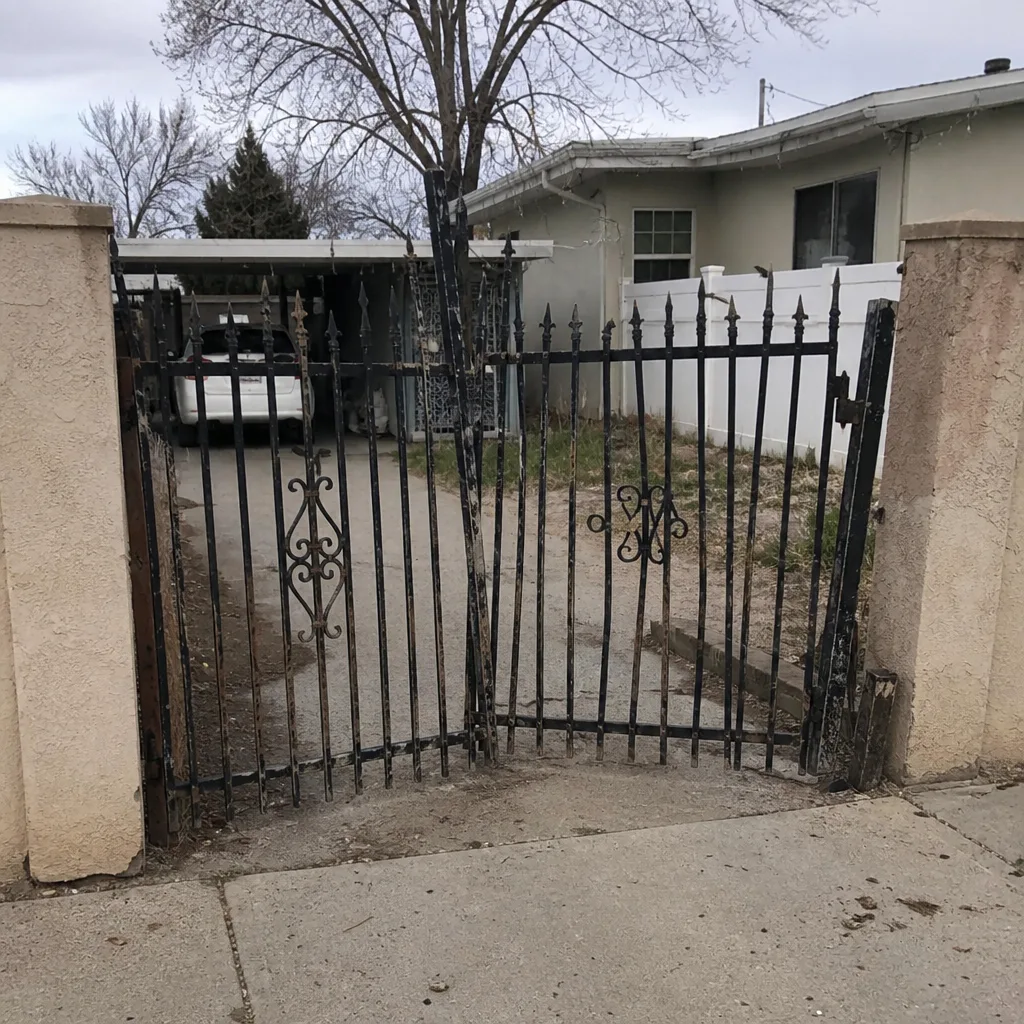 Before
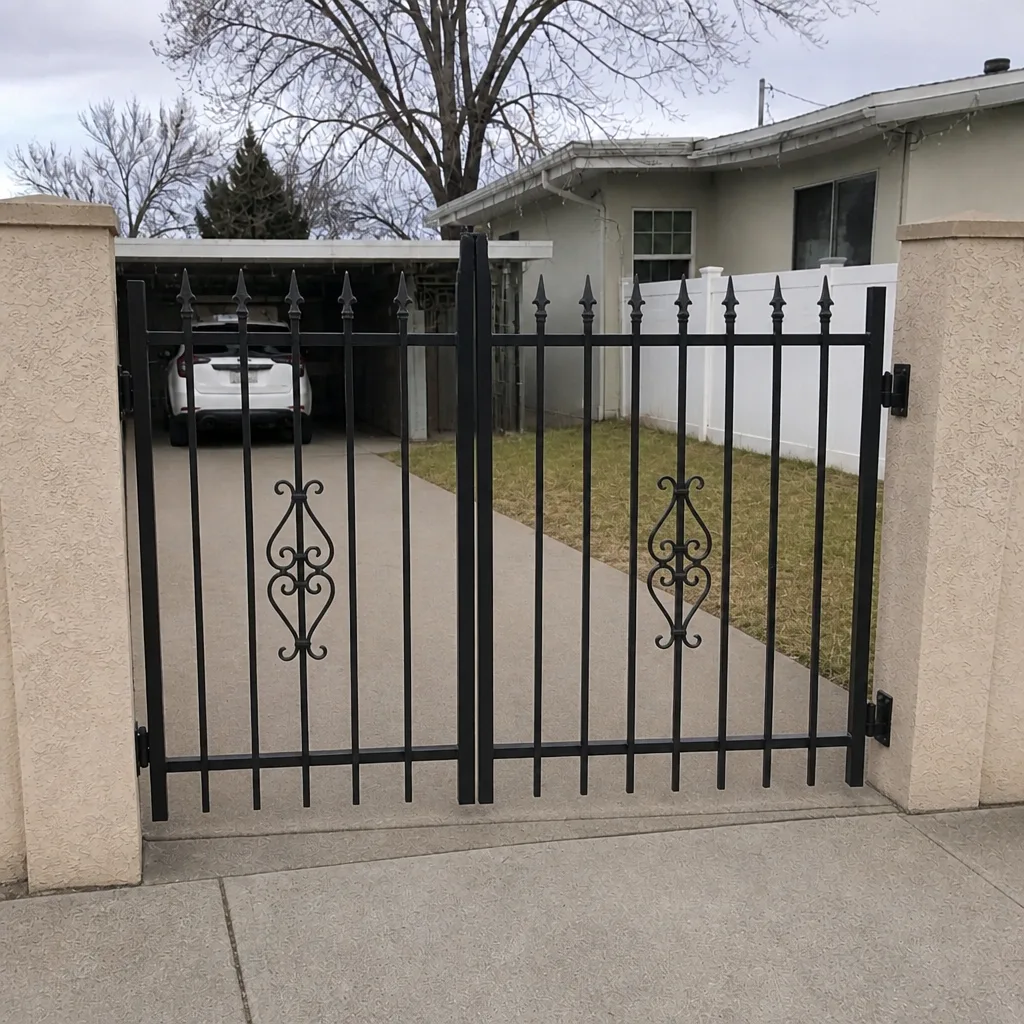 After
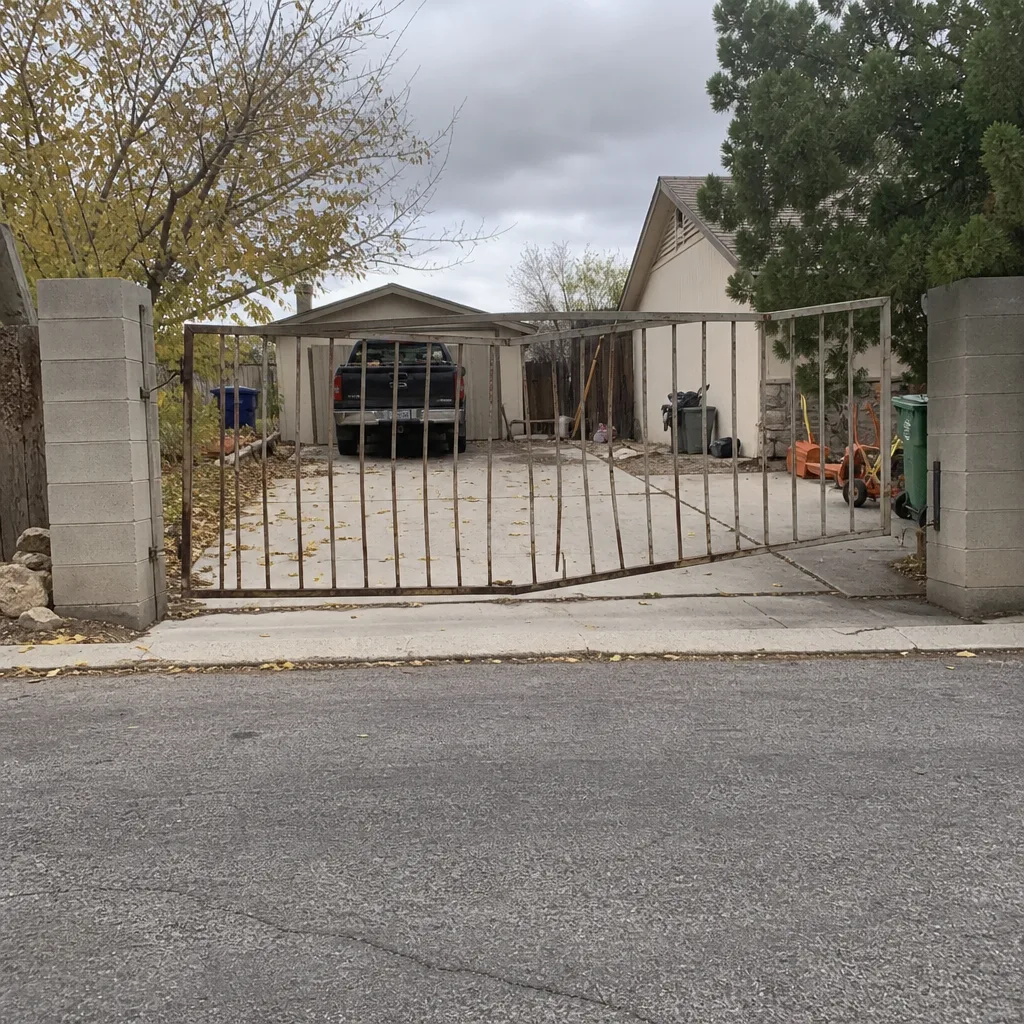 Before
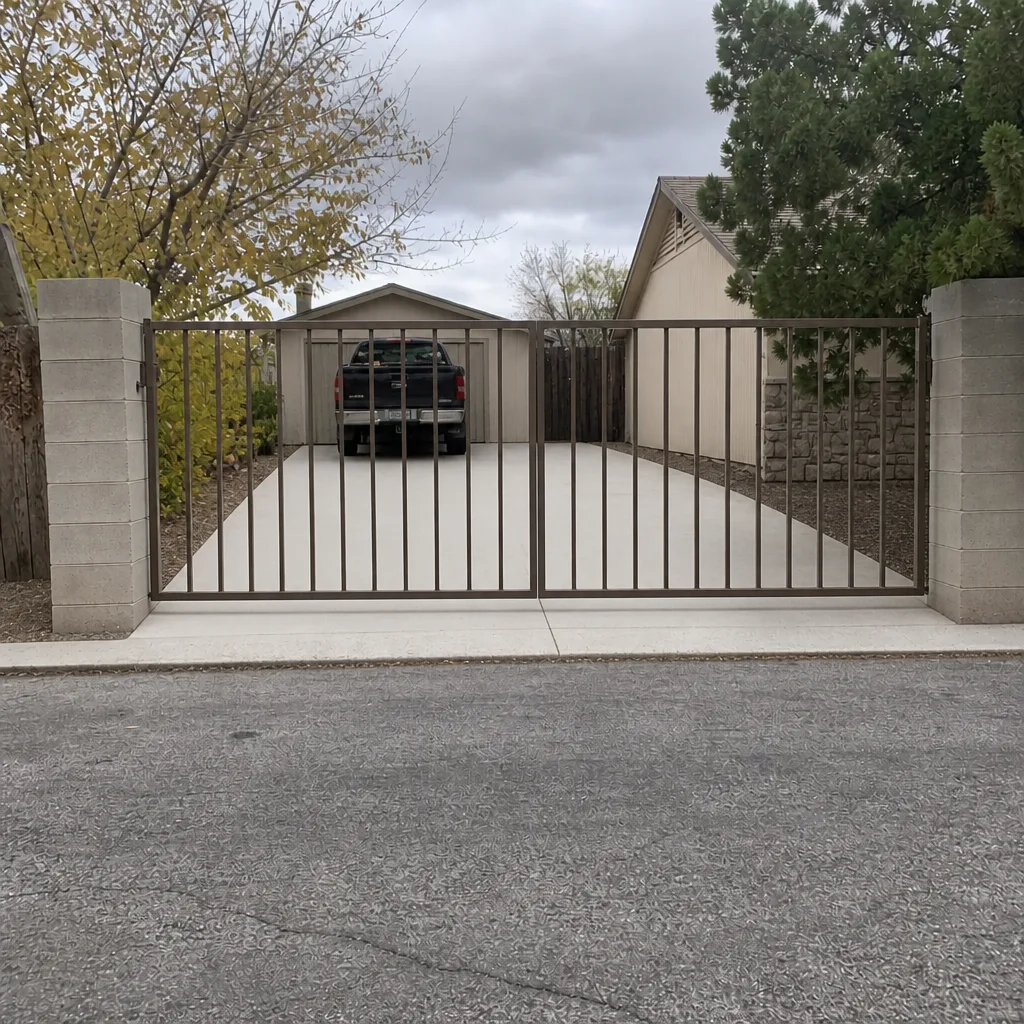 After
Frequently Asked Questions
Every three months for visual inspection, with lubrication every two to three months on hinges and rollers. The desert climate compresses the schedule that would work in a cooler, less dusty region. Automated systems should also get a professional annual service, and monthly auto-reverse and sensor checks.
A dry-film PTFE spray or a high-temperature synthetic grease rated for continuous high-temperature service. Avoid general-purpose grease, standard white lithium, and any all-purpose lubricant without a temperature rating, because they thin or turn tacky in the heat and trap dust. Call us if you want a recommendation for your specific gate.
Yes. Start the gate and break the sensor beam or press lightly on the leading edge while it’s moving. It must stop and reverse immediately. If it doesn’t, stop using the operator and call a technician. This is the one check you should never skip.
Stop using it and call. A grinding noise usually means a seized hinge, a worn roller, or a foreign object in the track, and running the gate will make it worse. On an automated system, continuing to run a grinding gate can also damage the operator’s drive.
No. Track cleaning is safe for homeowners. Sweep out debris, wipe the track, and inspect rollers monthly. What you shouldn’t do is adjust the operator or disassemble the roller carriage.
It depends on the part and the brand. Some repairs are minor adjustments; others involve replacing a hinge, roller, sensor, or control board. We give a written estimate before any work starts, and the estimate is free. Call (844) 420-8518 for an exact quote.
The Bottom Line
A gate in Spring Valley needs a different maintenance rhythm than one in a temperate climate, and the checklist you follow matters. Use high-temperature lubricants, not general-purpose grease. Inspect monthly, service quarterly, and schedule an annual professional check on any automated system. Test auto-reverse every month, because a silent failure is the one that matters most. Wipe your sensors, watch your footings, listen for new noises, and leave operator work to a technician. That’s the whole checklist, and following it faithfully is how you keep a gate running for years instead of months. When something’s above your pay grade, we’re a phone call away.
Contact Us
If your gate needs service or you’d like a professional’s eyes on a maintenance issue, call (844) 420-8518 for a free estimate. We answer 24/7. Fast dispatch from 7am to 7pm, Sunday through Friday. We work on every major brand, from residential systems to commercial operators, and we’ll give you a written price before any work starts.
Written by the team at Gate Repair Spring Valley.