
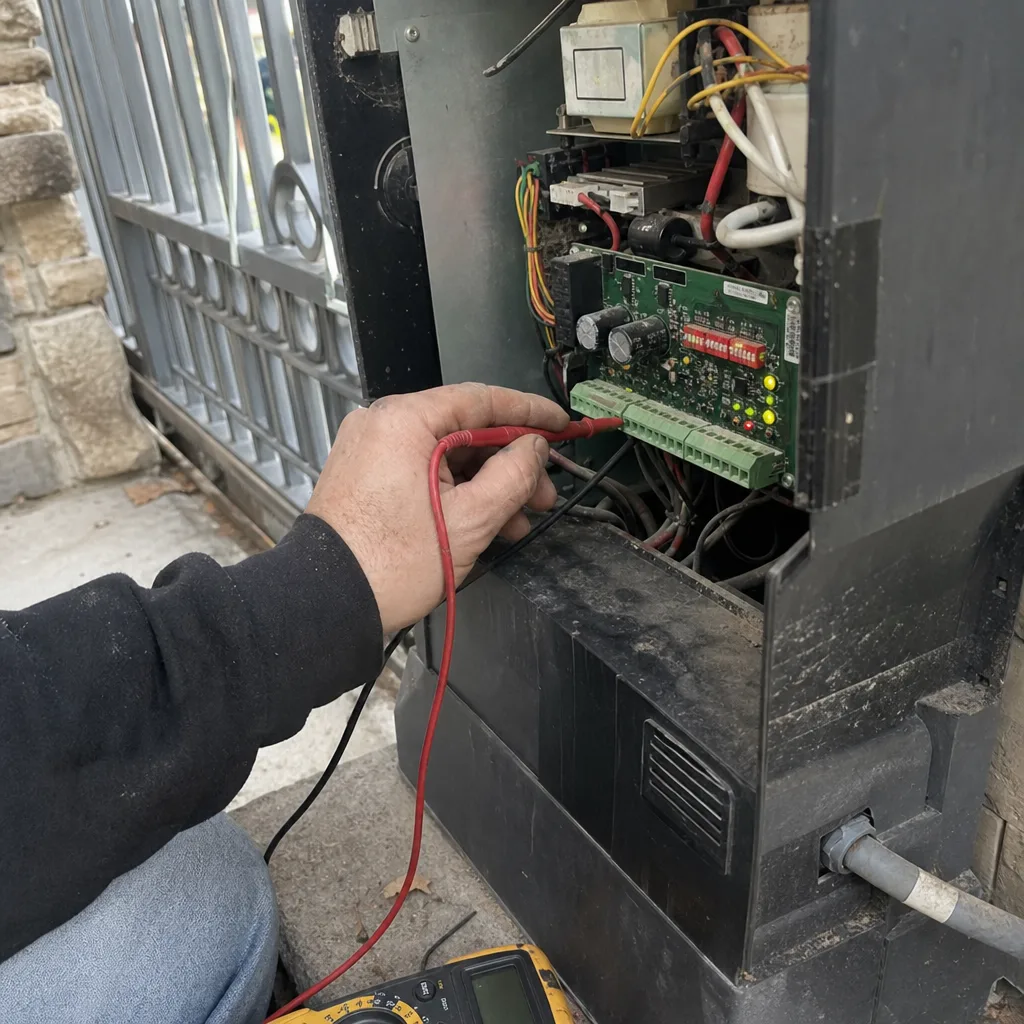
Last updated November 15, 2026
 Wrought iron
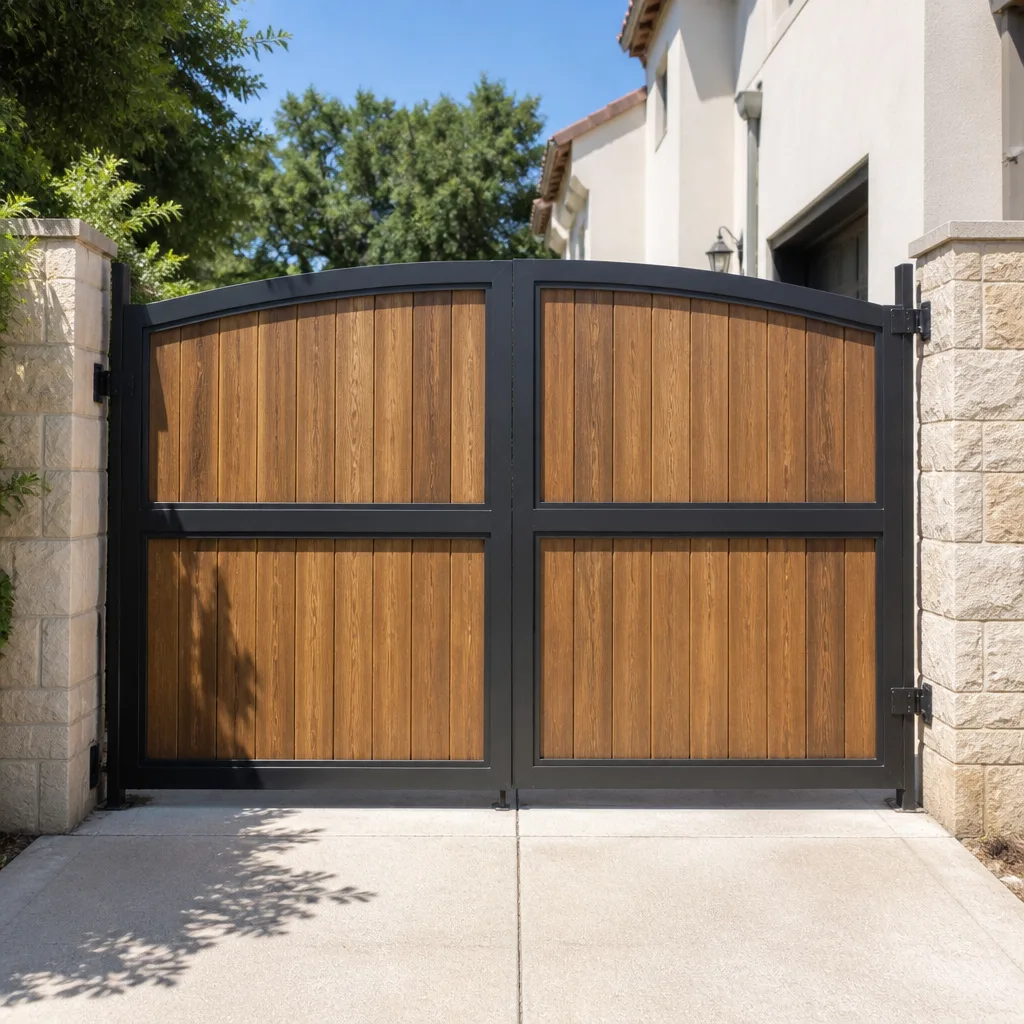 Wood & steel frame
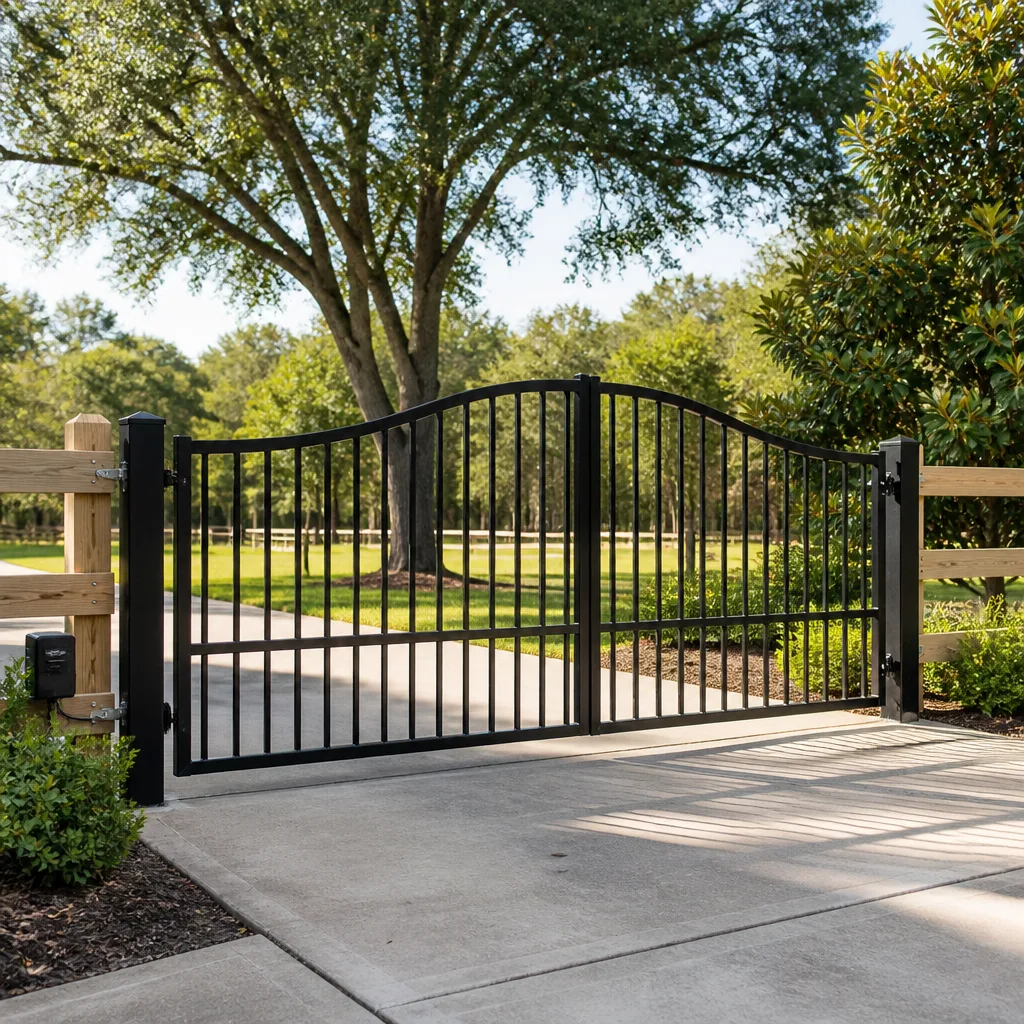 Farm & ranch
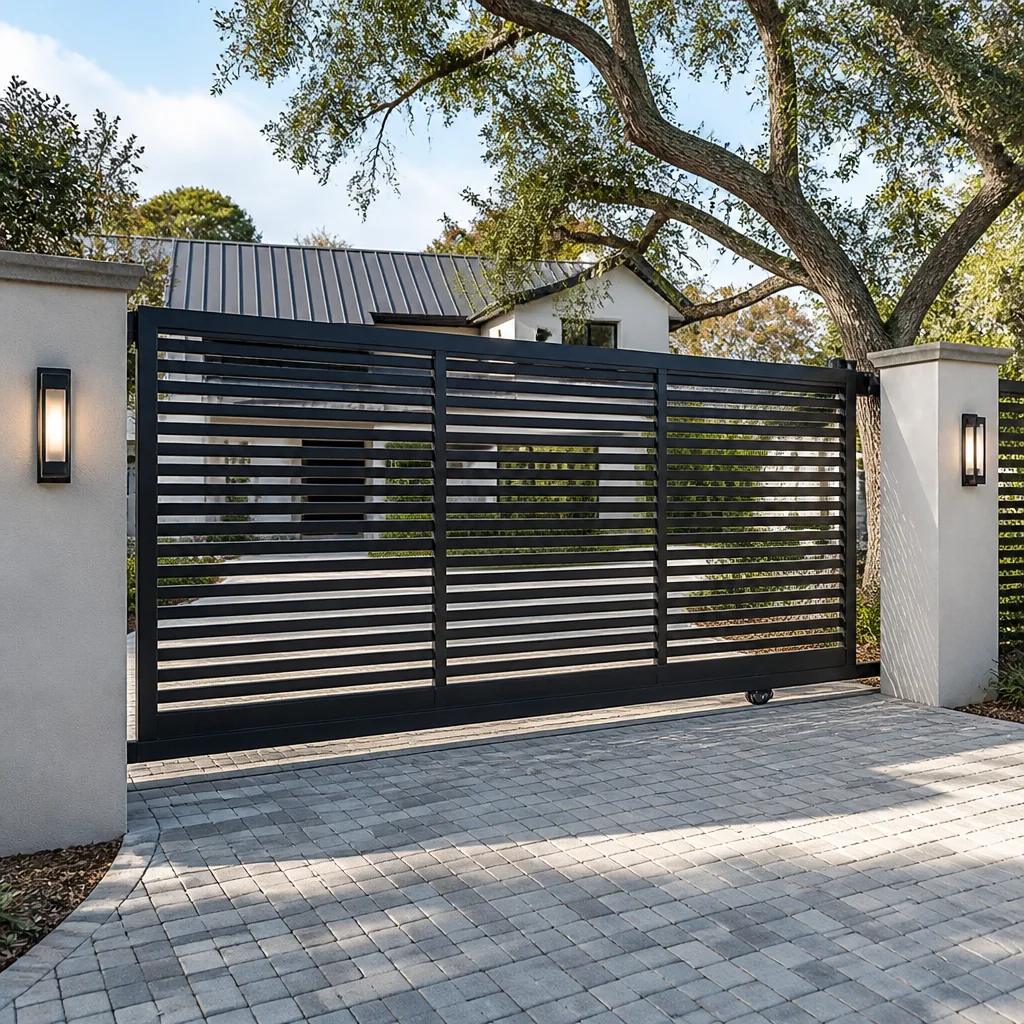 Sliding driveway gates
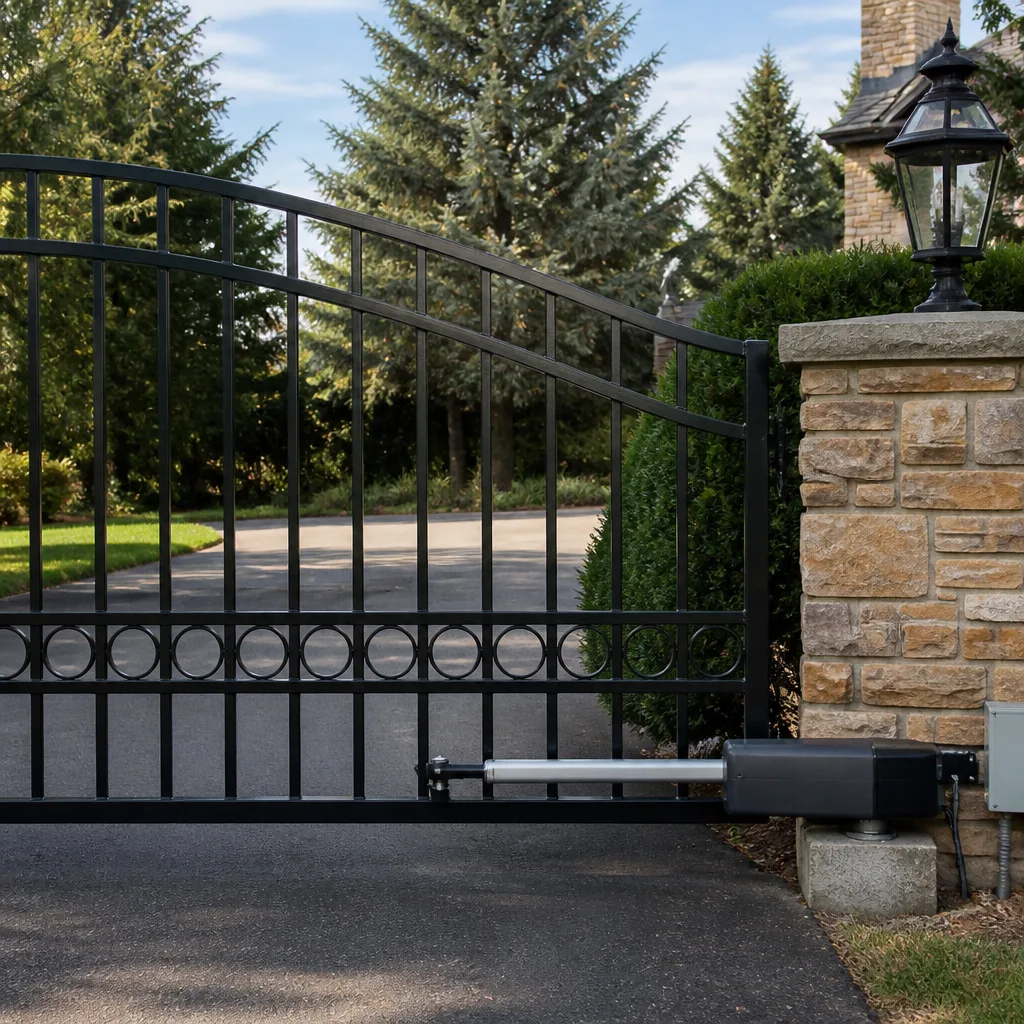 LiftMaster operators
Free on-site gate assessment - hinges, posts, and your LiftMaster or Nice gate operator checked before anything is quoted
The assessment is free and the quote is the invoice.
Get your free estimateGate Repair Permits, Codes & Inspections in Spring Valley, NV: What You Need to Know
A gate motor swap sounds like a straight part-for-part exchange. In unincorporated Clark County it often isn’t. If the replacement changes the system’s UL 325 classification, adds or alters safety sensors, or increases the arc, clearance or speed of travel, the county can treat the job as a new installation rather than a repair, which pulls inspection into the picture. That distinction is where most homeowners get caught, and it’s why quotes that skip the permit question deserve a second look. This guide walks through which gate jobs need a Clark County building permit and which don’t, how HOA guidelines in Spring Valley stack on top of county code, what UL 325 compliance means for liability in Nevada, and how to retroactively permit work a previous contractor left unpermitted. If your gate is already down, you can also read our Gate Repair Spring Valley overview first, then come back here for the paperwork side.
Quick Answer
Some gate repairs need a Clark County building permit and some don’t. Routine repairs – replacing a motor control board, repairing a hinge, adjusting a chain, swapping a keypad, replacing a photo-eye or safety edge – are typically repair work and don’t require a permit. Jobs that change the structure or electrical supply of the gate – new posts, new concrete footings, new electrical circuits, or a full replacement of the operator system with different safety or classification specs – are usually permit-triggering work in unincorporated Clark County. Because Spring Valley sits almost entirely in unincorporated Clark County, and permit rules shift, always confirm the current requirement with the Clark County Building Department before work starts. That call is free. Skipping it is what costs money.
Styles & brands we work with
- Wrought iron
- Wood & steel frame
- Farm & ranch
- Sliding driveway gates
- LiftMaster operators
Table of Contents
- Which Gate Jobs Need a Permit in Clark County?
- How HOA Guidelines Interact With County Code in Spring Valley
- UL 325 Compliance and Homeowner Liability in Nevada
- How Unpermitted Gate Work Affects Insurance and Disclosure
- How to Retroactively Permit Gate Work in Spring Valley
- Electric Gate Repairs and When the Electrical Side Needs a Permit
- Commercial and HOA Gates: Higher Stakes, Higher Requirements
- What an Inspection Actually Looks At
Which Gate Jobs Need a Permit in Clark County?
In plain terms: repair work doesn’t usually need one, and structural or electrical work usually does. The tricky part is where a repair stops being a repair. Here’s how we draw the line when we look at a gate in Spring Valley.
Repairs that typically don’t require a permit:
- Replacing a control board, receiver, or limit switch on an existing operator
- Adjusting or replacing a hinge, roller, or track hardware
- Replacing a photo-eye or safety edge sensor on an existing system that already had one
- Replacing a keypad or adding a second wireless remote receiver
- Greasing, aligning, or tuning an existing gate
- Swapping a battery backup on a residential opener like a Linear or Ghost Controls unit
Jobs that typically do require a permit in unincorporated Clark County:
- Setting new posts, footings, or concrete anchors
- Replacing the gate leaf or extending its length
- Running a new electrical circuit or junction to power a gate operator
- Replacing the operator with a system in a different UL 325 classification, or one that changes the safety sensor configuration
- Any structural change that alters how the gate holds itself up or how it closes
That second to last item is the one that surprises people. A residential operator swap that goes from a non-entrapment-protected system to one with monitored photo-eyes and edges changes the safety configuration, and county plan reviewers generally look at that as an installation issue, not a repair. If you’re not sure which side of the line your job lands on, call the Clark County Building Department before ordering a new motor, or call us and we’ll tell you based on what we see. When in doubt, permit it. The paperwork is a fraction of the cost of pulling it later during a sale.
How HOA Guidelines Interact With County Code in Spring Valley
Spring Valley HOAs add a second layer of approval that the county does not care about, and that’s the layer most homeowners forget. A gate can pass county inspection and still be out of compliance with HOA architectural rules, and the HOA can require it be corrected or removed.
Here’s how the two systems interact:
- County code is the minimum. Clark County Building Department enforces structural and electrical safety. It does not weigh in on colors, heights, styles, materials, or view-corridor aesthetics.
- HOA rules often exceed county code. Many Spring Valley master-planned communities regulate gate height, color finish, opacity, and visibility from the street. A gate that meets the county’s structural requirements can still violate design review.
- You usually need HOA approval before you file for a permit. Architectural review committees often want a submittal with drawings, finish samples and a site plan before work starts. Filing a county permit without that approval doesn’t get you around the HOA.
- Replacement parts can trigger design review. Changing the style of a gate leaf, the finish color, or the anchor style can put the job under architectural review even if the operator is the same model.
- Common-area and shared gates sit on the HOA’s plate. If your gate serves a shared drive, a gated cluster, or a commercial plaza in Spring Valley, the association or property manager usually carries the permit, and their contractor needs to as well.
The practical takeaway: get the HOA submittal done first, then confirm with the county whether a permit is needed, then book the work. Doing it in that order avoids most of the pain we see when a gate gets installed, passes county, and then the association asks for it to be modified. Your gate is doing its structural job and its community job at the same time, and both count.
UL 325 Compliance and Homeowner Liability in Nevada
UL 325 is the safety standard for gate operators, and it’s the reason the permit conversation matters more than people expect. In simple terms, the standard categorizes gate operators by the level of entrapment protection they provide. Residential swing and slide gates typically fall under one classification, and commercial or heavy-duty systems under another. When a motor is replaced with a system in a different classification, the county can treat the work as a new installation and require inspection to make sure the protection level matches the site.
Why this matters for you:
- Liability. An automated gate is a moving weight with a motor behind it. If a child, a pet, or a delivery driver gets caught in the closing path and the gate operator doesn’t have the protection it should, the homeowner or property owner carries the exposure.
- Sensor configuration matters. Photo-eyes, safety edges, and monitored vs. non-monitored systems change what the operator can stop for and how quickly. A motor swap that leaves the old sensors in place but the new operator expecting monitored sensors is a liability gap.
- Commercial gate systems typically need more protection. Commercial-grade operators like DoorKing and FAAC systems often require monitored entrapment protection as part of the operator’s design. A residential-grade linear operator on a commercial drive is where inspections get tricky.
- Inspection confirms the setup. A county inspection for a gate operator replacement confirms that the entrapment protection is in place and functioning. That inspection report is a piece of paper you want to have.
We work on upgraded residential brands like Viking and Ghost Controls and on commercial operators like DoorKing, and the safety setup looks different on each. If you’re replacing a motor and you’re not sure what classification your spring Valley gate falls into, call us and we’ll walk through it on-site or over the phone. Our technicians have up to 11 years of experience with gate operators, and they know when the sensor configuration is the real question. If your gate is misbehaving today, our electric gate repair page covers the same-day side of things.
How Unpermitted Gate Work Affects Insurance and Disclosure
Most Spring Valley homeowners don’t think about their gate until something breaks. The insurance and disclosure angle is where the missing permit comes back to bite.
Here’s how unpermitted gate work tends to play out:
- Claim denial or reduction. If a gate failure leads to a damage claim, and your insurer finds the work that caused the failure was unpermitted, the claim can be reduced or denied. Policies vary, but “unpermitted improvement” is a common exclusion.
- Sale disclosures. Nevada is a disclosure state, and when you sell, you’re asked about permitted improvements. Unpermitted gate or electrical work needs to be disclosed, and buyers’ agents and inspectors will flag it during the transaction.
- Appraisal complications. An appraiser who can’t confirm the gate and operator were permitted may treat the gate as a liability rather than a value add. That’s not what you want on a sale sheet.
- Lender scrutiny. If a buyer is financing, their lender may require the unpermitted work to be brought into compliance before closing.
- Warranty issues. Some gate operators carry their own manufacturer warranty, and if the install was non-compliant with the operator’s requirements, you may have trouble making a warranty claim.
The fix is usually simple but not free. If you bought a Spring Valley home with an unpermitted gate, or you inherited one, getting it permitted retroactively is far cheaper than discovering the problem at the closing table. It’s also cheaper than a denied claim after a gate incident. Ask for the permit history when you’re buying a home with an automated gate, and ask for it when you’re selling one.
How to Retroactively Permit Gate Work in Spring Valley
If you discover that a previous contractor skipped the permit, you can still make it right. The retroactive permit process is slower than filing before work starts, and it may involve inspection of the completed work, but it’s not the scary thing homeowners assume it is. Here’s how it typically goes.
- Gather what you have. Find the operator’s installation manual, any wiring diagrams, and photos of the gate in the current state. If you have a receipt or invoice from the original install, that helps.
- Call the Clark County Building Department. Ask specifically about a permit for work already performed, sometimes called a permit for existing or completed work. The exact process depends on the type of work and the current rules, and it does change, so verify with them.
- Get the operator and safety setup reviewed. If the gate operator is already in place, the county may want to see that the entrapment protection matches the UL 325 classification for the operator. That review is usually done during inspection.
- Book the inspection. An inspector will look at the gate structure, the operator, the electrical connection, and the safety sensors. They will also confirm the work matches what the permit describes.
- Correct anything the inspector flags. This is where a gate specialist earns their keep. If the inspector asks for changes to the sensor wiring, the post footings, or the electrical disconnect, we’re set up to handle them.
- Get the sign-off. Once the inspection passes, the permit gets signed off and the work becomes permitted, which is what you want for insurance and disclosure.
If you’re dealing with a retroactive situation, we can look at the gate, tell you what we see, and help you line up the paperwork on your side. We don’t file permits for you, but we work with homeowners who are going through the process in Spring Valley regularly, and we know the standard the county is looking for.
Electric Gate Repairs and When the Electrical Side Needs a Permit
An electric gate repair becomes a permitting question the moment you touch the electrical supply rather than the operator. Replacing a bad control board is repair work. Pulling a new circuit from the panel to the gate is electrical work that usually needs a permit.
Here’s how we sort it:
- Existing circuit, existing operator. If the circuit is intact and you’re swapping or repairing the operator on that circuit, that’s typically permitted as a repair, not an electrical installation.
- New circuit or a new electrical path to the gate. This is where the county gets involved. It’s electrical work, and in most jurisdictions it needs a permit and inspection. Ask Clark County before work starts.
- Adding a low-voltage accessory. A keypad, an intercom, or an access control reader usually runs on low voltage off the existing transformer. That’s typically repair or accessory work and generally doesn’t need a separate electrical permit.
- Changing the operator class. A residential operator swapped for a commercial operator on a commercial drive is where the permit and inspection requirement is most likely.
- Solar and battery backup. Adding a battery backup like some Linear and Ghost Controls units support is usually repair-adjacent work and usually doesn’t need a permit. Adding a solar panel or new power source for the operator is different, so ask.
The electrical side of an automated gate is a genuine safety issue. Any time power is disconnected, moved, or extended, whether the panel is the one at the house or the sub-panel near the gate, use a licensed electrician for the circuit work. Our team handles the gate operator, the safety sensors, and the access control side. We don’t troubleshoot or repair the panel itself, and we don’t do the electrical run. For the operator, sensor, and access control work, if your gate is on the fritz today, our gate repair team handles the mechanical and operator side.
Commercial and HOA Gates: Higher Stakes, Higher Requirements
Commercial and HOA-managed gates in Spring Valley tend to involve the county, the HOA, and sometimes the property owner all at once. The permitting expectations are usually higher and the liability exposure is larger.
Things that come up on commercial and HOA work:
- Multiple stakeholders. The association or property manager holds the permit, the gate specialist performs the work, and the county inspects. Each party has to communicate.
- Heavier operators, more safety. Commercial operators like DoorKing are built for high cycles and typically require monitored entrapment protection. A residential-grade system on a commercial drive is not a shortcut worth taking.
- Access control integration. Card readers, call boxes, and gate entry systems are usually installed at the same time as the operator and reviewed as part of the same permit trail.
- Fire access and emergency egress. Commercial gates often have emergency access requirements. If the gate is part of an access control or emergency egress plan for the property, the inspector will check that too.
- Higher exposure. A commercial gate with heavy traffic and visitors has more incidents per year than a residential driveway gate. That’s the reason the requirements are stricter.
If you’re a property manager or HOA board in Spring Valley working through a gate job, our process is to walk the site with you, confirm what brand and model you have, and give you a written scope so you know what the county is going to look at. We work on the operator, the access control, and the safety edges. We’re a gate specialist, not a general contractor, and we stick to gates. If you’re not sure which brand or model your community gate is running, take a photo of the operator housing and send it our way.
What an Inspection Actually Looks At
A gate inspection is not a mystery. An inspector walks up to the gate, looks at a defined set of items, and checks them off. Knowing what they’re looking at helps you prep, and it’s a good pre-check even if you’re just doing repair work.
The items an inspector typically reviews:
- Structure and mounting. Posts, footings, anchor bolts, and whether the gate hangs and travels the way it should.
- Operator installation. The operator is mounted per the manufacturer’s instructions and matches the classification recorded on the permit.
- Entrapment protection. Photo-eyes, safety edges, and monitored vs. non-monitored configuration, matched to the operator’s UL 325 classification.
- Electrical connection. If a new circuit was run, the electrician’s work and any disconnects or junctions are checked. If it’s an existing circuit, the connection at the operator is checked.
- Access control and egress. Keypads, card readers, and emergency access, including how the gate behaves when someone wants out.
- Gate travel and speed. How the gate opens and closes, whether it reverses when it should, and whether the timing is consistent.
- Manual release. That the operator can be manually released so the gate can be moved by hand in a power failure.
If any of these items fail, the inspector will usually tell you what to correct. The correction is almost always on the gate and operator side, not the electrical side, and it’s the kind of thing a specialist can resolve in a single visit. We see a lot of gate inspection corrections in Spring Valley, and most of them come down to safety sensor configuration or manual release. Both are fixable, both are quick, and both are cheaper than the alternative.
Common Mistakes to Avoid
- Skipping the permit because “it’s just a repair.” The county’s definition of repair and your contractor’s definition aren’t the same, and a motor swap that changes the UL 325 classification is the classic example.
- Filing the county permit before the HOA approval. In Spring Valley, HOA architectural review often comes first. Filing with the county without HOA sign-off can leave you with a permitted gate that the HOA still wants changed.
- Assuming the county and the HOA are reviewing the same thing. They’re not. The county checks structure, operator, and electrical safety. The HOA checks style, color, height, and visibility. You need both.
- Ignoring sensor configuration when replacing a motor. A new operator that expects monitored photo-eyes will not behave correctly with the existing non-monitored sensors, and it’s a liability gap even if the gate opens and closes.
- Not keeping the inspection sign-off. That piece of paper is your proof for insurance and for the sale of the home. Keep it with the property records.
- Hiring a general handyman for a motorized gate. A handyman may fix the symptom without touching the permit question, and you’re left holding the compliance problem later.
- Assuming the last installer handled it. Verify. Ask for the permit number and the inspection sign-off whenever work on a motorized gate is completed on your property in Spring Valley.
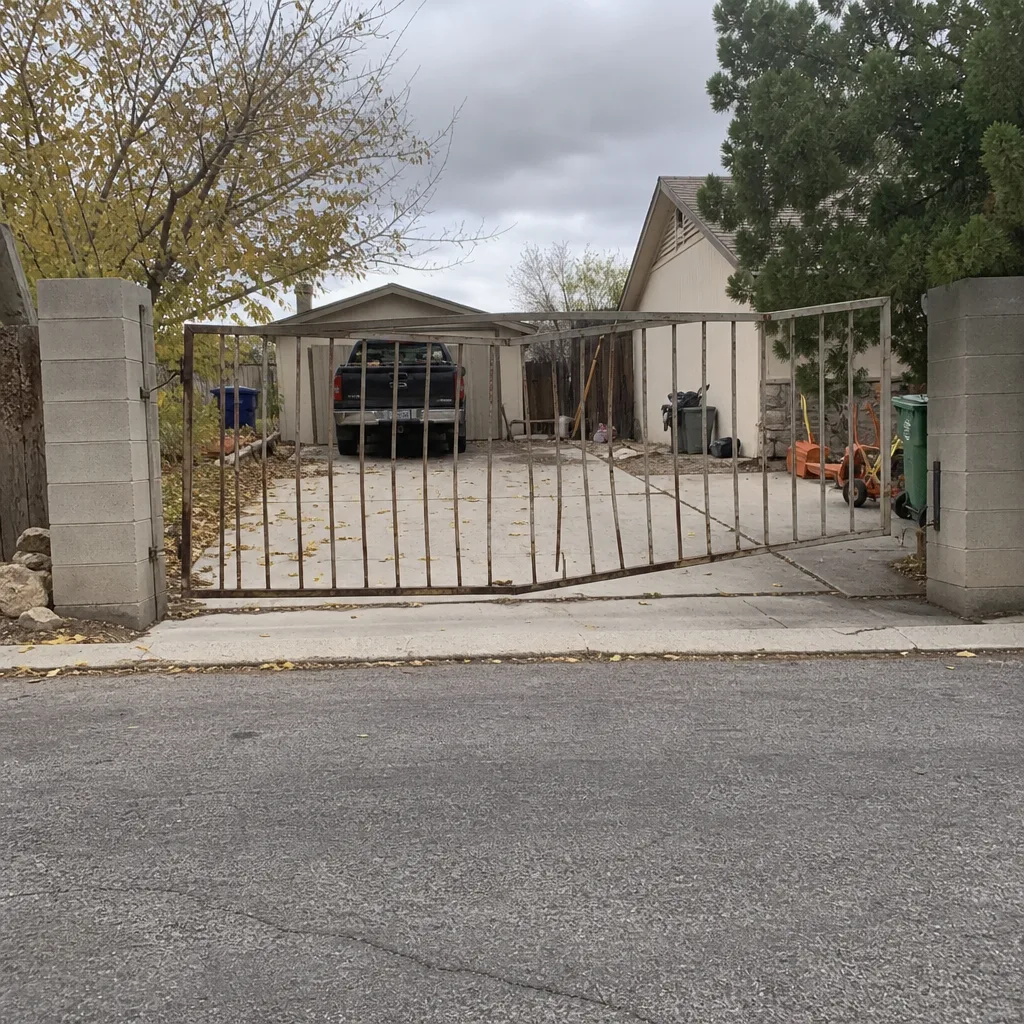
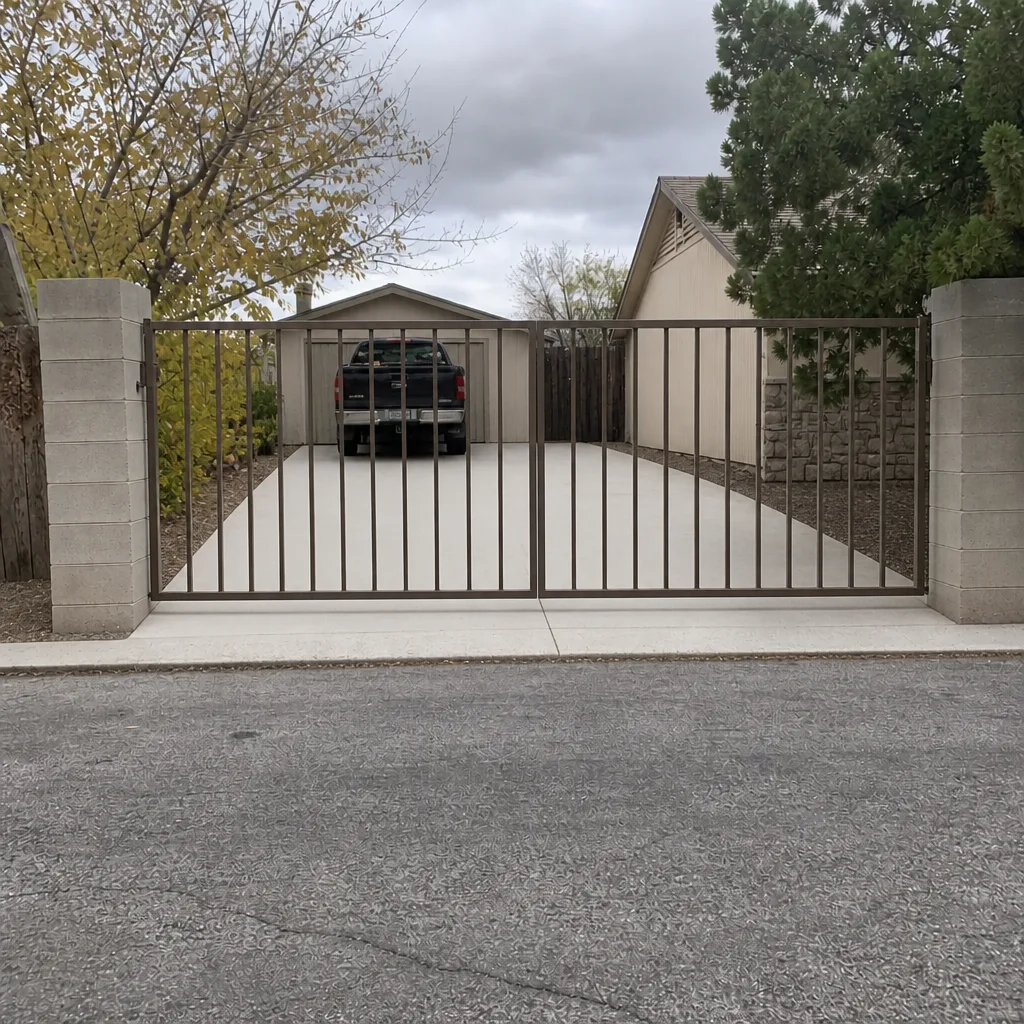
See the difference
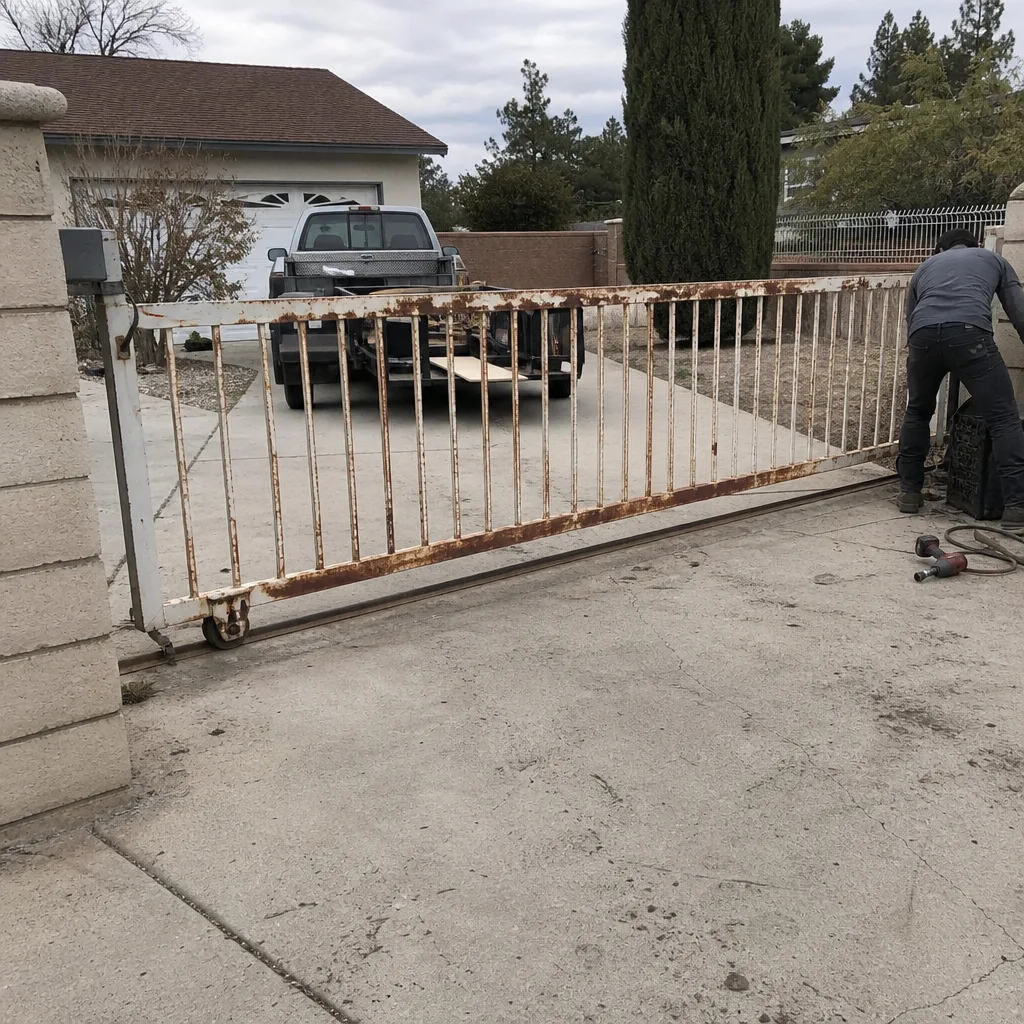 Before
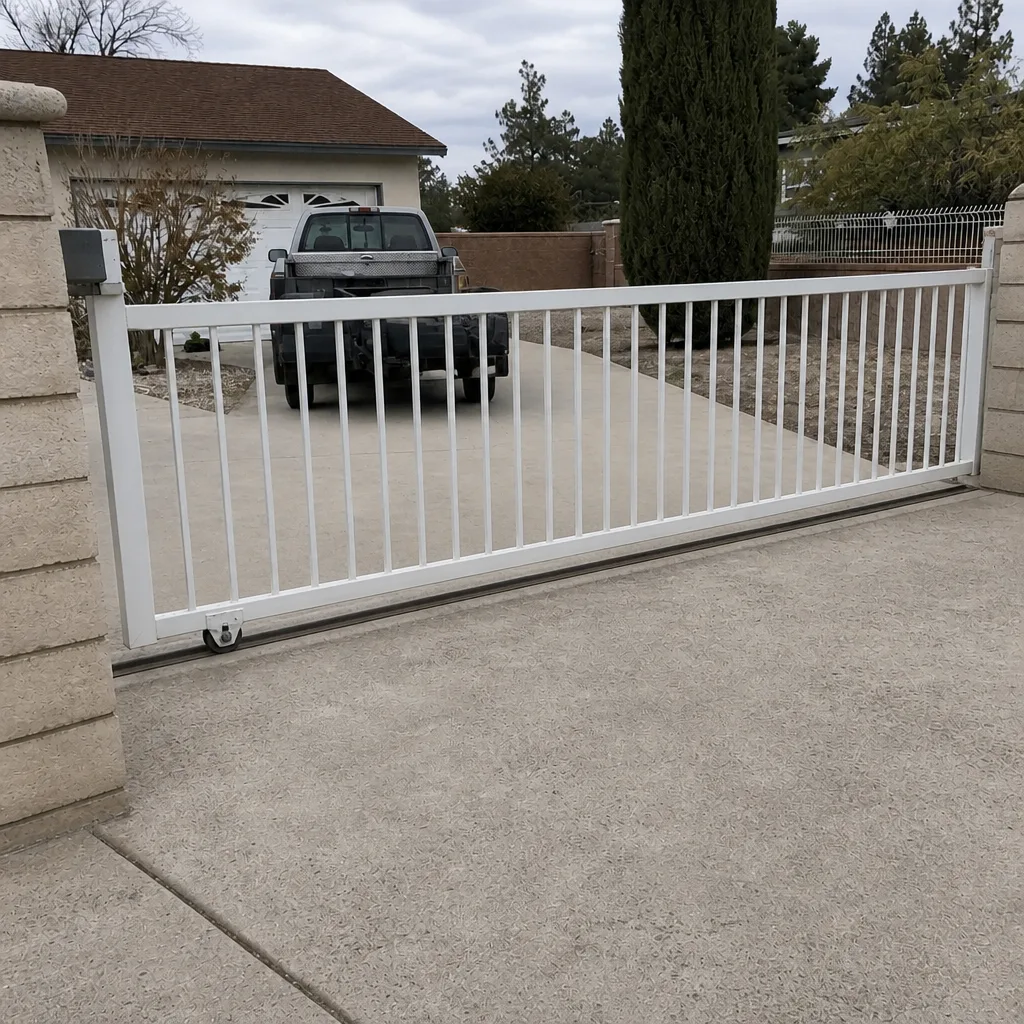 After
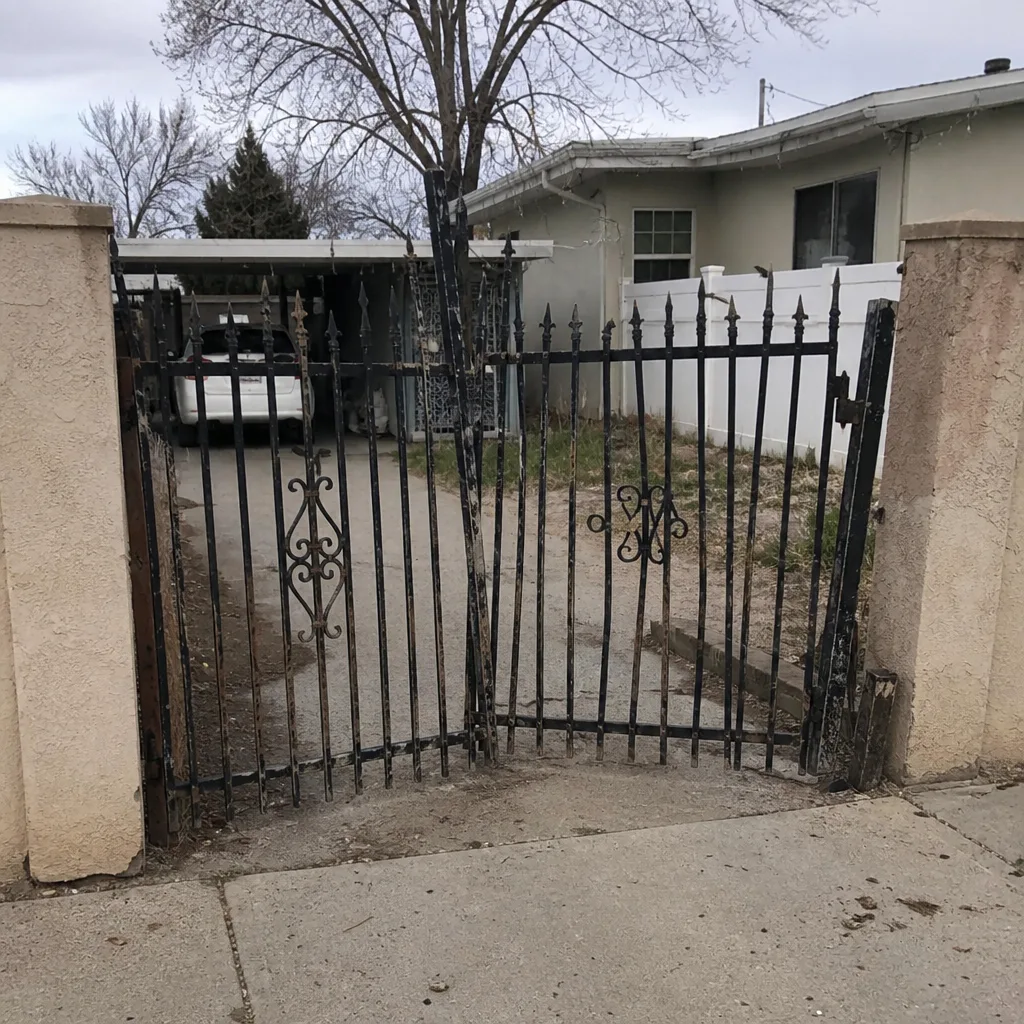 Before
 After
 Before
 After
When to Call a Professional
Call a gate specialist when the gate is automated and the work touches the motor, the safety sensors, the access control, or the structure. Call when a previous contractor left work unpermitted and you need someone to evaluate it against the county’s standard. Call when the gate is on a commercial or HOA-managed drive, because the requirements are higher and the exposure is larger. Call when a Spring Valley HOA has flagged your gate for a design issue and you want to know whether the fix is cosmetic or structural. And call if you’re just not sure which side of the permit line your job is on. Fresh estimates are free, and a quick walk of the gate often answers the question in minutes. Contact Spring Valley gate repair at (844) 420-8518. We answer 24/7. Fast dispatch from 7am to 7pm, Sunday through Friday.
Frequently Asked Questions
Usually not, if the work is repair rather than structural or electrical installation. Replacing a control board, hinge, sensor, keypad, or battery backup on an existing automated gate is typically repair work and doesn’t require a Clark County permit. New posts, new footings, new electrical circuits, and motor swaps that change the operator’s UL 325 classification or safety sensor setup are the jobs that typically do need one. Confirm with the Clark County Building Department before work starts, because the rules can change. Call (844) 420-8518 for a free estimate on the gate side of the job.
UL 325 is the safety standard for gate operators, and it categorizes operators by the level of entrapment protection they provide. Replacing a motor with a system in a different classification, or changing the safety sensor configuration, can push the job into “new installation” territory, which is where the county wants an inspection. That inspection confirms the safety sensors and edge protection match the operator’s requirements. Call (844) 420-8518 for an exact quote on bringing your operator and sensors into compliance.
The county sets the minimum for structure, operator, and electrical safety, and the HOA’s architectural rules sit on top of that and often exceed it. Many Spring Valley communities regulate gate height, finish, style, and street visibility, so a gate can pass county inspection and still violate the HOA’s design review. Get the HOA submittal approved first, then confirm county permit requirements, then book the work. Call (844) 420-8518 for a free estimate on the gate work itself.
Nevada is a disclosure state, so unpermitted work has to be disclosed when you sell, and buyers’ agents and inspectors will flag it. It can also complicate the buyer’s financing and, in some cases, reduce or deny an insurance claim on the gate later. The fix is usually to get the work permitted retroactively, which is cheaper than discovering the problem at the closing table. Call (844) 420-8518 for a free estimate on any corrections the gate needs before you file.
Yes. The typical path is to gather the operator’s manual, photos, and any original install paperwork, then call the Clark County Building Department and ask about a permit for existing or completed work. File the permit, book the inspection, and correct anything the inspector flags on the structure, operator, or safety sensors. On the gate side, we handle the corrections. Call (844) 420-8518 for a free estimate on what needs to be fixed before inspection.
Not necessarily. Matching the existing brand keeps the wiring, the remote, and the access control integration simpler, but it’s not always the best option, especially if the existing operator is underpowered for the drive. We work on Linear, Viking, Ghost Controls, DoorKing, and other major gate brands, so we can compare what you have against what the job actually needs. Call (844) 420-8518 for an exact quote after we look at the gate.
The Bottom Line
The short version: most gate repairs in Spring Valley don’t need a permit, but the ones that do are exactly the jobs where skipping it becomes expensive later. Motor swaps that change the UL 325 classification, new posts and footings, and new electrical runs are the ones to check with the county on. HOA rules sit on top of county code and often exceed it, so file the HOA submittal first. UL 325 compliance protects you from liability. Unpermitted work follows the gate through every insurance claim and every sale. If any of it is unclear, call the county and call us. We’ll tell you what we see on the gate and you can take it from there.
Whether you’re a homeowner, an HOA board, or a property manager in Spring Valley, our team is set up to inspect, repair, and install gate systems across the full range of residential and commercial brands. We work on your brand, we handle the operator and safety side, and we don’t leave the compliance question to guesswork. Call (844) 420-8518 for a free estimate. We answer 24/7. Fast dispatch from 7am to 7pm, Sunday through Friday.
Written by the team at Gate Repair Spring Valley.