
Last updated November 15, 2026
 Wrought iron
 Wood & steel frame
 Farm & ranch
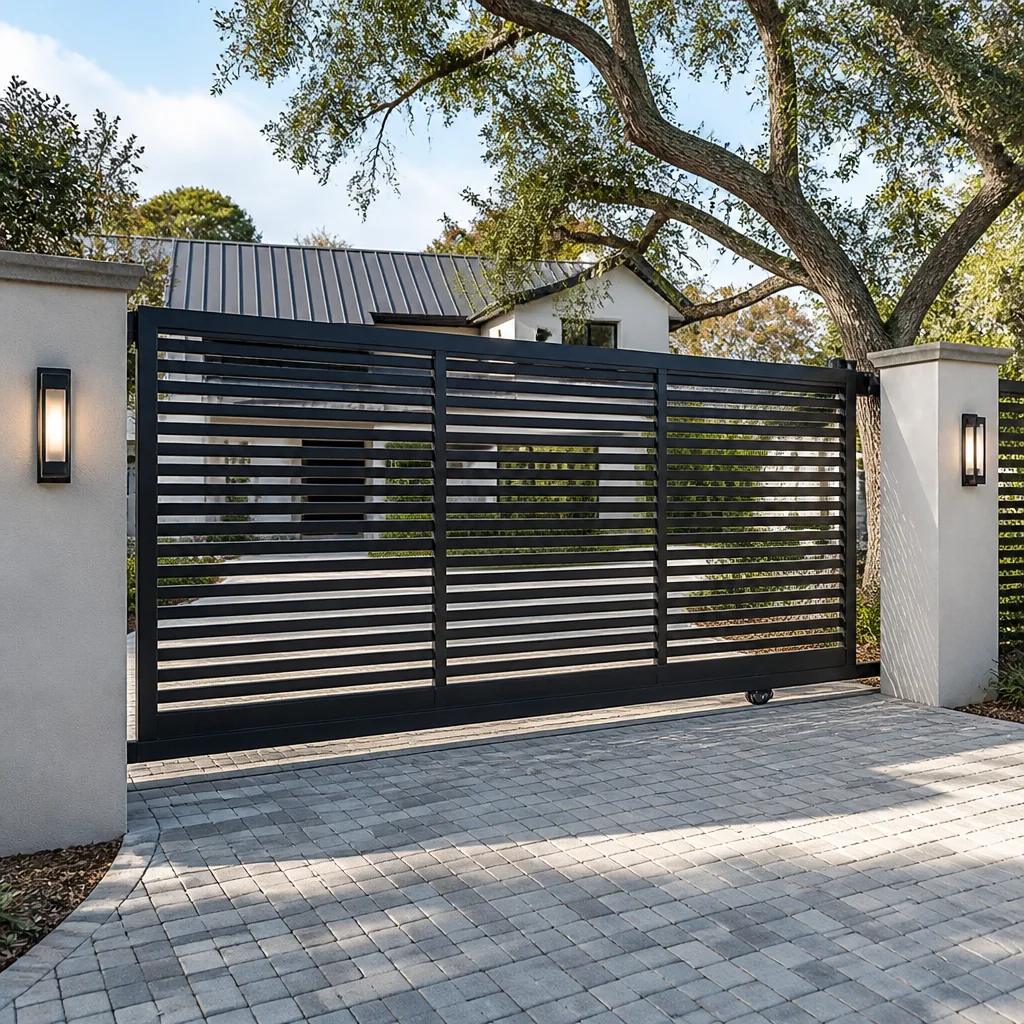 Sliding driveway gates
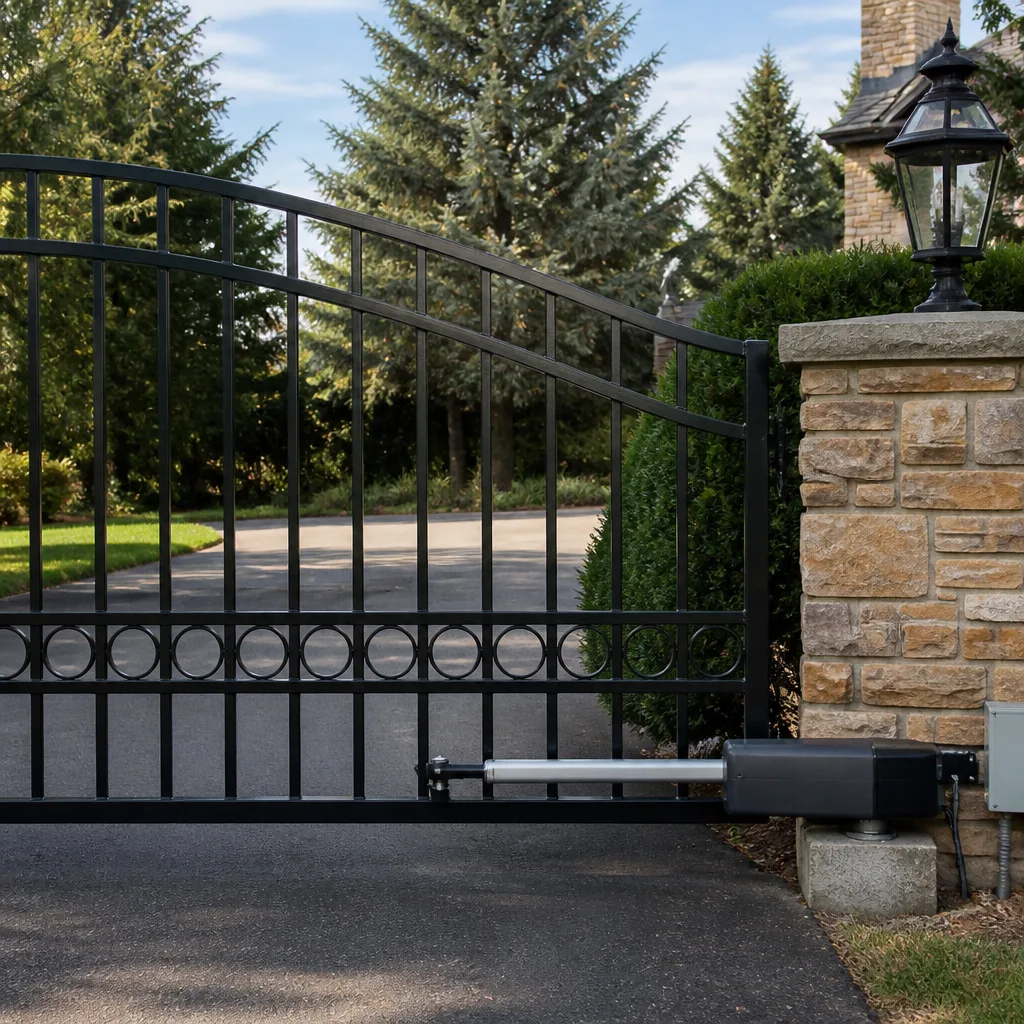 LiftMaster operators
Free on-site gate assessment - hinges, posts, and your LiftMaster or Nice gate operator checked before anything is quoted
The assessment is free and the quote is the invoice.
Get your free estimateChoosing the Right Gate Repair Brand: A Buyer’s Guide for Spring Valley
The most common mistake we see with gate operators in Spring Valley isn’t a cheap brand or a bad install. It’s a system picked from reviews written by someone in Portland or Chicago. Those reviews describe a machine that runs beautifully at 65°F on a mild summer day. Then July arrives, the gate starts cycling in 110-degree heat, and a duty cycle rating that looked generous on paper turns out to be a fantasy. Gate operators here live harder lives than the spec sheet assumes. This guide covers what actually matters when you choose a brand in the Las Vegas valley: how heat eats into duty cycle, which brands have real parts supply nearby, what the hardware is made of, and how to match a brand to your gate’s weight and traffic.
Quick Answer
The right gate repair brand in Spring Valley is the one with strong local parts supply, a control board your technician can actually get, and a duty cycle rating you can cut by 30-40% for desert heat and still meet your daily usage. For most single-family driveways, LiftMaster or Linear is a practical fit. For heavier multi-tenant and commercial entries, FAAC or BFT hold up better. Brand familiarity matters as much as the badge, because the fastest repair is the one your technician has already done.
Styles & brands we work with
- Wrought iron
- Wood & steel frame
- Farm & ranch
- Sliding driveway gates
- LiftMaster operators
Table of Contents
- How Desert Heat Changes a Gate Operator’s Duty Cycle
- Which Brands Have Real Parts Supply in the Las Vegas Metro
- How Brand Choice Affects Repair Costs Down the Line
- Alloys and Coatings That Survive UV and Caliche Soil
- Matching Operator Brand to Gate Weight and Traffic
- Residential Versus Multi-Tenant: Different Brand Logic
- Questions to Ask Before You Commit to a Brand
- Common Mistakes to Avoid
How Desert Heat Changes a Gate Operator’s Duty Cycle
A gate operator’s duty cycle is rated at a standard lab temperature, usually somewhere in the 70s. That number tells you how many cycles per day the motor and gearbox can handle without overheating. In Spring Valley, from roughly May through September, an operator sitting in direct sun on a metal frame can run well above 130°F at the housing. Heat thins lubricant, raises motor resistance, and trips thermal cutouts earlier than the manual predicts.
What that means in practice: take the rated cycles per day and reduce it by 30-40% for a realistic Spring Valley figure. A unit rated for 50 cycles a day is more honestly a 30 to 35 cycle machine through the summer. If your household or property runs more than that, the brand and model you choose needs headroom built in from the start.
What to check on the duty cycle
- Rated cycles per day at the standard test temperature. The baseline number on the datasheet.
- Continuous versus intermittent rating. Continuous-duty motors handle repeated daily use with less heat buildup.
- Thermal protection behavior. A unit that shuts itself down on heat is protecting itself, not failing – but it tells you the gate is working too hard for the operator.
- Housing and mounting. Shade, ventilation, and standoff from hot metal all affect how close you get to the rated number.
- Real usage count. Count how many times your gate actually opens and closes on a busy day. Most people underestimate this.
This is the single biggest reason a brand that performs flawlessly somewhere else falls short in Spring Valley. It isn’t a defect in the operator. It’s a mismatch between the spec sheet’s assumptions and the local climate. When we evaluate a brand, heat derating is the first filter, and the second is whether the parts to service that brand are within reach.
Which Brands Have Real Parts Supply in the Las Vegas Metro
Parts supply is the invisible variable in brand choice. Two operators with nearly identical specs can be wildly different to own, because one has a control board you can get locally in a day and the other needs a week of shipping from a warehouse three states away. When a gate is your driveway or your community entrance, a week without it is a genuine problem.
In our experience across the Las Vegas metro, LiftMaster and Linear have the strongest local availability for residential and light commercial hardware. Viking also tends to be well supported for residential swing and slide operators. FAAC and BFT, which lean toward heavier commercial and multi-tenant systems, are well understood by specialists but their parts sometimes come through distributor channels rather than sitting on a local shelf. That’s not a reason to avoid them – it’s a reason to plan ahead on a brand whose parts are less immediately stocked.
How to judge parts supply before you buy
- Ask where the control board comes from. A board that has to be ordered is a gate that sits open or closed while it ships.
- Ask about the motor and gearbox. These are the parts most likely to need replacement in a hot climate.
- Check the brand’s distribution for the region. Some brands have deep dealer networks here; others are thinner.
- Confirm the model is current. A discontinued model is a future parts puzzle, regardless of brand reputation.
If you’re already dealing with a failed operator and want to understand your options before choosing a replacement brand, our electric gate repair work covers diagnosis and repair across motorized and access-controlled systems, so you can make the decision with real information rather than a spec sheet.
How Brand Choice Affects Repair Costs Down the Line
Two brands can cost the same to install and very different amounts to keep running. The gap usually comes down to three things: proprietary versus universal control boards, parts scarcity, and how much of a learning curve a brand puts in front of a technician.
Proprietary control boards are the biggest factor. A brand that designs its own boards and connectors locks you into its parts ecosystem. That’s fine when the parts are available and the brand is well supported locally. It becomes expensive when a board fails and the only source is a manufacturer order with a lead time. Universal boards and more open architectures give a technician more options, which usually means faster, less costly fixes.
What drives long-term repair cost
- Board architecture. Proprietary boards cost more and take longer to source; universal boards are easier to replace.
- Parts scarcity. A common model has parts everywhere. An orphaned model does not.
- Technician familiarity. A brand a technician has repaired many times is diagnosed faster, and time is money on a repair bill.
- Duty cycle headroom. An operator worked past its real capacity wears out sooner, which means more repairs regardless of brand.
- Accessory compatibility. Safety edges, keypads, and access control that are easy to source keep the whole system serviceable.
The pattern holds across Spring Valley: the brands that get repaired fastest and cheapest are the ones with local parts and a large installed base a technician already knows. A slightly more expensive operator from a well-supported brand often costs less over its life than a bargain unit from a brand nobody stocks. This is the practical side of choosing right the first time, and it’s why we keep our focus narrow. You can see how this plays out on our gate repair page, where diagnosis and parts availability drive the conversation.
Alloys and Coatings That Survive UV and Caliche Soil
The operator motor gets the attention, but the hardware around it decides how long the whole system lasts in Spring Valley. Two forces do the damage here: relentless UV from a high-altitude desert sun, and alkaline caliche soil that attacks metal at and below grade.
Powder-coated steel and aluminum hold up far better than thin painted finishes, which chalk and fade under UV and then start to corrode at every scratch. Stainless hardware at pivot points and fasteners resists rust where painted steel will not. Gates anchored in caliche need posts and footings set to proper depth with hardware chosen for alkaline soil – plated fasteners degrade faster than stainless or hot-dip galvanized ones in that chemistry.
Hardware that holds up, and what doesn’t
- Powder-coated aluminum: resists UV fading and corrosion well; a strong choice for the gate frame and panels.
- Stainless steel fasteners and hinges: worth the small extra cost at every pivot and bolt.
- Hot-dip galvanized or stainless anchoring hardware: the right call for posts in caliche soil.
- Thin painted or untreated steel: fades and corrodes within two to three years in this sun and soil. Avoid on anything structural.
- Cheap plated fasteners at grade: common failure point where alkaline soil meets metal.
This is where shortcuts show up fastest. A gate can have a perfectly good operator and still be a problem in two years because the hardware around it was never suited to desert conditions. When we assess a gate, the alloy and coating choices get as much attention as the motor, because replacing a corroded hinge or a rotted anchor is a repair you shouldn’t have to repeat. If you want a baseline on your own gate before choosing a brand, a Gate Repair Spring Valley evaluation is a sensible starting point.
Matching Operator Brand to Gate Weight and Traffic
Brand choice only makes sense once you know what the gate actually has to do. A lightweight decorative swing gate on a single-family lot and a heavy sliding gate at a multi-unit entrance are two completely different jobs, and the operator brand that fits one may be the wrong fit for the other.
The starting point is the gate itself: its weight, its leaf length or slide span, and how often it cycles. Then you match an operator with enough capacity, and enough duty cycle headroom, to handle that load through a desert summer without running at its limit every day.
A simple matching process
- Weigh and measure the gate. Leaf weight and length for a swing gate; panel weight and travel distance for a slide gate.
- Count real daily cycles. Household traffic versus a shared entrance with many users per day.
- Derate for heat. Cut the operator’s rated cycles by 30-40% for a realistic Spring Valley figure.
- Confirm local parts for that model. Check the board and motor are obtainable nearby.
- Match brand to use case. Lighter residential brands for single driveways; heavier commercial operators for multi-user entrances.
For a single-family home in Spring Valley, a LiftMaster or Linear swing or slide operator sized to the gate usually covers the job cleanly. For an HOA or commercial entrance running heavy traffic, an FAAC or BFT commercial operator is the more honest match, because the duty cycle and build are designed for repeated use. The mistake is buying a light-duty brand for heavy traffic, or a heavy commercial unit for a gate that opens four times a day and paying for capacity you’ll never use. The goal is the right brand for the specific gate, not the biggest name on the shelf.
Residential Versus Multi-Tenant: Different Brand Logic
Residential and commercial gate systems call for different brand reasoning, and the difference is almost entirely about traffic and duty. A homeowner’s gate might cycle a handful of times in a morning. A multi-tenant entrance can cycle dozens of times in an hour at peak, and every one of those cycles happens in the same desert heat.
For single-family homes, the priorities are quiet operation, a reliable operator with local parts, and easy integration with access control and safety edges. LiftMaster and Linear fit comfortably here. For a multi-tenant property or commercial entry, the priorities shift to duty cycle, the durability of every pivot and track component, and a system designed for access control from the start. FAAC and BFT tend to be better matched to that workload.
What changes between the two
- Duty cycle rating: residential operators assume light use; commercial units are built for high repeated cycles.
- Access control: multi-tenant entrances need keypads, card readers, and intercom integration that commercial operators handle well.
- Hardware durability: heavier panels mean heavier hinges, tracks, and rollers, all working harder in the heat.
- Parts supply: a busy entrance that’s down is a real problem, so local availability matters even more.
- Heat headroom: the derating is the same 30-40%, but the starting cycle count is much higher.
Property managers in Spring Valley and the broader metro get burned most often by picking a residential brand for a multi-tenant entrance to save on the initial install. It works for a season and then the duty cycle catches up with it. A commercial operator sized correctly costs more up front and far less over the life of the gate. We work across the full range here, from light residential driveways to heavy commercial entries, because the brand question only has a good answer once the use case is clear.
Questions to Ask Before You Commit to a Brand
The best time to interrogate a brand is before it’s installed. Once the operator is on the gate and the concrete is set, changing your mind is expensive. These are the questions we’d want answered for our own property.
- What is the real duty cycle after derating for heat? Take the rated figure and cut it by 30-40% for Spring Valley summers.
- Where does the control board come from? Local availability versus a distributor or factory order.
- Is this model current? A current model won’t strand you on parts in a few years.
- How does it integrate with access control and safety edges? Make sure the operator supports what your entry needs.
- How hard is it to find a technician who knows this brand? Local familiarity shortens diagnosis and lowers repair bills.
- What are the hardware alloys and coatings? Confirm powder-coated aluminum and stainless fasteners rather than thin painted steel.
- Has the brand been matched to gate weight and traffic? The operator should have headroom, not run at its limit daily.
If a seller can’t answer these clearly, that’s your answer. A brand worth committing to has a technician in the metro who knows it, parts that are within reach, and hardware that survives the sun. We keep our own list of the brands we know deeply – LiftMaster, FAAC, BFT, Linear, Viking, Ghost Controls, DoorKing, Elite, and Mighty Mule – precisely because knowing a brand well is what turns a difficult repair into a quick one.
Common Mistakes to Avoid
- Trusting a duty cycle rating written for a mild climate. An operator that works perfectly at 65°F in another state can fail in a Spring Valley July. Always cut the rated cycles by 30-40% for the heat here.
- Choosing a brand with no local parts. A model that needs a control board shipped from out of state leaves your gate out of service for days. Confirm parts availability in the Las Vegas metro before you commit.
- Buying a residential brand for a multi-tenant entrance. Shared entrances in Spring Valley cycle far more than a home driveway, and a light-duty operator will burn through its duty cycle. Match the brand to the traffic.
- Ignoring the hardware around the operator. Thin painted steel and plated fasteners corrode within two to three years in this sun and alkaline caliche soil. The gate frame, hinges, and anchoring hardware matter as much as the motor.
- Skipping the safety edge or bypassing access control. A gate with children, pets, or vehicles near it needs working safety edges and proper access control from day one.
- Choosing an orphaned or discontinued model. A discontinued operator is a future parts puzzle no matter how good the brand name is. Stick with current models.
- Buying on price without a usage and weight assessment. The cheapest operator that’s undersized for the gate is the most expensive one to own in Spring Valley, because it wears out and gets repaired repeatedly.
See the difference
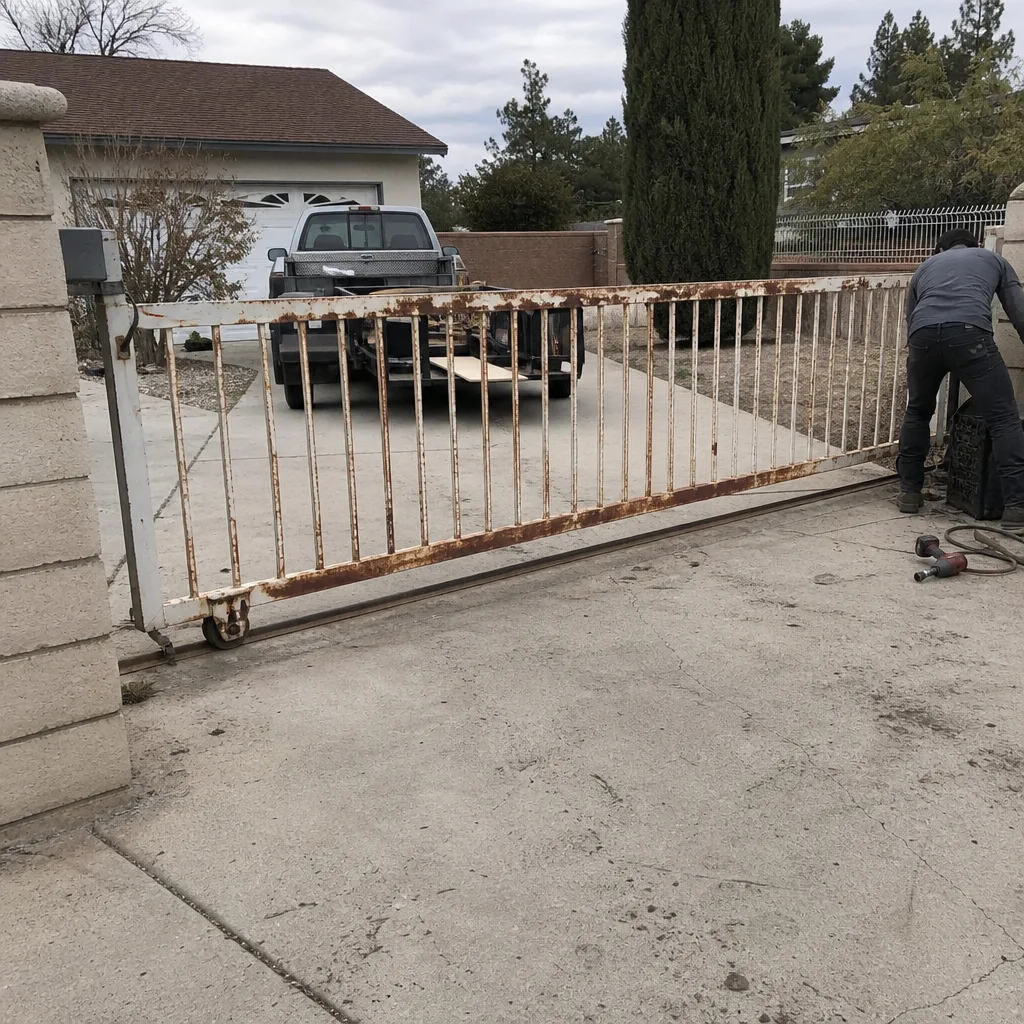 Before
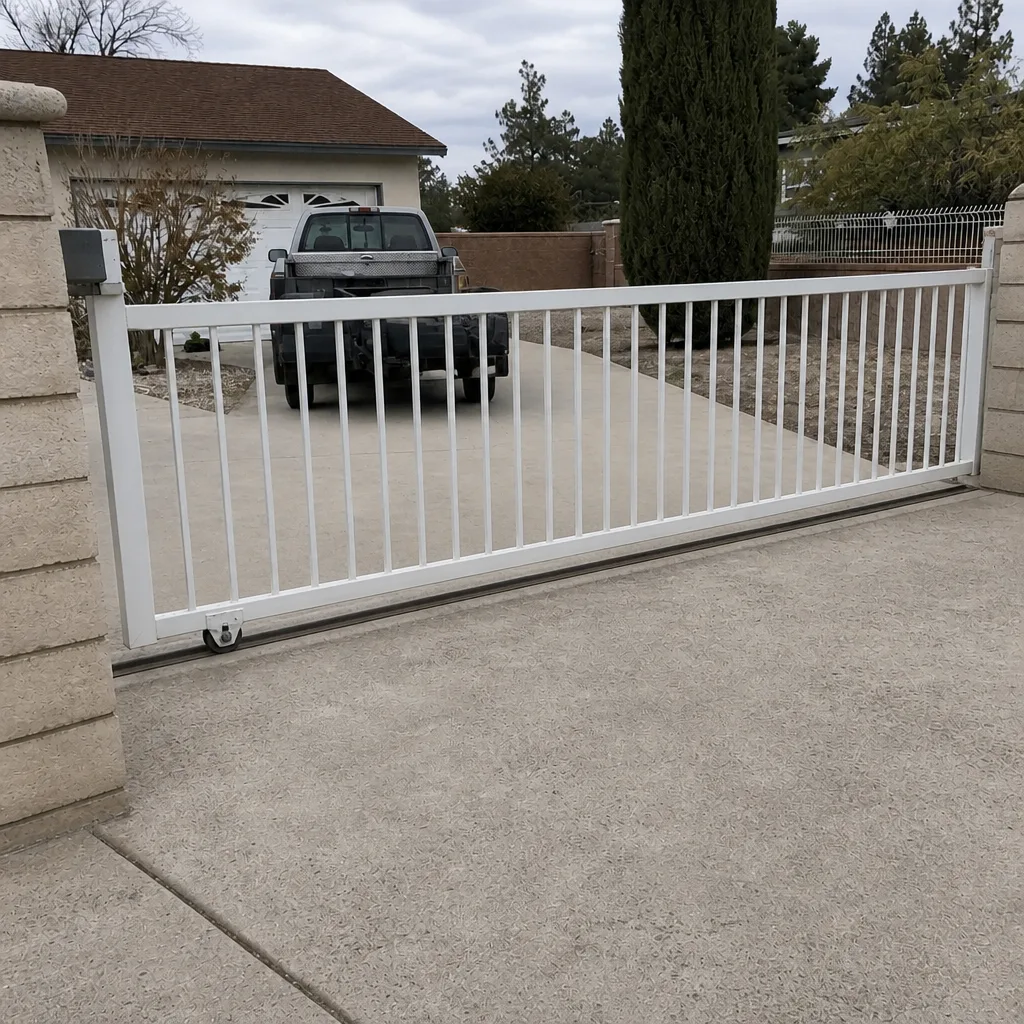 After
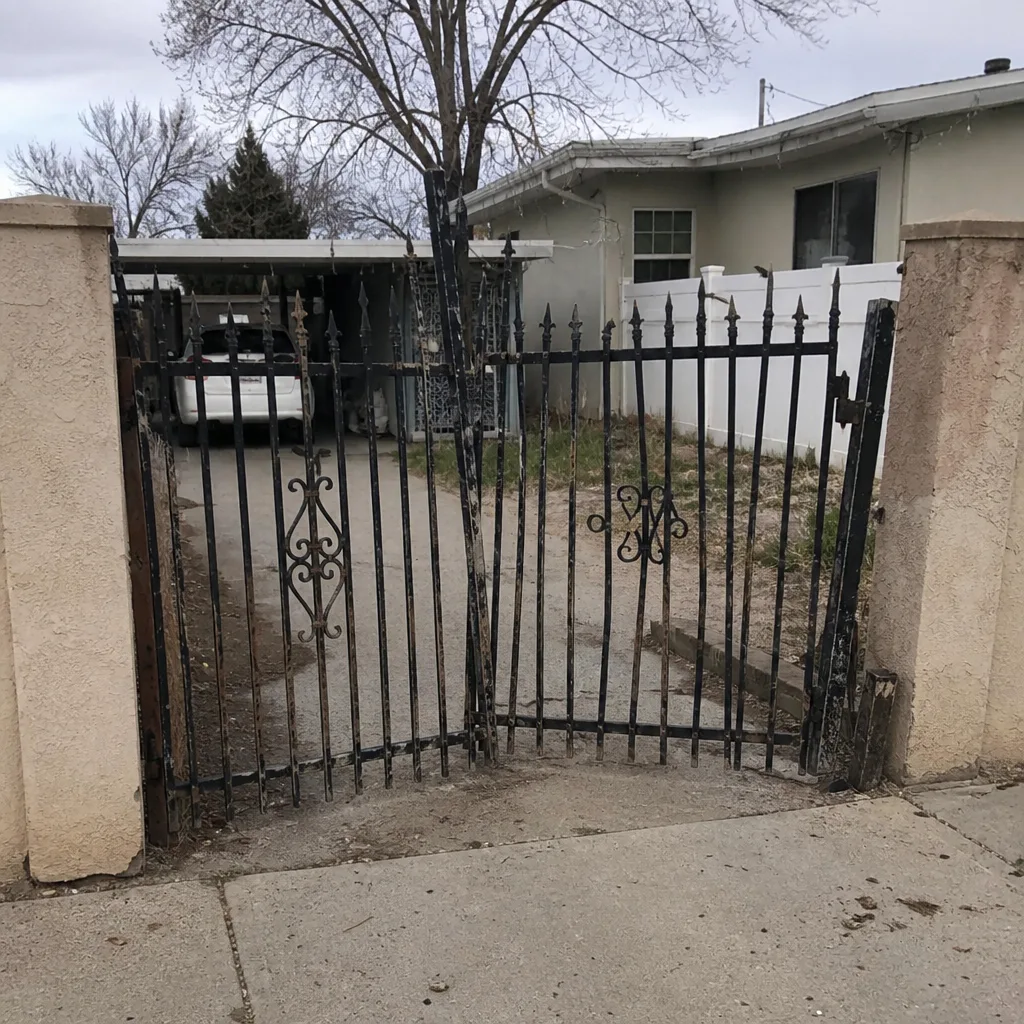 Before
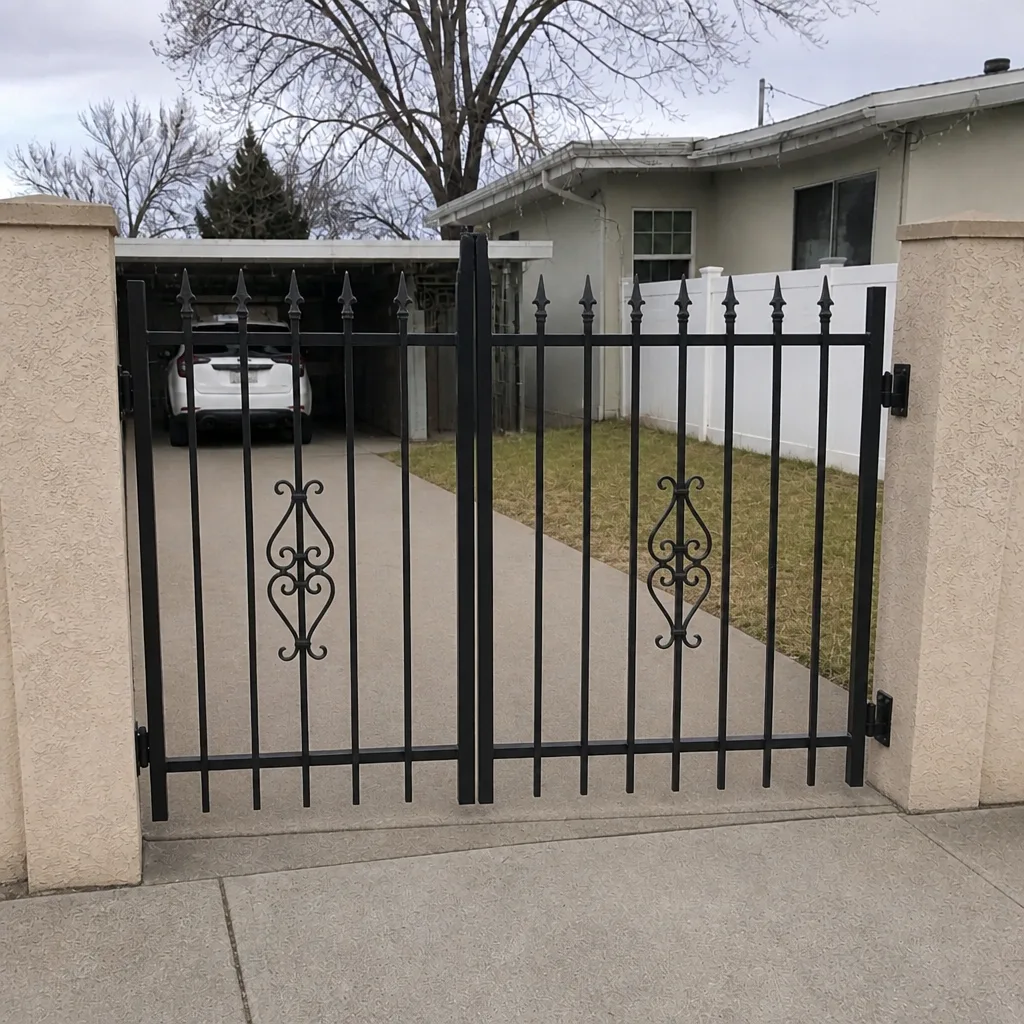 After
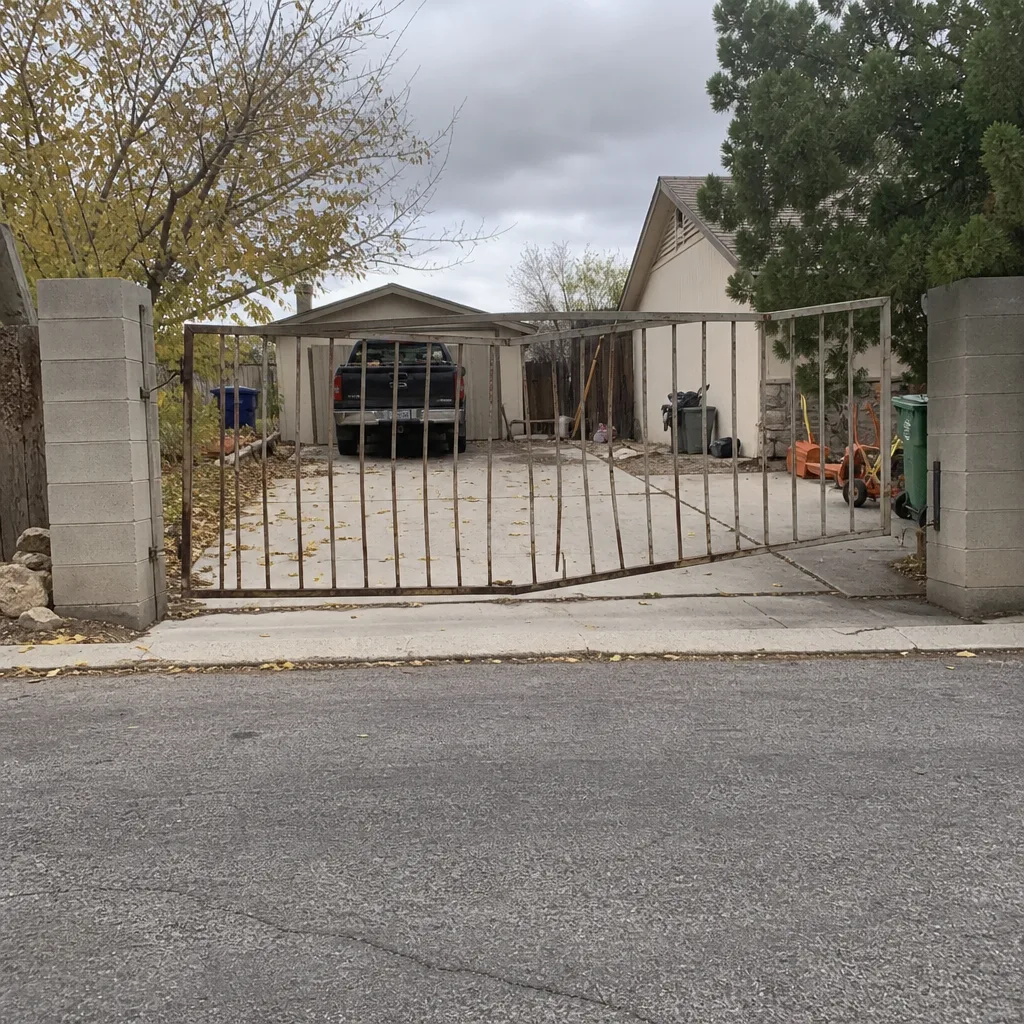 Before
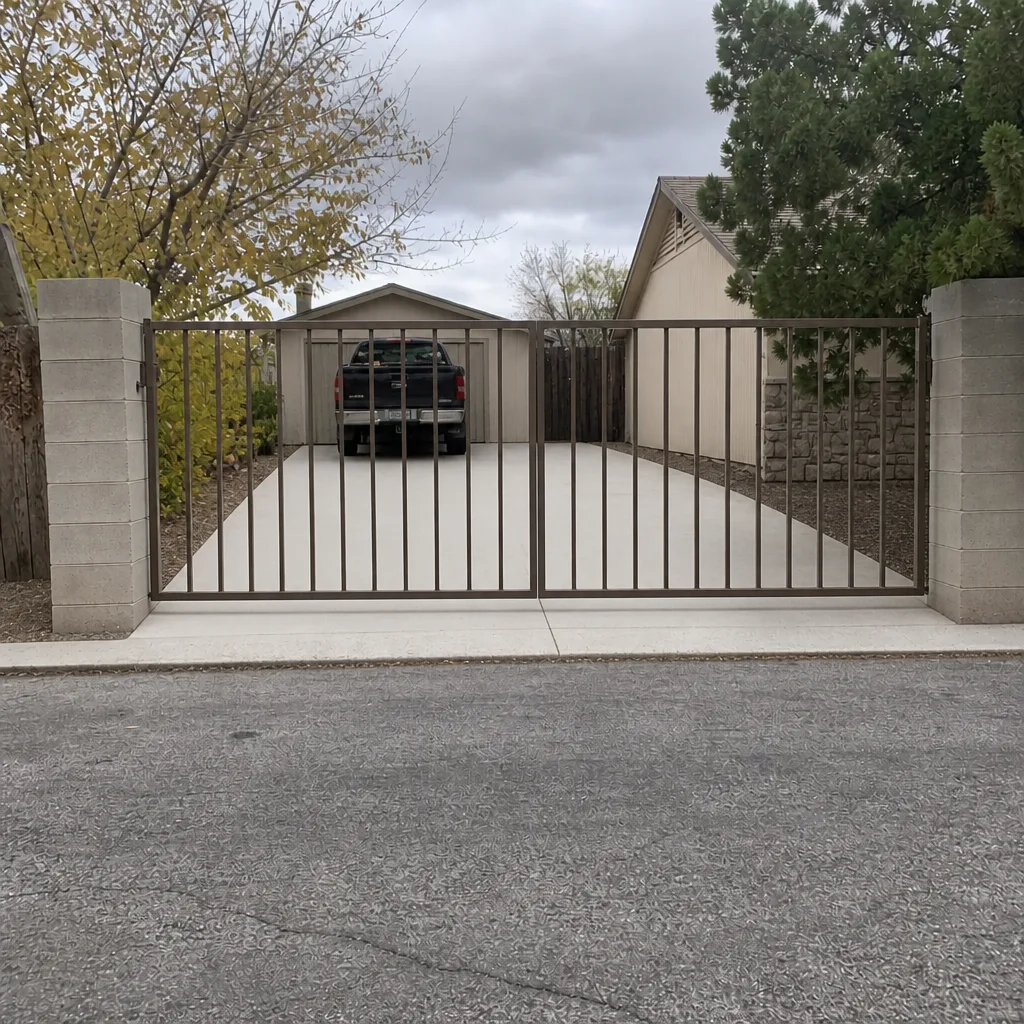 After
When to Call a Professional
Some gate problems are brand and part choices best handled by a specialist. Call a professional when an operator shorts or trips a breaker, when a heavy gate leaf or panel isn’t moving reliably, or when a slide gate jumps or comes off its track. Call when the operator’s control board is suspect, because the electrical side carries real risk – a trained technician should handle the wiring and power. Call when safety edges, access control, or an intercom stop working, since those protect people and vehicles. And call before you buy a replacement brand or operator, so the choice is matched to your gate’s weight, traffic, and parts availability. Gate Repair Spring Valley offers free estimates in Spring Valley – call (844) 420-8518.
Frequently Asked Questions
There’s no single best brand – the right choice depends on your gate’s weight, traffic, and parts availability locally. For most single-family driveways in Spring Valley, LiftMaster or Linear is a practical fit with strong local parts supply. For heavier multi-tenant and commercial entrances, FAAC or BFT hold up better. The key is choosing a brand your technician knows and can source parts for. Call (844) 420-8518 for an exact recommendation – estimates are free.
Desert heat raises the operator’s operating temperature well above the lab temperature its duty cycle was rated at. In Spring Valley that means the motor and gearbox run hotter, lubricant thins, and thermal cutouts trip sooner, so a unit worked at its rated cycles per day will wear out faster. Rule of thumb: cut the rated cycles per day by 30-40% for a realistic figure. Call (844) 420-8518 if your operator keeps overheating – estimates are free.
LiftMaster and Linear tend to have the strongest local parts availability for residential and light commercial systems, and Viking is also well supported for residential swing and slide operators. FAAC and BFT lean toward commercial and multi-tenant systems; their parts sometimes move through distributor channels rather than sitting on a local shelf. Before committing to any brand, ask where the control board comes from. Call (844) 420-8518 for advice – estimates are free.
Gate repair pricing is set per job by a written estimate after we look at the gate, because the cost depends on the brand, the failed part, and its local availability. A control board replacement, a motor or gearbox issue, an off-track slide gate, and an access-control fault all price differently. The estimate is free and the price is agreed before any work starts. Call (844) 420-8518 for an exact quote – estimates are free.
Yes, usually. A multi-tenant or commercial entrance in Spring Valley cycles dozens of times an hour at peak, which a light residential operator isn’t built for. Commercial brands like FAAC or BFT are matched to that workload, while a single-family home is well served by LiftMaster or Linear. Buying a residential brand for heavy traffic is the most common and costly mistake property managers make. Call (844) 420-8518 to match a brand to your gate – estimates are free.
Yes. Brands with proprietary control boards and thin local parts supply cost more and take longer to fix when something fails, while brands with broad local parts and a large installed base are diagnosed and repaired faster. Duty cycle headroom and hardware materials add to that. A slightly pricier operator from a well-supported brand often costs less over its life than a bargain unit nobody stocks. Call (844) 420-8518 for guidance – estimates are free.
The Bottom Line
Choosing a gate repair brand in Spring Valley is about three things: heat derating, local parts, and hardware that survives the desert. Cut any operator’s rated duty cycle by 30-40% for our summers. Favor brands with strong parts supply in the Las Vegas metro, and match the brand to your gate’s weight and traffic. Powder-coated aluminum and stainless hardware outlast thin painted steel in UV and alkaline caliche soil. And pick a brand a technician already knows, because familiarity is what makes repairs fast. We work on all of these brands every day, and we’re happy to help you choose right the first time. If you’re in the metro and want to understand the local service picture, a look at Spring Valley is a good place to start. Call (844) 420-8518. We answer 24/7. Fast dispatch from 7am to 7pm, Sunday through Friday.
Written by the team at Gate Repair Spring Valley.