
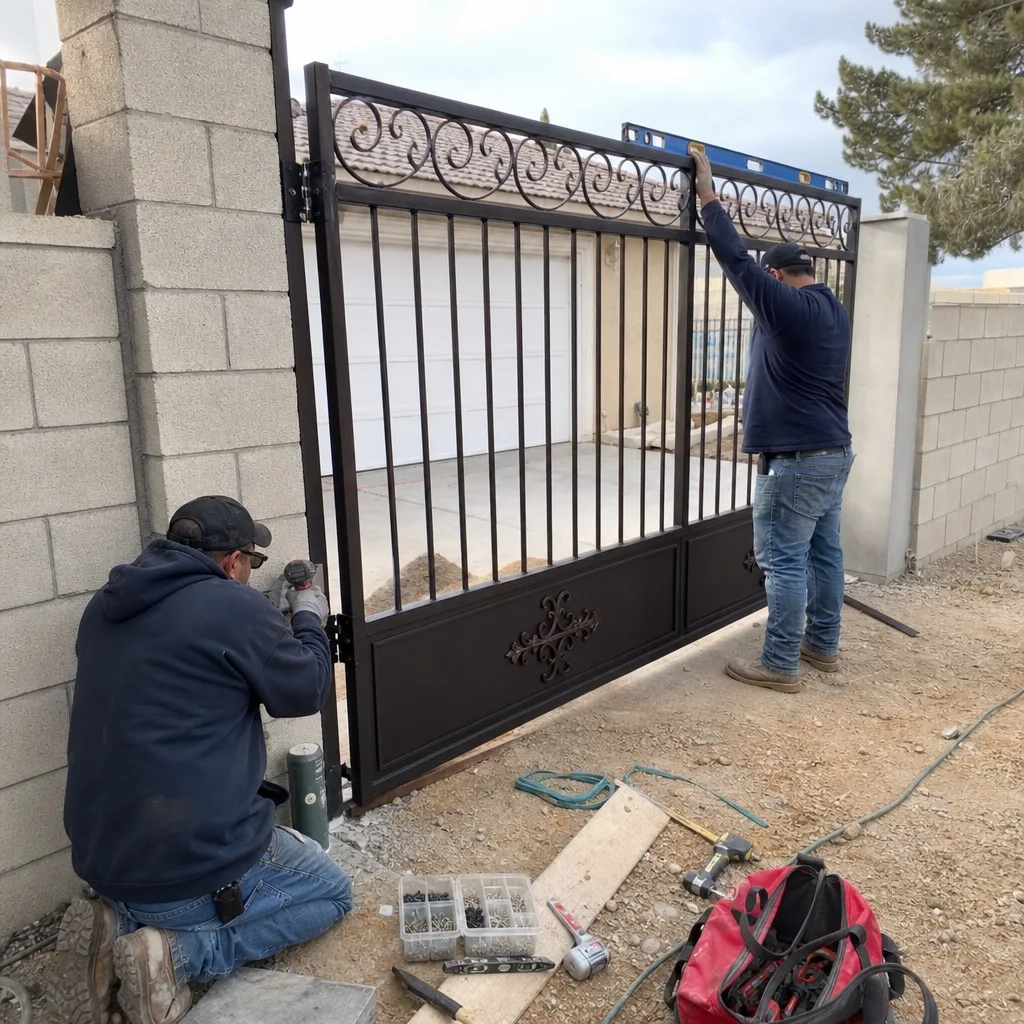
Last updated November 15, 2026
 Wrought iron
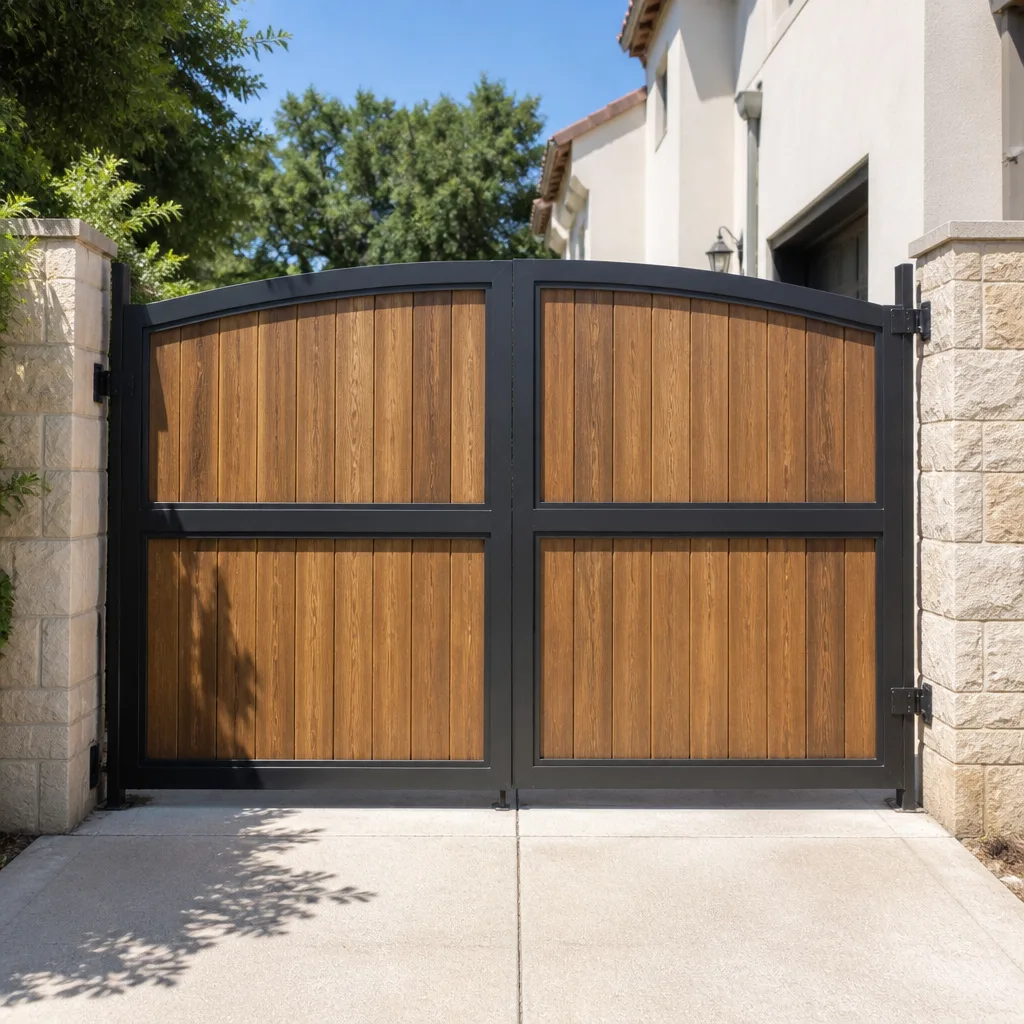 Wood & steel frame
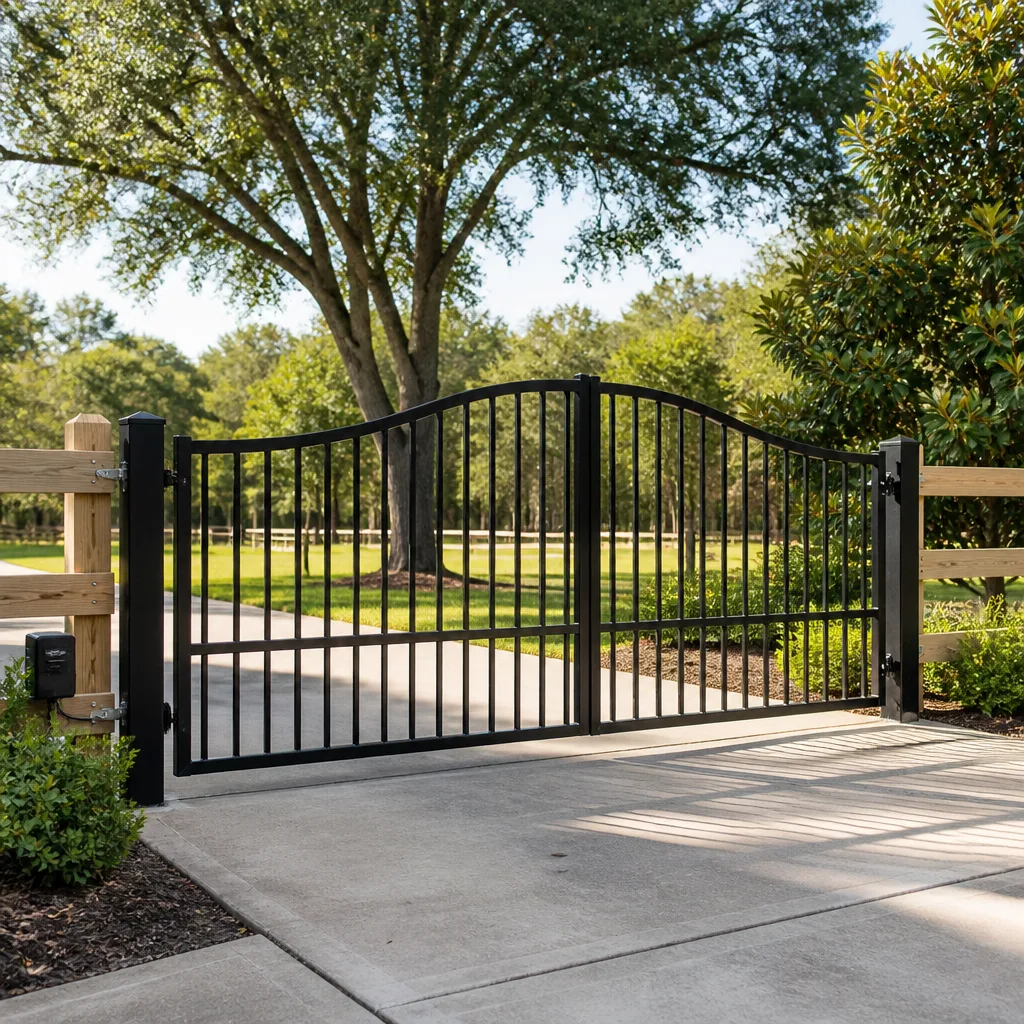 Farm & ranch
 Sliding driveway gates
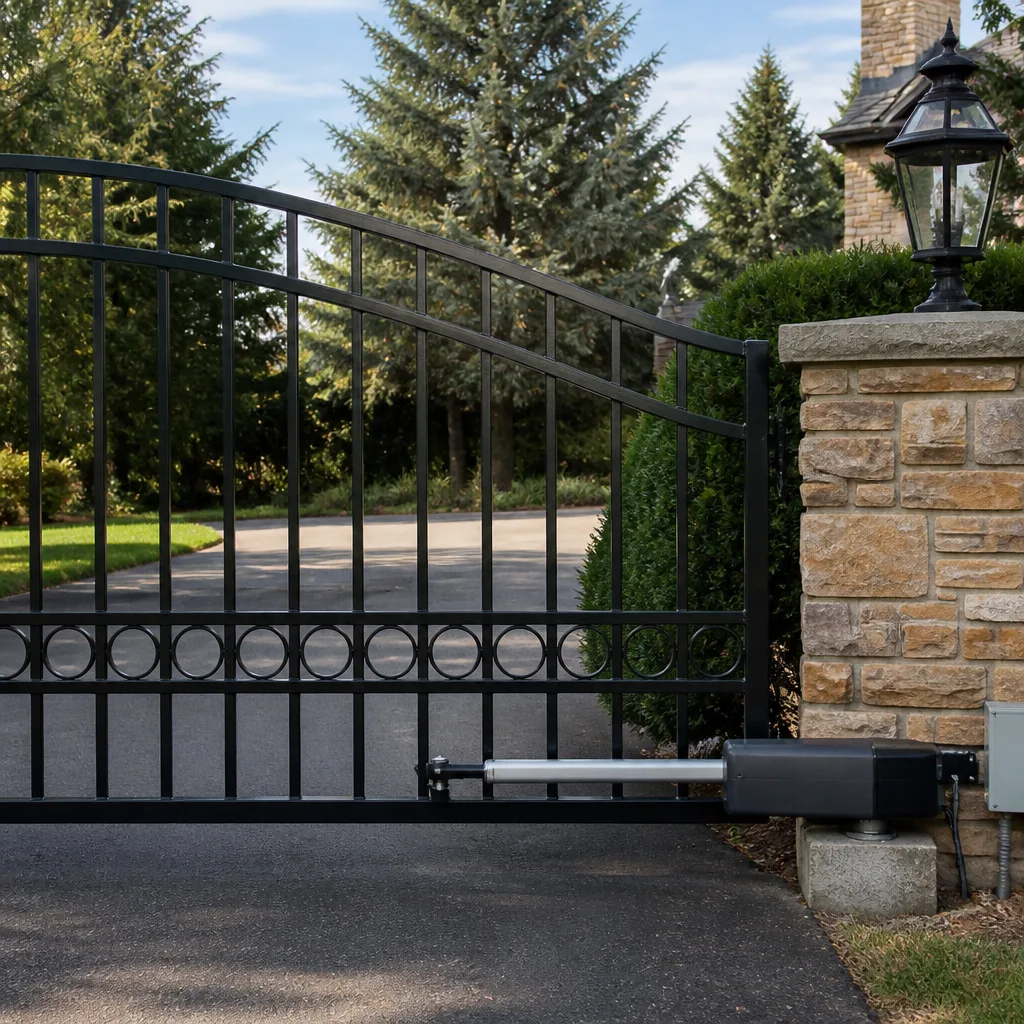 LiftMaster operators
Free on-site gate assessment - hinges, posts, and your LiftMaster or Nice gate operator checked before anything is quoted
The assessment is free and the quote is the invoice.
Get your free estimateGate Repair Emergency Preparedness Guide for Spring Valley Homes
Most homeowners discover their gate’s manual release for the first time during a power outage at 11pm, which is exactly the wrong time to learn it requires a specific key that came with the original operator and is now buried in a drawer somewhere. The second most common discovery is that the release lever won’t budge because nobody has moved it in years. Gate failures aren’t rare in Spring Valley; what’s rare is a household that already knows what to do when one happens. This guide is about building that knowledge before you need it: how to document your release procedure, what to do in the first thirty minutes of a stuck gate, how to secure a gate that has swung open, and what to have ready when you call. By the end, you’ll have a plan that works whether it’s a Tuesday morning or the middle of a holiday weekend.
Quick Answer
Emergency gate preparedness in Spring Valley comes down to four steps: find and test your operator’s manual release, write down what you learned, keep a small kit of basic tools on hand, and know the information a technician will ask for when you call. A gate stuck closed traps vehicles and blocks access; a gate stuck open leaves the property exposed. Both are manageable in the first thirty minutes if you’ve prepared in advance.
Styles & brands we work with
- Wrought iron
- Wood & steel frame
- Farm & ranch
- Sliding driveway gates
- LiftMaster operators
Table of Contents
- Why Gate Emergencies Hit Harder in Spring Valley
- How Do You Find and Test Your Gate’s Manual Release?
- What Should You Do in the First 30 Minutes of a Stuck-Closed Gate?
- How Do You Temporarily Secure a Gate That Failed Open?
- What Information Should You Have Ready Before Calling for Repair?
- How Do You Build a Gate Emergency Kit Under $40?
- How Do You Document Your Gate System for Future Emergencies?
- How Do Seasonal Conditions in Spring Valley Affect Gate Reliability?
Why Gate Emergencies Hit Harder in Spring Valley
A gate isn’t a garage door. When a garage door fails, you park in the driveway and go inside. When a gate fails, the whole vehicle access point goes with it. For a single-family home, that means you can’t get your car out. For an HOA or a multi-unit property, it means the entire community is affected at once, and the person who gets the call at 10pm is usually the property manager, not the homeowner.
Spring Valley adds a few wrinkles. The valley sits at the eastern edge of the Mojave, which means summer heat that stresses motors, batteries, and control boards, plus monsoon-season wind and dust that push against gate panels and work their way into tracks and hinges. Driveway gates here deal with sun exposure for most of the year, and operators mounted in full sun run hotter than the same model installed in shade. We’ve seen more gate failures on the hottest afternoons of the year than any other time, and more after the first strong wind event of monsoon season than any other week.
Timing matters too. Gate failures don’t politely happen during business hours. They happen when the battery in a Ghost Controls operator finally gives up after a few cool nights, when a sliding gate jumps its track after a summer of expansion and contraction, or when a power surge from a utility event knocks out the control board on a DoorKing system. If you’ve prepared, these are inconveniences. If you haven’t, they become crises.
The good news: almost everything that turns a gate failure into a crisis is preventable with about an hour of preparation. That’s what the rest of this guide covers. If you’re already past the preparation stage and your gate is currently broken, the fastest path is to gate repair from a team that works on gates every day and knows what to look for.
How Do You Find and Test Your Gate’s Manual Release?
Every automated gate has a manual release, a way to disengage the motor so you can push the gate open or closed by hand. Most homeowners have never used theirs. The right time to learn it is not during a power outage at night.
The release mechanism varies by brand. Here’s what to look for on the operators most common in Spring Valley residential and commercial installations:
- LiftMaster: Usually a keyed release on the operator housing. The key came with the original installation and is often on a small ring attached to a document pack or taped inside the control box cover.
- Ghost Controls: Most residential models use a manual release lever or pin near the operator arm. Some units have a lockable cover that needs to be opened first.
- Viking: Typically a pull-lever or keyed release on the operator body. Older units sometimes use a chain-hoist release for heavier swing gates.
- DoorKing: Commercial operators often use a keyed manual release on the housing, and some models have a separate emergency release for slide gates. If you manage a multi-unit property, you need to know which one yours uses.
- Elite: Swing and slide operators vary; most residential units use a keyed release, and some slide models use a release lever beneath a cover plate.
Once you’ve located it, test it. Do this during daylight, with the gate powered down, and with someone else present. The steps are the same for most systems:
- Put the operator in manual mode using the release mechanism.
- Push the gate by hand through its full travel, both directions. It should move smoothly with modest effort.
- Note anything that feels stiff, grinds, or catches. That’s the early warning sign of a hinge, roller, or track problem.
- Re-engage the release. Confirm the operator takes control again when you restore power.
- Write down the procedure, the key location, and anything you noticed.
If the release won’t budge, or the gate won’t move freely by hand once released, something is binding or the release mechanism itself is frozen. Don’t force it. That’s a call to a gate specialist, not a stronger pull. This is exactly the sort of diagnostic we handle regularly as part of electric gate repair in Spring Valley.
What Should You Do in the First 30 Minutes of a Stuck-Closed Gate?
A gate that fails closed is an access problem, not a security problem, but it still needs handling in the right order. The first thirty minutes should be about protecting people, vehicles, and the gate itself, not about troubleshooting the operator.
Work through this sequence:
- Confirm the gate is fully stopped. Make sure no part of the gate is still trying to move. If you hear the motor running or the gate is twitching, cut power at the breaker or the operator’s disconnect switch. Never put your hands or body between a gate and its post while the motor might engage.
- Check the obvious before assuming the worst. Look for a tripped breaker, a blown fuse on the control board, or a photo-eye that’s been blocked by a leaf, dust, or a knocked-over reflector. In Spring Valley, windblown debris on the safety sensors is one of the most common causes of a gate that won’t close, and it’s often fixable in under a minute.
- Release the operator manually using the procedure you’ve already documented. Push the gate open by hand and secure it in the open position.
- Get vehicles clear. Move any car that’s blocked so the driveway isn’t a bottleneck. If you live on a shared driveway, tell neighbors what’s happening before they discover it themselves.
- Note the symptoms for the call. What was the gate doing before it stopped? Did it jam partway, reverse immediately, or fail silently? Every detail shortens the diagnostic time.
What you should not do: don’t pry the gate with a lever, don’t try to jump the control board from a car battery, and don’t remove covers to “have a look” at wiring you don’t recognize. Gate operators carry line voltage, and a surprise is not the kind of surprise you want. When in doubt, cut power and call.
How Do You Temporarily Secure a Gate That Failed Open?
A gate that fails open is a different problem. The gate isn’t blocking you; it’s leaving the property exposed. Whether that matters depends on the property, but for most Spring Valley homeowners it does, and the fix needs to hold until a technician arrives.
The safest temporary measures, in order of preference:
- Manual close and lock. If the gate has a manual latch or a drop rod, use it. Once the operator is disengaged, most swing gates can be pushed closed and latched by hand. Slide gates often have a lockable catch.
- Chain and padlock. If your gate has posts or framework you can wrap a chain around, a short chain and padlock will hold a swing gate closed. Keep the chain loose enough that it can be removed quickly in an emergency.
- Vehicle block. If you can’t close the gate, park a vehicle across the opening or just inside it. It’s not elegant, but it’s effective overnight.
- Temporary brace. For a slide gate that’s rolled off its track or is drifting, a wedge under the leading edge will often hold it in place until you can get it looked at.
What not to do: don’t tie the gate shut with rope if there’s any chance someone could mistake it for secure, don’t block the gate in a way that prevents emergency vehicles from entering if the property is an HOA or commercial site, and don’t leave a gate propped open overnight if the property depends on it for perimeter security. If the gate is on a shared access drive, tell your neighbors what’s going on so nobody assumes the property has been left unattended. If you’re a property manager dealing with a gate that failed open on a commercial entry, this is exactly the scenario that calls for a fast on-site diagnostic from a team that works on gate repair in Spring Valley regularly.
What Information Should You Have Ready Before Calling for Repair?
The single biggest factor in how quickly a gate gets fixed is how quickly the technician can identify the problem. Having the right information ready when you call cuts diagnostic time significantly and gets you closer to a written price sooner.
Before you dial, gather this:
- Brand and model of the operator. The nameplate on the motor housing or control box will tell you. LiftMaster, FAAC, BFT, Linear, Viking, Ghost Controls, DoorKing, Elite, and Mighty Mule are the brands we work on most often in Spring Valley, but any brand name is useful.
- Gate type. Swing or slide, single or double leaf, approximate width and weight if you know it.
- Power source. Is the operator wired to the home’s electrical panel, or is it solar-assisted or battery-powered? If you’re not sure, say so.
- Recent symptoms. When did the gate first act up? Was it intermittent for a few days before failing completely? Did anything change, like a power outage, a storm, or a new remote in the household?
- Safety features. Photo-eyes, safety edges, loop detectors, or access control like a keypad or intercom. Know what your system has.
- Access and parking. Where a technician can park, whether there’s a code or key needed for entry, and whether pets or vehicles need to be moved.
You don’t need perfect answers. “I don’t know the model, but the sticker says DoorKing and it’s a slide gate with a keypad entry” is enough for us to come prepared with the right diagnostic equipment. If your gate is currently in an unsafe state, say that first when you call. Call (844) 420-8518. We answer 24/7. Fast dispatch from 7am to 7pm, Sunday through Friday.
How Do You Build a Gate Emergency Kit Under $40?
Ninety percent of gate emergencies don’t need a full service call to stabilize; they need ten minutes of attention with the right basic items. You can put together a simple gate kit for well under $40, and it will handle most roadside-style emergencies without waiting for a technician.
Here’s what belongs in it:
- A small flashlight with fresh batteries. Operators and control boxes are usually in dark corners, and you’ll want both hands free.
- A short chain and padlock, about four feet is enough for most swing gates. This secures a gate that has failed open until you can get it fixed properly.
- A multi-tool or small screwdriver set for opening access covers, adjusting hinges, and tightening the occasional loose fastener.
- A pair of work gloves for moving a heavy gate by hand or clearing a jammed track.
- A labeled copy of your manual release procedure, plus the release key, in a small zip bag or on a hook near the operator.
That kit handles the most common roadside emergencies: a gate that failed open and needs to be chained, a control cover that needs to come off so you can look at the LEDs, or a manual release that needs a flashlight to see the keyway. It won’t fix a broken motor or a bad control board, but it will stabilize the situation long enough for a proper repair. Keep it wherever you keep your home tool kit, and check the flashlight batteries once a year.
One item worth adding if you have room: a spare remote battery, or the model number of your remote written on a card. Battery failures are the most common cause of “the remote doesn’t work,” and it’s a five-minute fix once you know what battery to buy.
How Do You Document Your Gate System for Future Emergencies?
A one-page document you create today will save you hours of guesswork later. Whether you live in a single-family home, manage an HOA, or oversee a commercial property, having the details of your gate system in a known, accessible place is the single highest-value prep action you can take.
Create a simple page with these sections:
- Operator details: Brand, model, serial number, and install date if you have it. Photograph the nameplate.
- Release procedure: Step-by-step notes from your own test, plus the location of the release key. Photograph the release mechanism.
- Safety features: What photo-eyes, loops, or sensing edges the system has, and their location.
- Power and controls: Where the breaker is, and every remote, keypad, and intercom the system uses.
- Recent repairs: What was done, when, and by whom, if you’ve had work done before.
Keep one copy near the operator, one in the house, and one digital copy in your phone or shared drive. For HOA and multi-unit properties, share it with whoever is on call. The person who gets the call at 10pm shouldn’t have to search for the manual release key. If you’re not sure how to identify your operator, that’s fine to sort out on the phone; we work with nine major brands across residential and commercial gates, so the chances are we already know your system by name. Our technicians have up to 11 years of experience, and we spend all of it on gates, not garage doors or fence work.
How Do Seasonal Conditions in Spring Valley Affect Gate Reliability?
Spring Valley sits at the eastern edge of the Mojave, close enough to the mountains on the west side that wind events are common, and hot enough through the summer that gate operators get worked hard. The conditions that make a gate fail aren’t random; they follow a seasonal rhythm, and knowing it helps you get ahead of problems instead of reacting to them.
Summer heat. Long, high-sun days are hard on operators and control boards. Batteries in solar-assisted and battery-backup systems lose capacity faster in the heat, and motor duty cycles get stressed. If your gate is running more often than usual (a busy HOA entry, a commercial driveway), summer is when hinges, rollers, and torque limits deserve a look.
Monsoon season. Wind and dust are the main issue, not rain. Dust gets into tracks and hinges, and wind events can push a badly adjusted swing gate against its stops hard enough to bend hardware or knock photo-eyes out of alignment. After the first big wind of the season is the right time to walk the gate and check sensor alignment, hinge play, and any loose fasteners.
Winter cold. Spring Valley doesn’t get the hard freezes of higher elevations, but cold mornings still stiffen hinges and can expose a battery that was already on its way out. If your gate is slower on cold mornings, don’t wait for it to stop entirely; that’s a symptom worth a look.
A simple post-wind, post-heat check takes five minutes and catches most seasonal problems before they become emergencies. Walk the gate through its full travel by hand, look at the photo-eyes, and run it a couple of times from the remote. If something feels off, or the gate is struggling against itself, get it looked at sooner rather than later.
Common Mistakes to Avoid
- Never testing the manual release until you need it. The most common failure mode in a gate emergency is discovering you don’t know where the release key is, or that the mechanism is frozen. Test it now, not at 11pm.
- Forcing a stuck gate or release mechanism. If something is binding, forcing it can bend hinges, strip the gearbox, or damage the operator arm. That turns a repair into a replacement.
- Trying to fix a control board or wiring on your own. Gate operators carry line voltage, and the components you’d be working on aren’t on the safe side of the danger line. Cut power and call.
- Ignoring a “slow” or “sticky” gate because it still works. Spring Valley heat and dust wear down hinges and tracks over months. A gate that hesitates is sending a signal; a gate that stops is sending an invoice.
- Assuming a stuck gate is a motor problem. In our experience, a large fraction of “my gate won’t close” calls are a misaligned photo-eye, a dead remote battery, or a tripped breaker, not a dead operator. Rule out the simple causes first.
- Blocking a community gate in a way that stops emergency access. For HOA and multi-unit properties, temporary securing should always leave a way in for fire and medical access.
- Calling without brand or symptom information. “It’s broken” makes every diagnostic slower. A model name and a description of what happened before it failed shaves time off the call and gets you to a written price faster.
See the difference
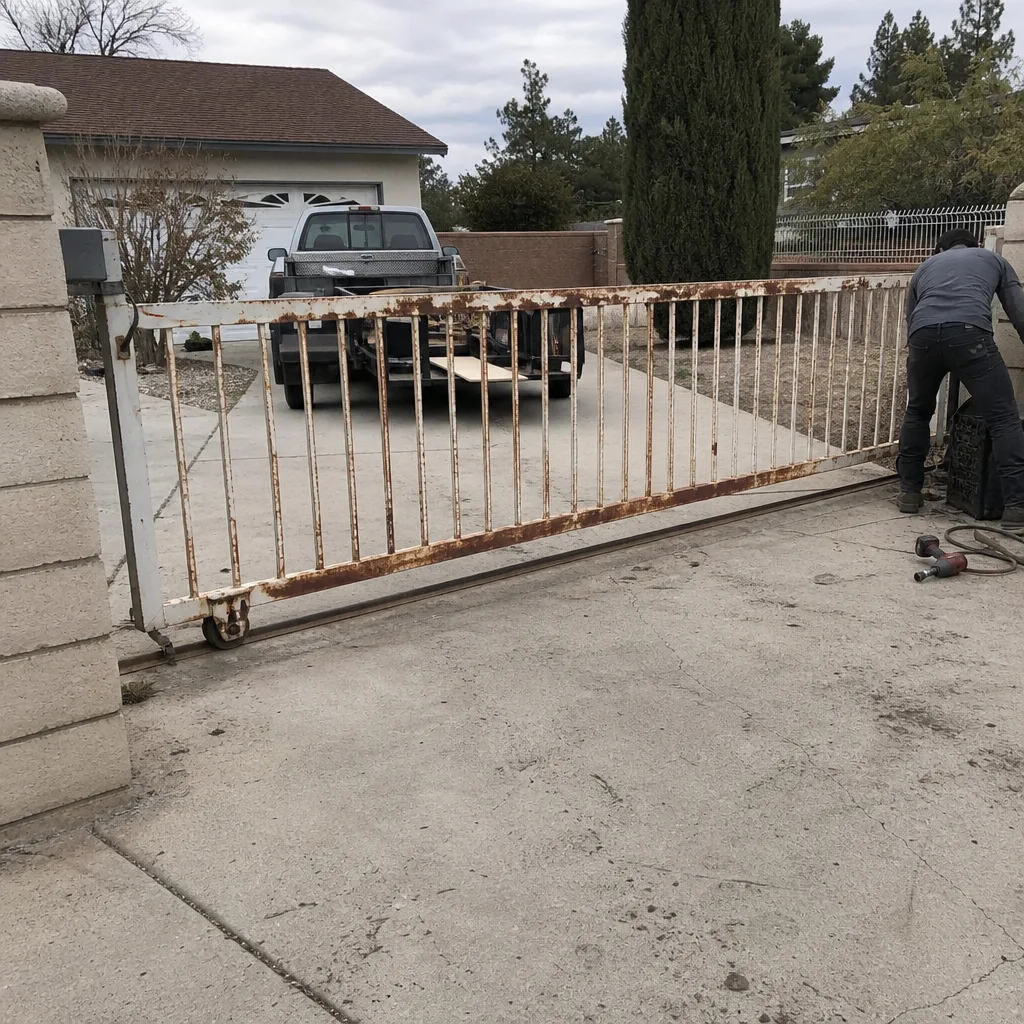 Before
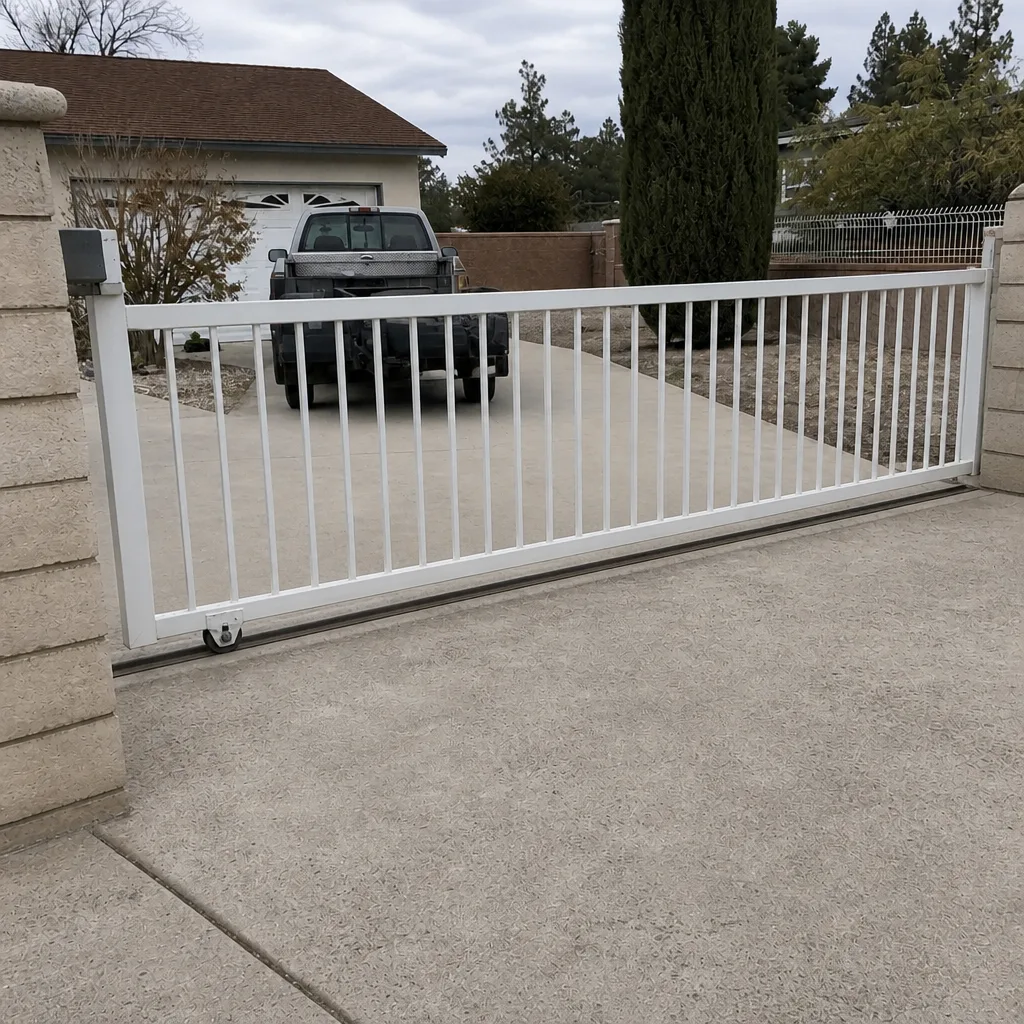 After
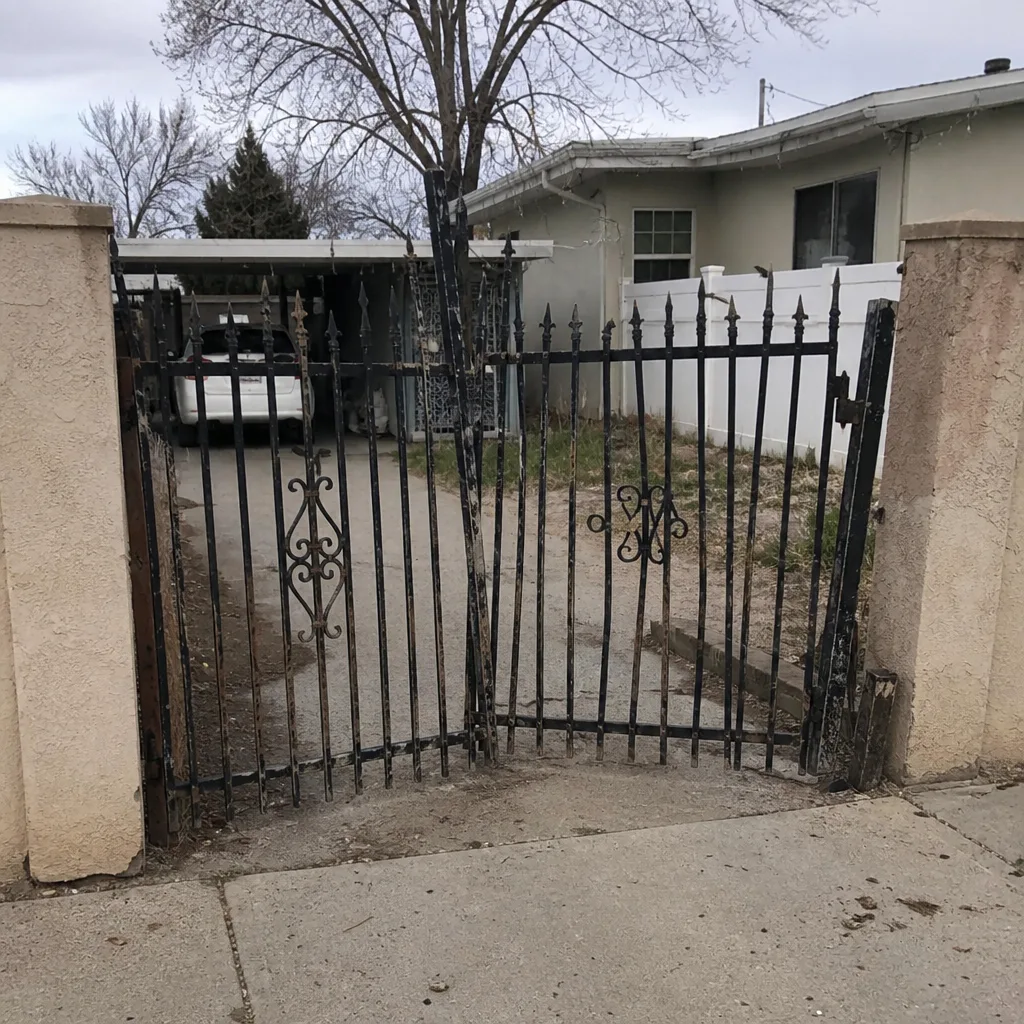 Before
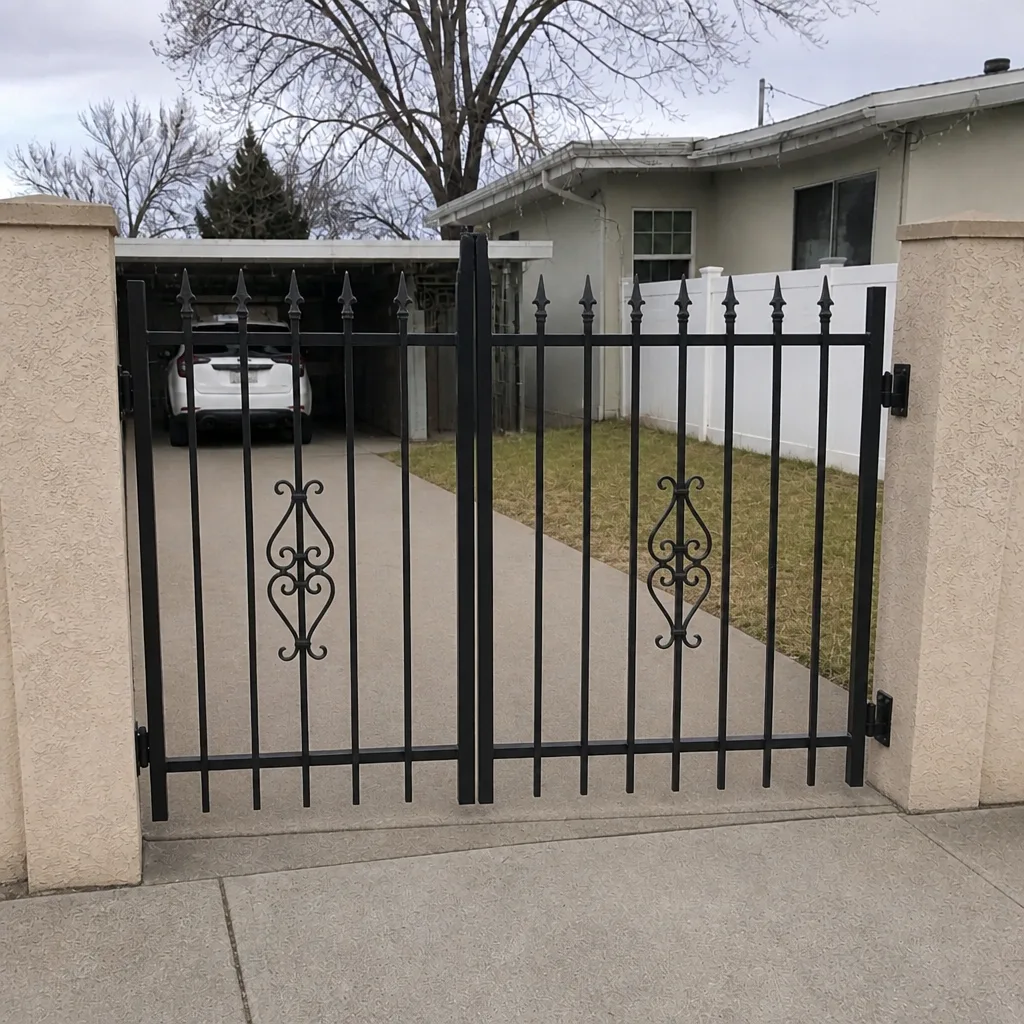 After
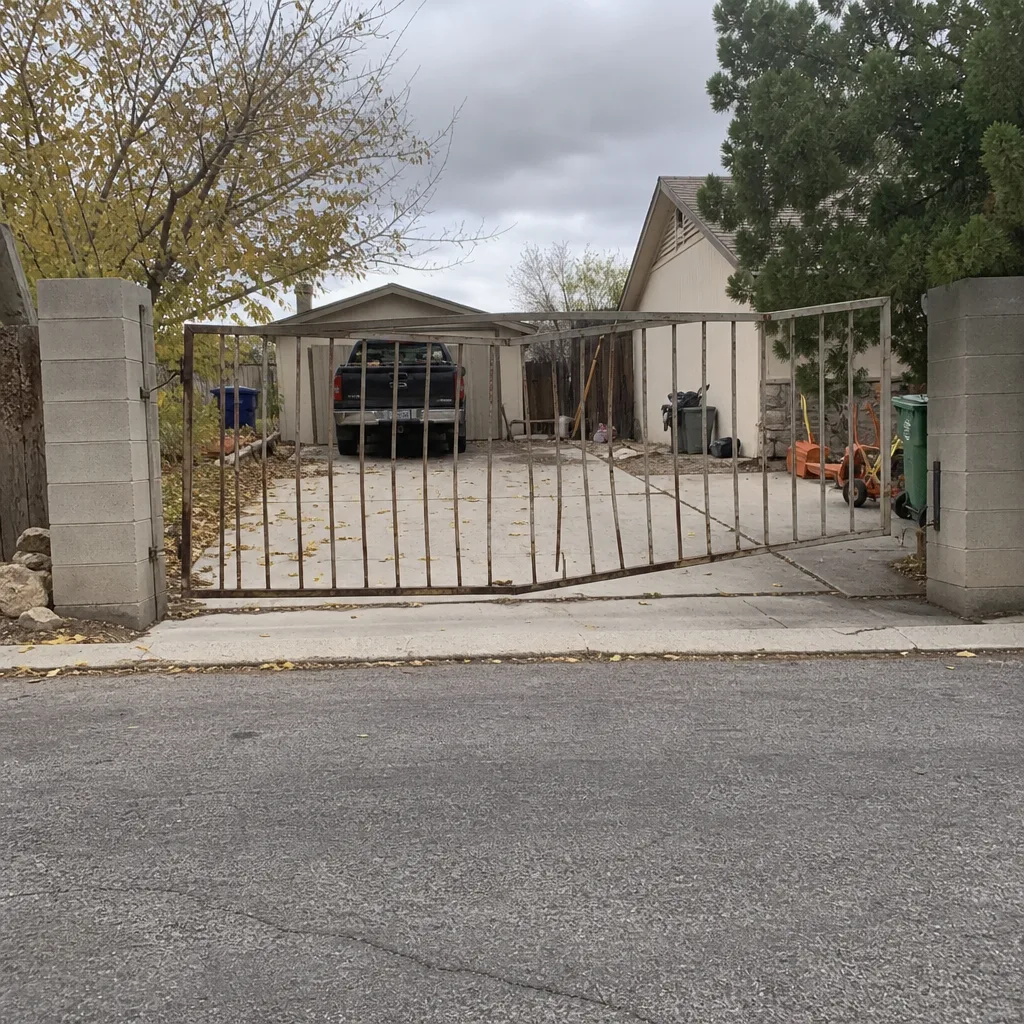 Before
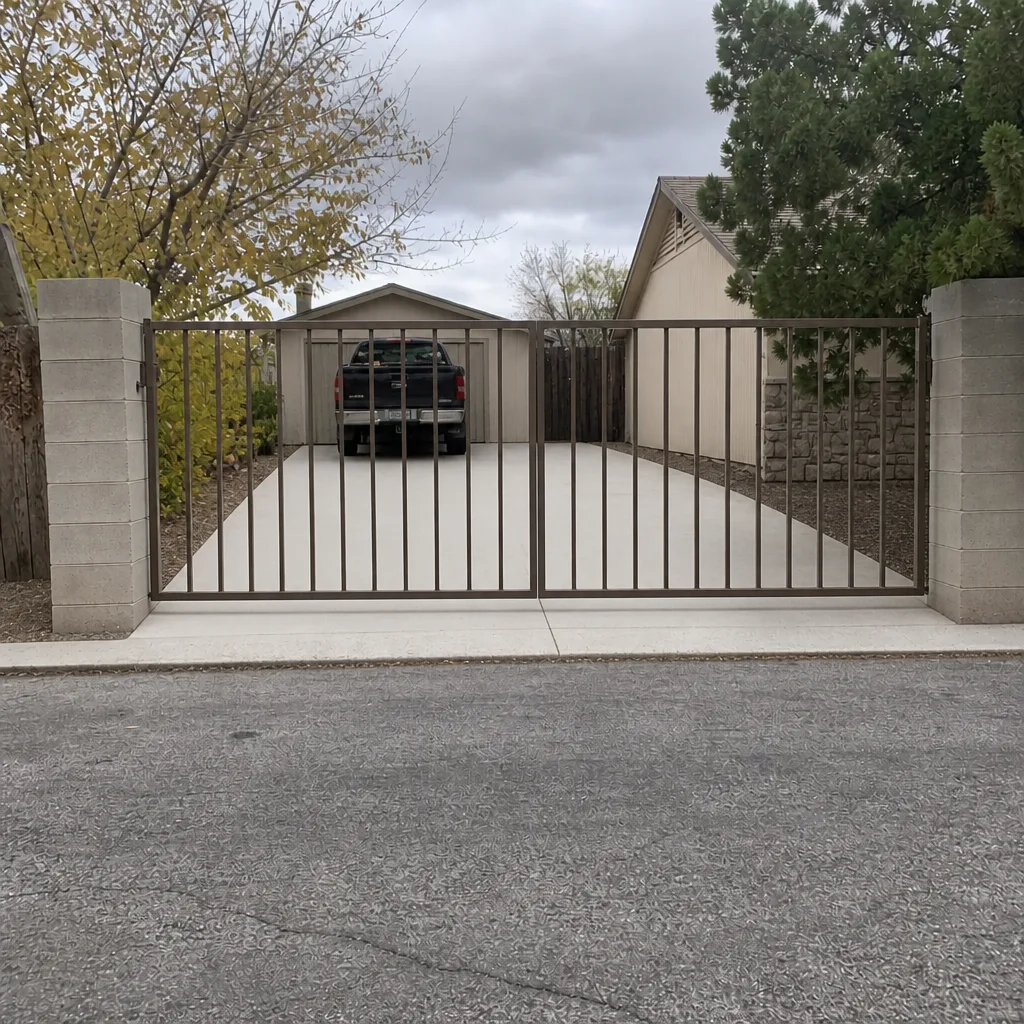 After
When to Call a Professional
Some gate problems are genuine emergencies that shouldn’t wait for you to try one more thing. Call us if the gate is stuck and won’t release manually, if you see or smell burning near the operator, if the gate has come off its track or is leaning dangerously, if the photo-eyes or safety edge are damaged, or if the operator is running but the gate isn’t moving. Also call if you’ve lost access for medical or emergency reasons; that’s the highest priority scenario. For anything else, the prepared homeowner can often stabilize the gate and book a proper diagnostic without a scramble. Gate Repair Spring Valley offers free estimates in Spring Valley, and we work on manual and motorized gates across residential, HOA, and commercial properties. Call (844) 420-8518.
Frequently Asked Questions
The manual release is usually a keyed lever, pin, or handle on the operator housing, and its exact location depends on the brand. On a LiftMaster or DoorKing unit it’s often a keyed cylinder on the side of the housing; on a Ghost Controls or Viking unit it’s usually a lever or pin near the arm. Look for a small keyed opening, a pull handle, or a cover plate, and photograph it once you find it.
Cut power to the operator if the motor is still trying to run, then look for simple causes before assuming a major problem. Check for a tripped breaker, a blocked photo-eye, or a dead remote battery; any of those can present as a stuck gate. If none of the simple causes apply, disengage the operator manually, open the gate by hand, and call.
In most cases, yes. We work on gates every day in Spring Valley and carry the diagnostic equipment for the major brands. Call (844) 420-8518. We answer 24/7. Fast dispatch from 7am to 7pm, Sunday through Friday. A call outside dispatch hours is booked into the next opening.
Repair pricing depends on what’s actually wrong, which is why we recommend a diagnostic first. Call (844) 420-8518 for an exact quote; estimates are free and the price is set per job by the written estimate, agreed before any work starts.
Chain and padlock it if the framework supports one, or park a vehicle across the opening as a temporary block. Don’t force the operator or try to jump the wiring. If it’s a shared or commercial entry, notify neighbors or tenants so nobody assumes the property is unattended, and book a repair for the next opening.
Afternoon failures in Spring Valley usually point to heat. Operators, batteries, and control boards in full sun run hotter in the afternoon, and marginal components often fail only when warm. A gate that works fine first thing but hesitates or stops later in the day is a gate that needs a look before the failure becomes permanent.
The Bottom Line
Gate emergencies become crises when they catch you unprepared. The fix is simple: find and test the manual release, document your system, keep a small kit with a flashlight, chain, and lock, and know the information a technician will ask for. Do that for the gate at your Spring Valley property and you’ll turn most failures into inconveniences instead of emergencies. Our technicians have up to 11 years of experience, we focus only on gates, and we work on the brands you actually have. Call (844) 420-8518 for a free estimate on Spring Valley gate repair, and get prepared before you need to be.
Written by the team at Gate Repair Spring Valley.