
Last updated November 15, 2026
 Wrought iron
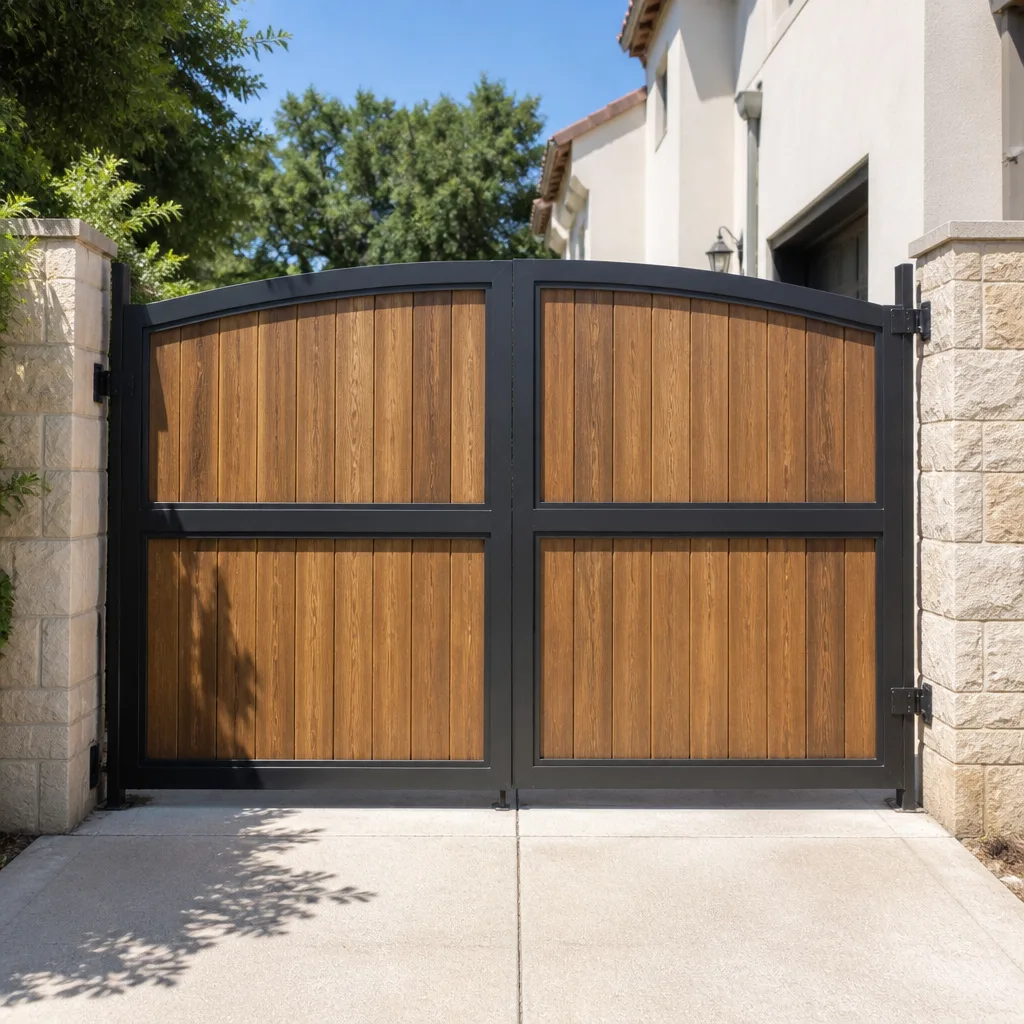 Wood & steel frame
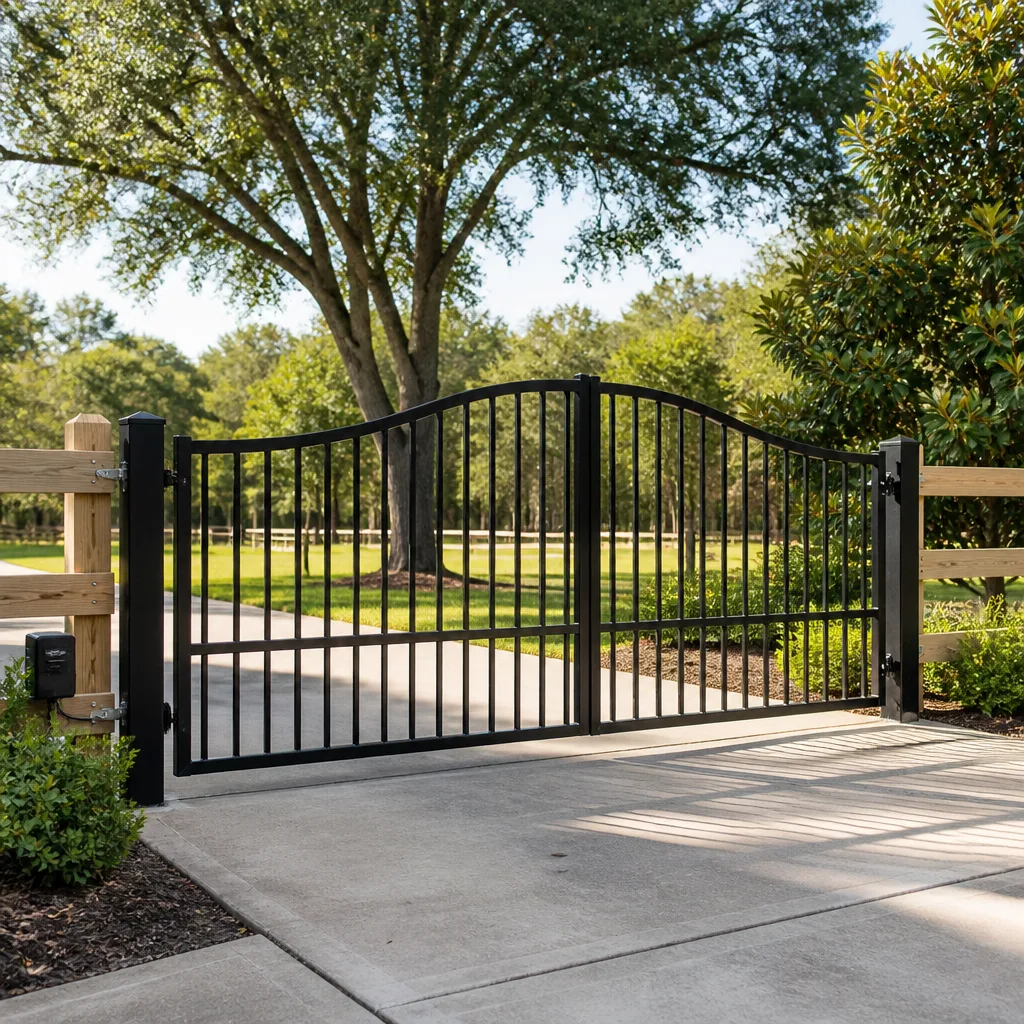 Farm & ranch
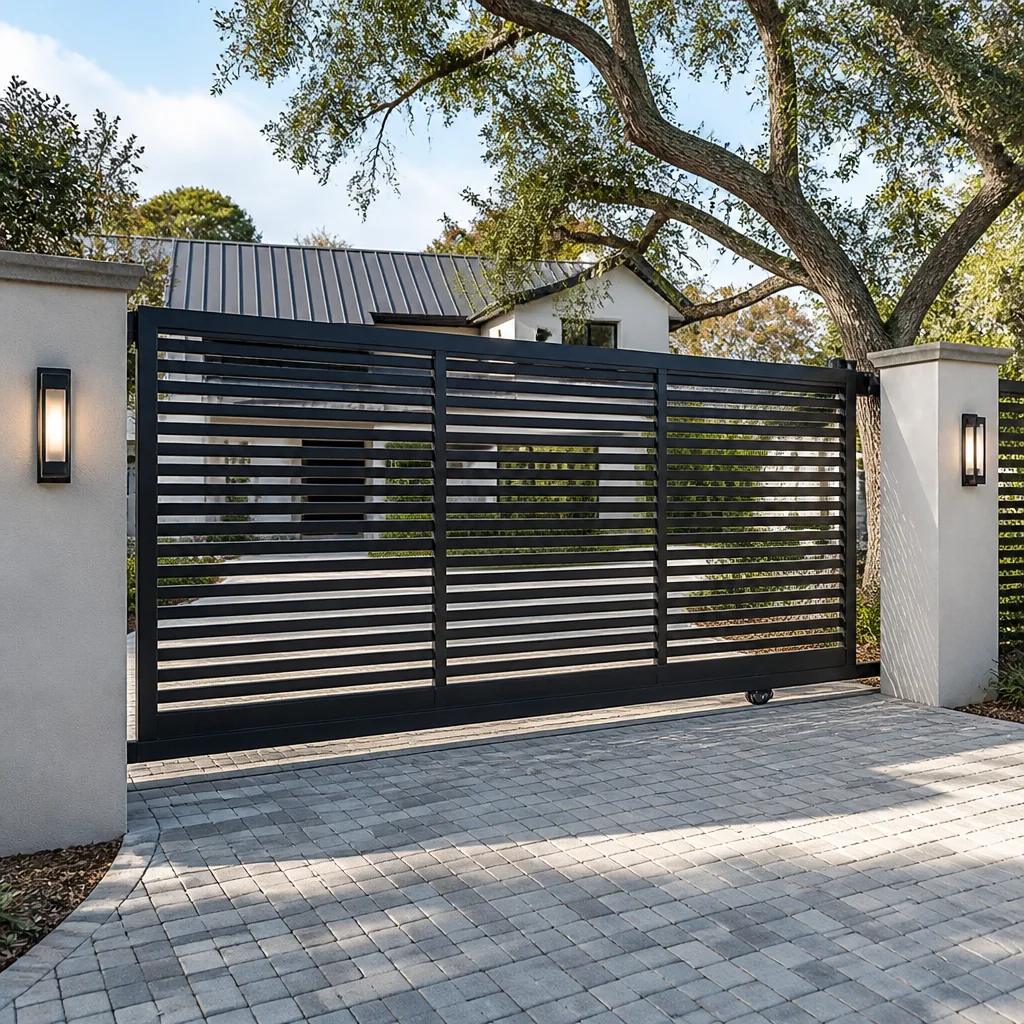 Sliding driveway gates
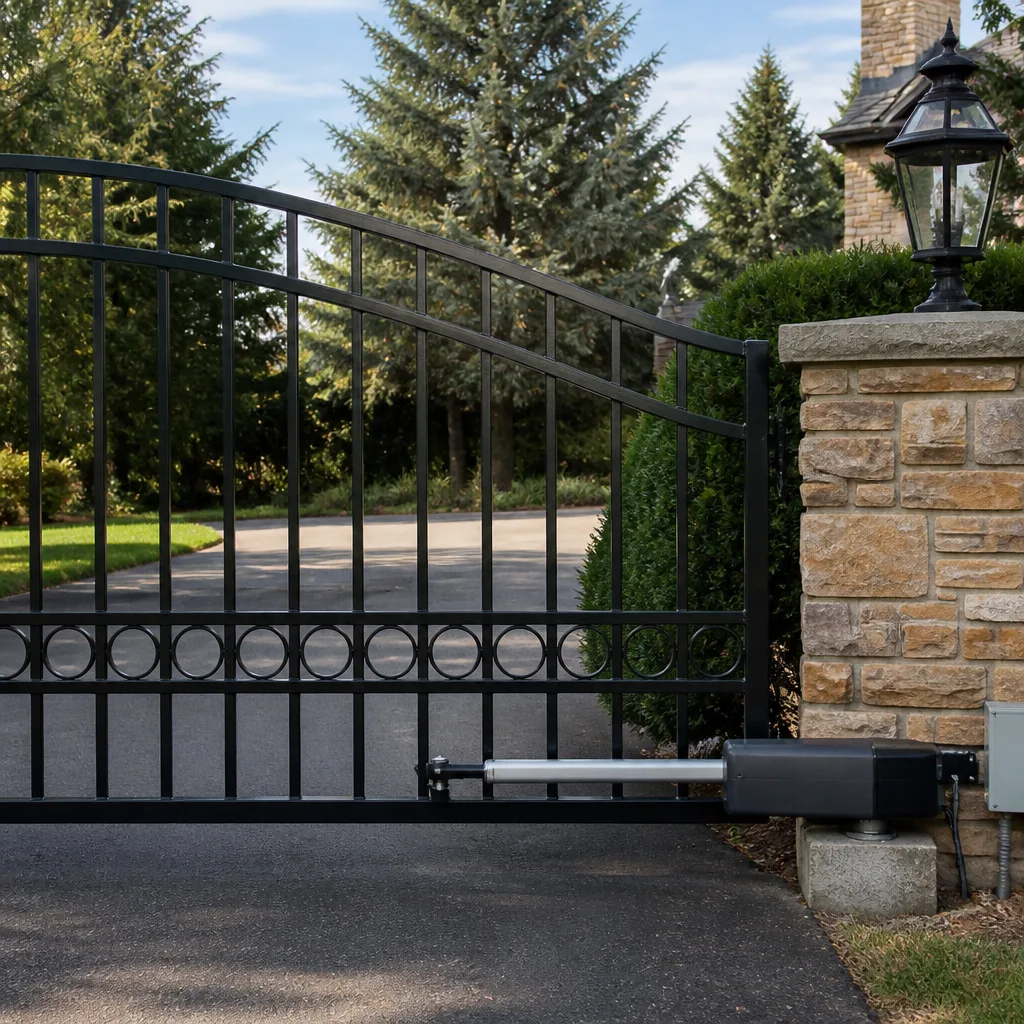 LiftMaster operators
Free on-site gate assessment - hinges, posts, and your LiftMaster or Nice gate operator checked before anything is quoted
The assessment is free and the quote is the invoice.
Get your free estimateGate Repair Warning Signs: A Spring Valley Homeowner’s Reference Guide
A gate that hesitates for a second before it opens isn’t being slow. It’s telling you the operator is working near its torque limit, which means something in the mechanical chain is resisting it and the motor is pushing harder to compensate. That’s a 60-day warning, not a quirk. Most gates don’t fail out of nowhere – they wear out loud, and the clues show up in the sounds, the movement, and the alignment weeks before anything actually stops working. This guide teaches you to read those signals the way a gate specialist does, so you catch a small adjustment before it turns into a full breakdown. We’ll cover what each sound and stutter points to, how to tell cosmetic wear from real structural damage, and how to log what you see so a technician in Spring Valley can diagnose faster.
Quick Answer
Gate repair warning signs in Spring Valley include grinding or clicking from the operator, a gate that hesitates, stops partway, or reverses on its own, visible sagging or misalignment, hinges that squeal or bind, and posts that have shifted in the ground. These are early signals that the motor, the hardware, or the gate frame is under stress. Caught early, most are a low-cost adjustment; ignored, they tend to turn into a motor or structural repair. If a gate hesitates, reverses, or sounds different than it did last month, it’s worth a look before it stops entirely.
Styles & brands we work with
- Wrought iron
- Wood & steel frame
- Farm & ranch
- Sliding driveway gates
- LiftMaster operators
Table of Contents
- How Gates Tell You They’re Failing
- The Auditory Warning Signs: What Each Sound Means
- Cosmetic Wear vs. Structural Degradation
- Why Automated Gates Stop, Stall, or Reverse Mid-Cycle
- Reading Misalignment: Post Movement, Hinge Wear, or Frame Warping
- How to Log Warning Signs So a Technician Diagnoses Faster
- When a Warning Sign Is a Safety Issue
- Getting a Gate Specialist Out to Spring Valley
How Gates Tell You They’re Failing
A gate is a machine with a handful of moving parts working against gravity, weather, and the weight of the gate itself. Every one of those parts gives some kind of notice before it quits. The problem is that most homeowners read the notice as a personality trait – the gate is “temperamental,” the motor is “getting old,” the gate “always does that in summer” – and by the time it actually fails, the small adjustment that would have fixed it has become a repair.
Here’s the way a specialist reads a gate. We look at three channels at once: what it sounds like, how it moves, and how it lines up. Each channel points to a different part of the system.
- Sound tells you about mechanical contact – metal on metal, binding hinges, worn rollers, a failing gearbox, a straining motor.
- Movement tells you about the operator, the power supply, and the control and safety circuit – torque, current draw, sensor readings, limit positions.
- Alignment tells you about the frame and the foundation – post movement, hinge wear, frame warping, track or guide problems on a sliding gate.
When two channels agree, you’re usually looking at a real developing problem. When all three point to the same component, it’s a strong signal that something is about to fail. That said, a single unusual sign is still worth noting. In Spring Valley, gates run in heat that stresses motors and dries out lubricants, and the swing from hot days to cool desert nights works on posts and frames. Those conditions accelerate a lot of the wear patterns on this list, which is one reason a Spring Valley gate owner should check the system on a schedule rather than waiting for a breakdown.
The Auditory Warning Signs: What Each Sound Means
Sound is the easiest warning sign to ignore and the most useful one to learn. Before you ever see a gate misbehave, it usually starts sounding different. Here’s how the common gate sounds map to the components behind them.
- Grinding or growling during travel. Metal-on-metal contact. On a sliding gate this usually points to worn rollers or a worn track; on a swing gate, to a binding hinge or a bushing that’s dried out. Left alone, grinding chews through the parts it’s rubbing against.
- A rhythmic click or tick, once per revolution. Something rotating is catching once per turn. Look first at the operator’s drive gear or sprocket, and at a chain that’s worn or has a stiff link.
- A high-pitched squeal or whine. Dry hinges, a dry chain, or a straining gearbox. A whine from the operator itself, rather than from the gate hardware, is worth paying attention to – it can mean the motor is working harder than it should.
- A deep hum that doesn’t move the gate. The motor is getting power but the gate isn’t traveling. That’s a mechanical disconnect somewhere in the chain, or a motor that’s reached the end of its life.
- A loud clunk at the start or end of travel. The gate is hitting a stop hard. That can mean a limit switch is set too far out or has drifted, or that the gate has settled and is striking the ground or a mechanical stop.
- A repeated click from the operator but no movement. On an automated system, this points toward the control board or a safety circuit that’s interrupting the command. On brands like LiftMaster and Linear, that click is often the board trying to start and immediately getting a stop signal.
One tip: record the sound on your phone next to the gate. It sounds odd, but pitch and rhythm are hard to describe and easy to capture, and a short recording helps a technician identify the component before they ever arrive. A gate that grinds louder on the outbound swing than the return is telling you something specific about the direction of the load.
Cosmetic Wear vs. Structural Degradation
Not every mark on a gate matters, and a lot of homeowners swing between two extremes – panicking over surface rust and ignoring a hinge that’s started to separate. Here’s how to tell the difference.
Cosmetic wear is surface-level. It affects appearance and, eventually, finish, but it doesn’t compromise how the gate carries its own weight.
- Surface rust or oxidized paint on a panel
- A faded finish or sun-chalked coating
- Minor scratches, dings, or scuffs on the gate face
- Loose or weathered caps and decorative pieces
Structural degradation changes how the gate holds itself up or how it moves. This is where the real money lives.
- A hinge pulling away from the post, with the screws starting to wallow out their holes
- Cracks at a weld, a bracket, or where a hinge plate meets the gate frame
- A post that’s leaning, has lifted, or shows a crack where it meets concrete or the ground
- Rust that has gone through a tube, rail, or the box of the gate frame rather than just sitting on the surface
- A gate that has dropped on one side, so it no longer lines up with its latch or its stop
The line between the two is usually a light touch test. Run a hand along a frame member: if the metal flexes or the paint flakes off with a hollow sound behind it, that’s rust through the wall, not on it. Push gently on the gate at the latch end with the motor off and the gate in the open position – a small amount of play at the hinge is normal, but visible movement in the post itself is not. Structural signs don’t get better with time, and in Spring Valley’s summer heat and dry ground they tend to get worse faster. When you find one, it’s worth having it looked at before the gate’s own weight finishes the job.
Why Automated Gates Stop, Stall, or Reverse Mid-Cycle
Intermittent behavior is the hardest class of gate problem to diagnose because it doesn’t always happen when you’re watching. But “sometimes it just stops” is rarely random. There’s a short list of causes, and each one leaves its own fingerprint on the pattern of the failure.
- Safety sensor or photo-eye interruption. A dirty lens, a misaligned photo-eye, or something in the path – including sunlight angling into a receiver – can stop or reverse a gate mid-travel. The tell: it happens at the same point in the travel every time, or only under certain light or weather conditions.
- Torque and current limits. Modern operators on LiftMaster, FAAC, and BFT systems monitor how hard the motor is working. If the gate starts to bind – a dry hinge, worn rollers, a slightly settled post – the operator reads that resistance as an obstruction and stops or reverses. This is the single most common reason a gate starts behaving badly before the hardware actually fails.
- Limit switch drift. The switches that tell the operator where “fully open” and “fully closed” are can drift out of position. When they do, the gate stops short of its full travel or overshoots and reverses.
- Power supply and voltage drop. A weak battery in a solar or backup setup, a loose connection, or a wiring fault can cut the operator’s power mid-cycle. Intermittent and often weather-related.
- Control board faults. A failing board can produce odd behavior – a gate that opens fine but won’t close, or one that runs a partial cycle and gives up. On a Linear or BFT operator, a fault code stored on the board can point straight to it.
What ties these together is that each has a signature: whether it happens in one direction or both, whether it happens at the same spot in the travel, whether it’s tied to heat, sunlight, or a specific time of day. That’s exactly the pattern a technician uses to zero in on the cause. If your electric gate is doing any of this, a diagnostic call is worth more than a guess – our electric gate repair service handles the control and circuit side as well as the mechanical side.
And one safety note: an automated gate that stops or reverses unpredictably is a gate whose safety circuitry may not be reliable. Keep people and vehicles clear of its travel until it’s checked.
Reading Misalignment: Post Movement, Hinge Wear, or Frame Warping
Misalignment is the visual channel, and it’s where most people spot a problem first. But “the gate doesn’t line up” can mean three completely different things, with three different fixes. Here’s how to tell them apart.
Post movement. The post has shifted in or on the ground. Signs: the gate sits low on one side, the gap between the gate and the post changes with the seasons, a crack appears in the concrete at the base of the post, or the gate swings freely and then binds when it reaches a certain point in its arc. Post movement is a foundation issue, not a hardware issue, and it’s common in desert ground where soil expands and contracts and where a post can work loose in heat and dry conditions. This is the most serious of the three, because the gate and operator are now working against a moving frame.
Hinge wear. The gate frame is fine; the joints connecting it to the post are worn. Signs: sagging at the latch end with the post looking straight, play in the hinge when you lift the gate, or a squeal that gets louder as the gate travels. Hinge wear is progressive – a worn hinge adds stress to everything downstream, including the operator.
Frame warping. The gate itself has twisted or flexed out of shape. Signs: the frame is racked so one corner is higher than the other, the gate binds at one end of its travel but not the other, or a sliding gate tracks crooked in its guide. Warping can come from a damaged frame, from a gate that’s been walked into, or from a frame reacting to heat over time.
The quick test is to open the gate by hand, with the operator off, and watch where it binds. If it binds at the same point every time regardless of direction, suspect the frame or the post. If the play is at the hinge but the gate’s shape is sound, it’s hinge wear. If the whole gate is leaning and the hinge looks tight, it’s the post. Getting this one right saves money, because fixing a hinge doesn’t fix a moving post, and vice versa. Our team works on gates across Spring Valley and sees all three patterns regularly, and diagnosing them correctly on the first visit is the whole point.
How to Log Warning Signs So a Technician Diagnoses Faster
A repair visit goes faster – and usually costs less – when the technician arrives with a clear picture of what’s been happening. You don’t need a technical log. You need five or ten minutes and a phone. Here’s a simple process you can run once a month.
- Record a short video of a full open and close cycle. Keep the camera steady and include the operator and the full travel of the gate. The sound, the speed, and any stutter or reverse will all be in it.
- Note the pattern of any fault. Does it hesitate at the start, mid-travel, or near the end? In one direction or both? Every time, or only sometimes? In heat, in the evening, in sunlight? Write it down.
- Photograph the alignment points. Take a photo of each hinge, the latch, the post base, and the operator. A before-and-after comparison is worth more than a description.
- Check the obvious safety items. Look at the photo-eyes and the safety edges for dirt, obstruction, or visible damage, and note whether the gate’s built-in safety reverse still responds when you pass a hand through the beam (test with the gate traveling in the open direction, not toward a person). If it doesn’t reverse, note that.
- Note the gate’s make and model if you can. A glance at the operator’s label tells the technician whether it’s a LiftMaster, a FAAC, a BFT, a Linear, or another system. That alone can shape the parts and the approach.
Why bother? Because intermittent faults are diagnosed by pattern, and pattern is exactly what a homeowner can observe better than anyone else. A technician who walks up to a gate that’s working fine that day has very little to go on. A technician who’s seen a 30-second video of the same gate stalling twice in a row is already halfway to the answer. That’s the difference between a diagnosis that takes minutes and one that takes a return visit.
When a Warning Sign Is a Safety Issue
Some signs are maintenance. Others are a hazard, and the difference matters. This is the part of the guide we want you to take seriously.
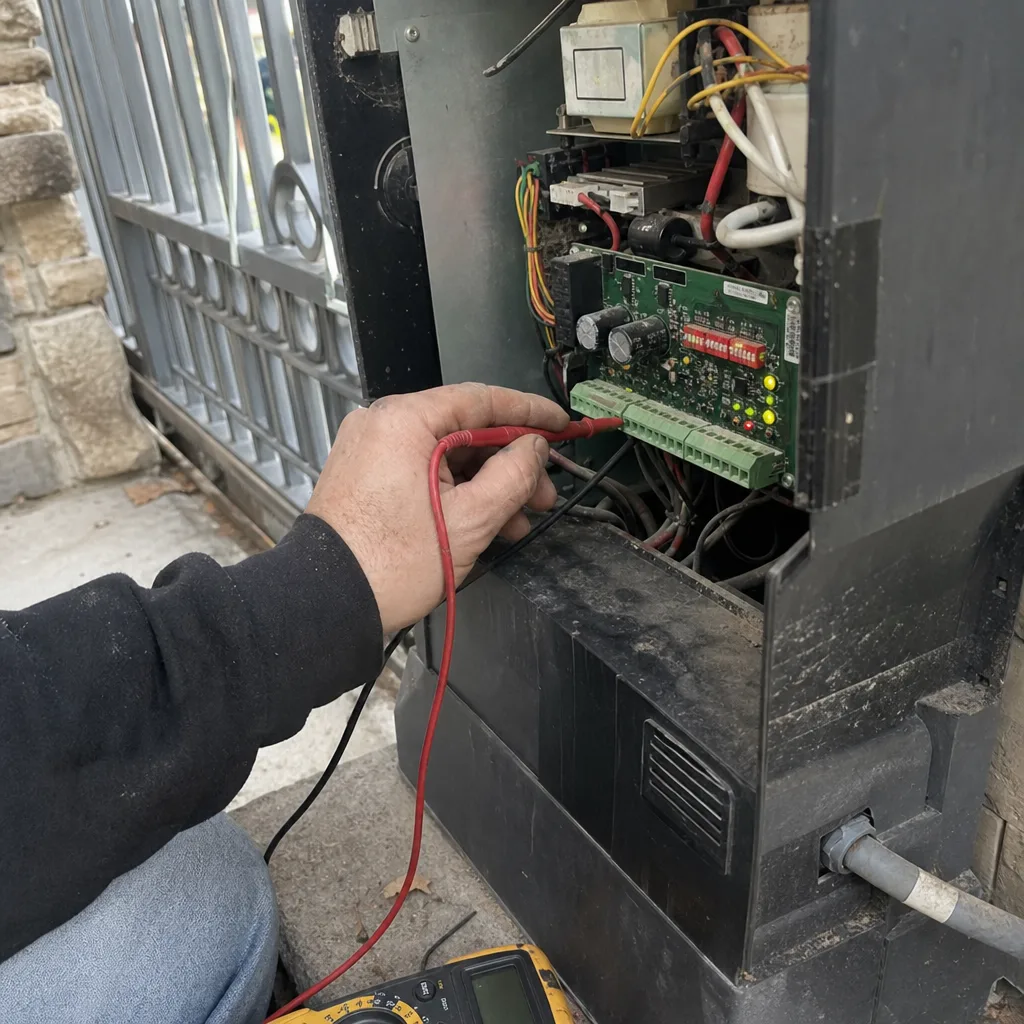
A gate is a heavy moving object, and on an automated gate the dangerous parts are the operator’s wiring and power supply, the gate panels themselves, and – on a sliding gate – the risk of a panel coming off its track and toppling. Do not open the operator housing, work on the wiring, or attempt to adjust the motor or the safety circuit yourself. The power at the operator, and the stored energy in the gate’s panels, can injure you badly. That work belongs to a trained professional.
- Stop using the gate if it reverses unpredictably or fails to reverse when something is in its path. That’s a safety failure, not a convenience problem.
- Stop using it if a post is visibly leaning or a hinge has started to separate. The gate could drop or swing out of control.
- Stop using an automated gate if you smell burning or see scorched wiring at the operator. That points to a wiring or motor problem that shouldn’t be run again until it’s inspected.
- Keep people – especially kids and pets – clear of a gate that’s behaving unpredictably until it’s checked.
If any of these apply, the right move is a call, not a screwdriver. Our gate repair specialists handle the mechanical and structural side, and the electric and control side, so a single visit can make the gate safe and functional again. We answer 24/7. Fast dispatch from 7am to 7pm, Sunday through Friday.
See the difference
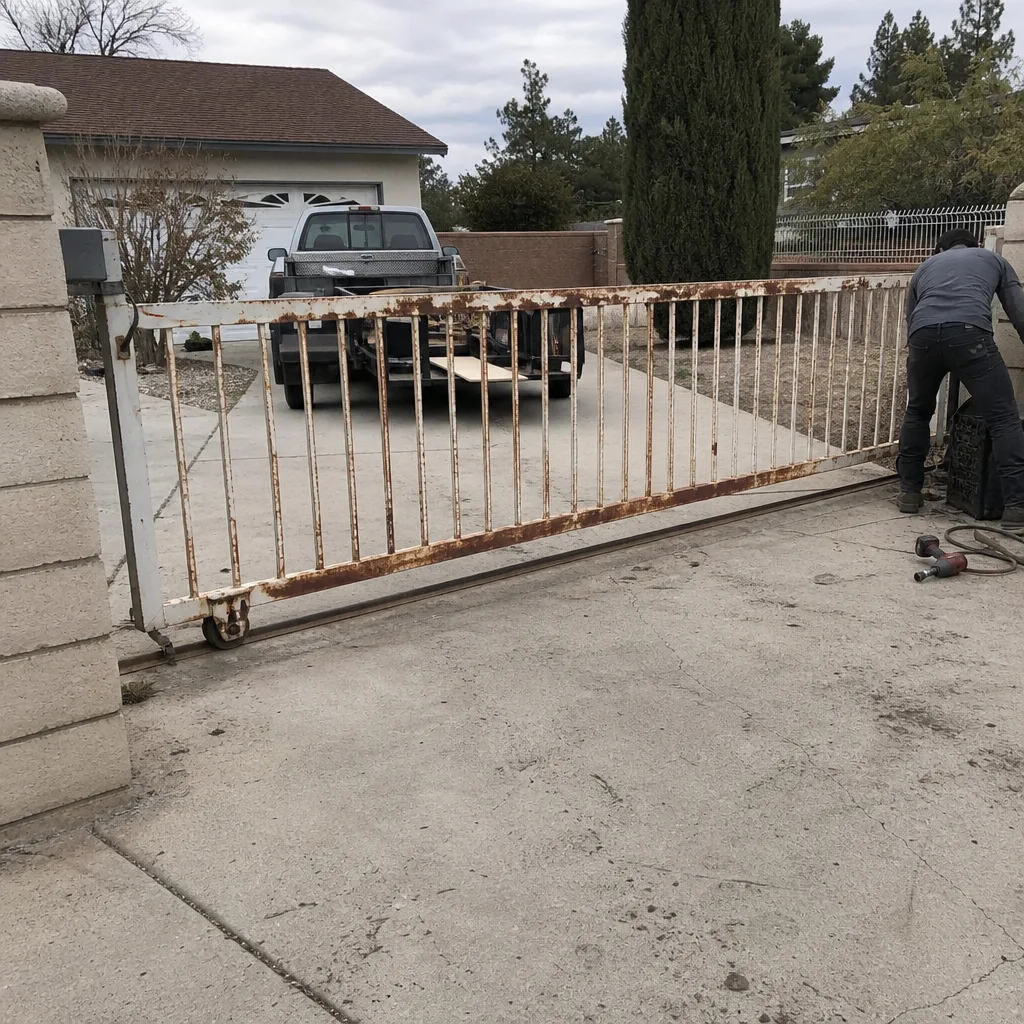 Before
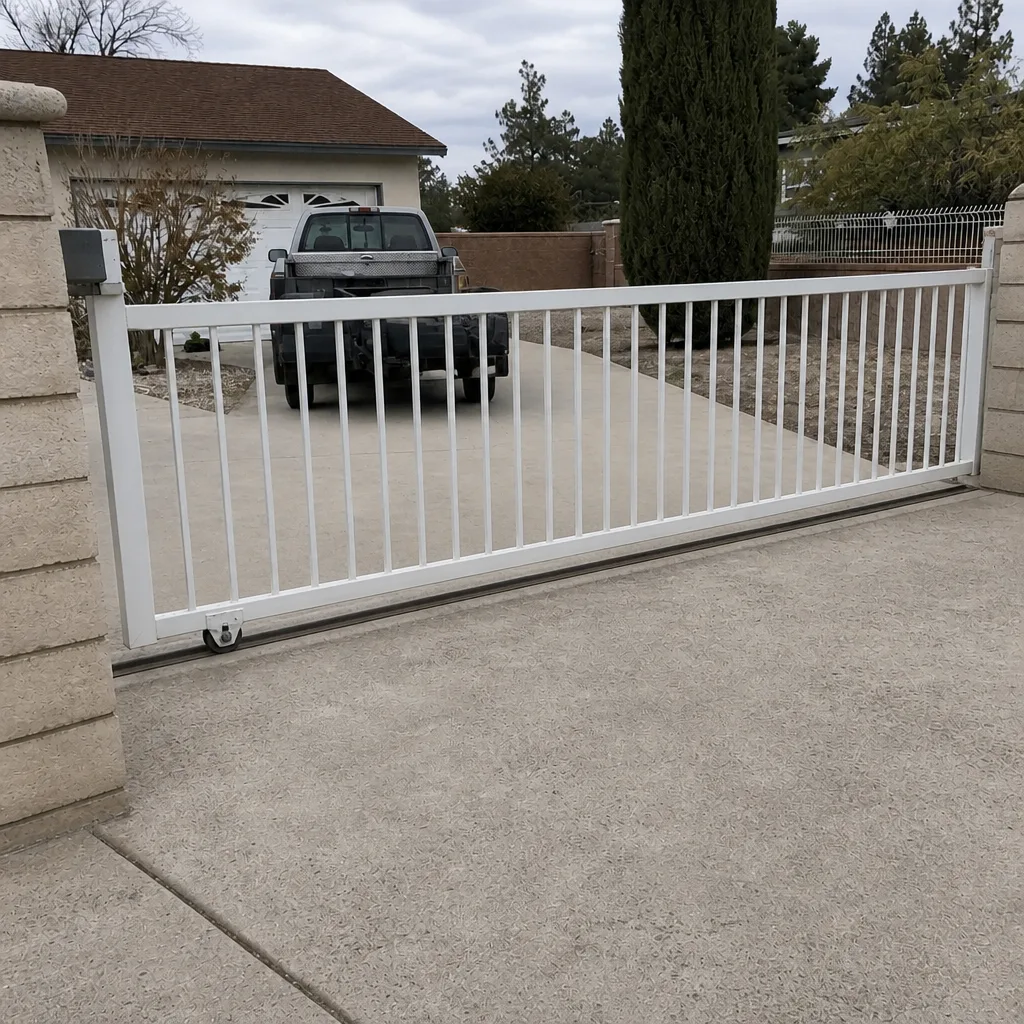 After
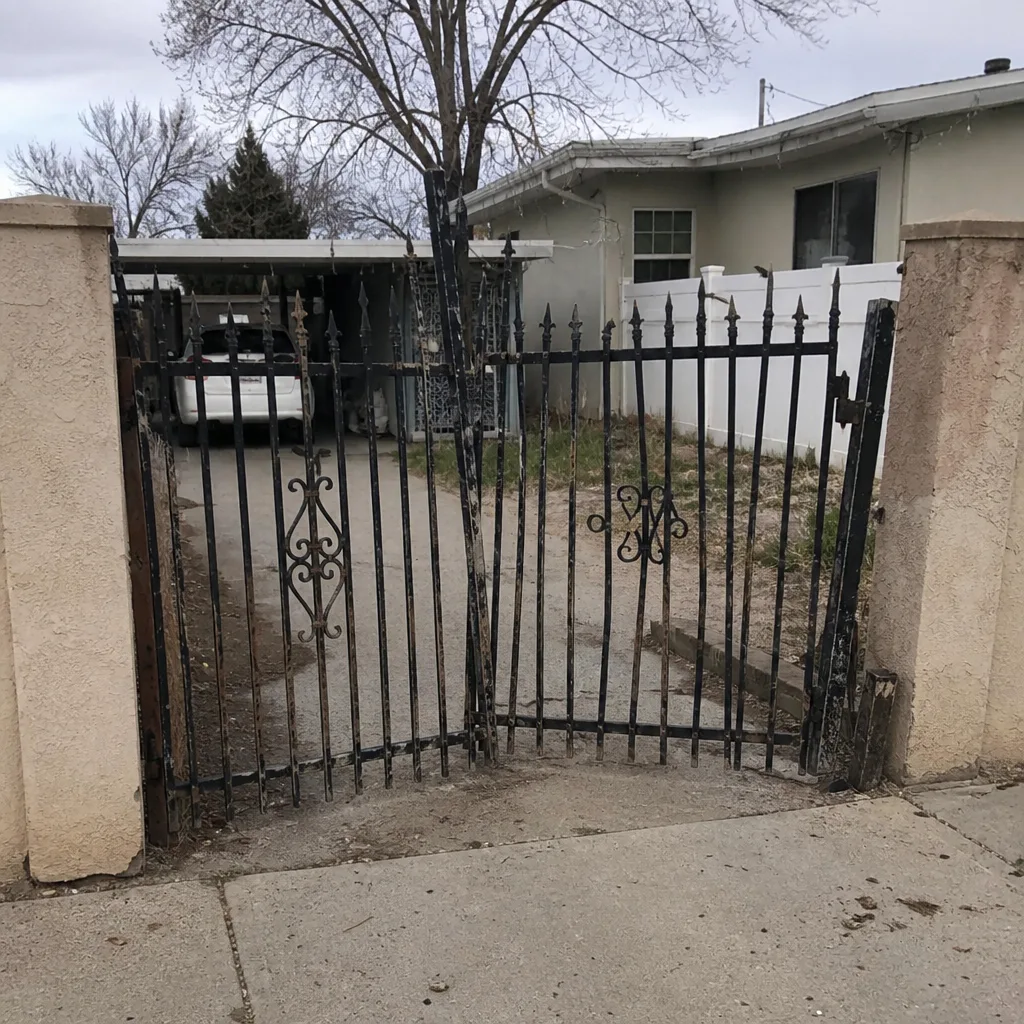 Before
 After
 Before
 After
Common Mistakes to Avoid
- Lubing everything that squeaks. A squeal can mean dry hinge or a worn bushing, and spraying the wrong lube on the wrong part can attract grit and make the wear worse. Match the lubricant to the part, not to the sound.
- Assuming “it’s just slow because it’s hot.” Heat does stress operators in Spring Valley, and that’s exactly why a slow or hesitant gate should be checked rather than dismissed. Heat makes an underlying bind worse; it doesn’t create one.
- Fixing a hinge when the post has moved. If the post is leaning, replacing the hinge won’t fix the alignment – the gate will sag again. Diagnose the foundation before the hardware.
- Ignoring a gate that reverses on its own because “it still opens.” A gate that reverses is a gate whose safety circuit is telling you something – often that it’s sensing an obstruction that isn’t there, which can mean a sensor fault, a bind, or a control board issue.
- Clearing a fault code by killing the power and hoping it doesn’t come back. Resetting the operator hides the symptom but leaves the cause. The fault will usually return, often at the worst time.
- Waiting for a hard failure before calling. A $150 adjustment in the make-believe is a $1,400 emergency when the same problem goes unaddressed and takes out the motor or the gate’s frame. Earlier is almost always cheaper.
- Hiring a generalist for a gate-specific fault. A gate operator, a control circuit, and a gate frame are their own systems. A tech who works across garage doors, fences, and handyman jobs will often spend the first visit learning your gate. Our focus is gates only – every job is inside our lane.
Getting a Gate Specialist Out to Spring Valley
If you’ve read this far and recognize a few of these signs on your own gate, the next step is simple: have it looked at before it fails. Our team works on manual and automated gates, residential and commercial, and we’re fluent in the brands you’re likely to own – LiftMaster, FAAC, BFT, Linear, and the rest of the nine major systems we service. That means the technician arriving at your home or commercial property already knows the platform and the likely failure points, rather than spending the visit learning the hardware. Our technicians have up to 11 years of experience, and the diagnostic approach is the same one in this guide – sound, movement, alignment.
Gate Repair Spring Valley offers free estimates in Spring Valley. Call (844) 420-8518. We answer 24/7. Fast dispatch from 7am to 7pm, Sunday through Friday. If the gate is in a state where it’s unsafe to run, tell us that when you call and we’ll treat it as the safety issue it is.
Frequently Asked Questions
The earliest signs are usually a change in sound and a hesitation in movement – a grind or squeal that wasn’t there before, or a gate that pauses before it starts. Add visible sagging, hinges that have play, or a gate that stops or reverses mid-travel, and you’re looking at a system that’s giving you notice. Any one of these is worth a look; two or more together is a strong signal to call. Call (844) 420-8518 for an exact quote – estimates are free.
Intermittent stopping and reversing almost always points to a safety sensor, a torque or current limit, a limit switch that’s drifted, or a power supply fault – and the pattern of when it happens is the key to which one. Intermittent faults need to be seen in action, so a short video of a full cycle is genuinely useful. Call (844) 420-8518 for an exact quote – estimates are free.
Open the gate by hand, with the operator off, and watch where it binds. If the whole gate leans and the hinge looks tight, the post has moved. If the post is straight but the latch end sags and the hinge has play, it’s hinge wear. The distinction matters, because fixing the hinge won’t fix a moving post. Call (844) 420-8518 for an exact quote – estimates are free.
Yes. Heat stresses motors and dries out lubricants, and the swing between hot days and cool desert nights works on posts and frames. That means a bind or a post movement that would develop slowly elsewhere can get worse faster in Spring Valley. Checking the gate on a schedule and acting on small signs early is the practical defense. Call (844) 420-8518 for an exact quote – estimates are free.
Yes – lubricating hinges and the gate hardware is a reasonable thing for a homeowner to do, and matching the lubricant to the part matters. What you should not do is open the operator housing, touch the wiring, or adjust the motor or safety circuit; those are the parts that can injure you. Call (844) 420-8518 for an exact quote – estimates are free.
Record a short video of a full open and close cycle, note the pattern of any fault (start, mid-travel, or end, and one direction or both), photograph the hinges, latch, post base, and operator, and note the gate’s make and model if you can see it. That picture is what lets a technician diagnose by pattern instead of by guesswork. Call (844) 420-8518 for an exact quote – estimates are free.
The Bottom Line
Gates rarely fail without warning. The sounds, the stutters, the misalignment – they’re all the system telling you where the strain is, weeks before it becomes a breakdown. Learn the three channels (sound, movement, alignment), act on the small signs while they’re small, and log what you see so a specialist can diagnose by pattern. In Spring Valley’s heat, that habit pays for itself. For the mechanical side and the electric and control side, our gate repair team is here to help. Call (844) 420-8518 for a free estimate. We answer 24/7. Fast dispatch from 7am to 7pm, Sunday through Friday.
Written by the team at Gate Repair Spring Valley.