
Last updated November 15, 2026
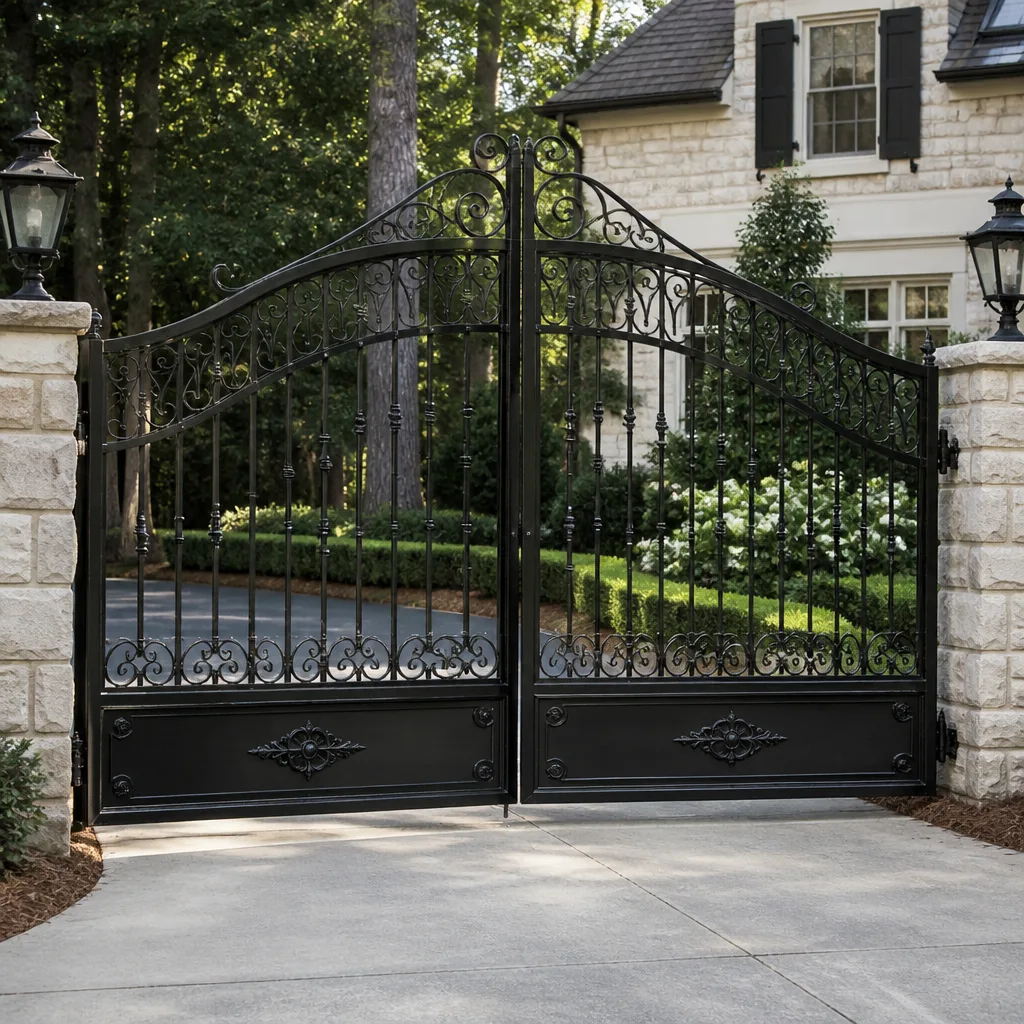 Wrought iron
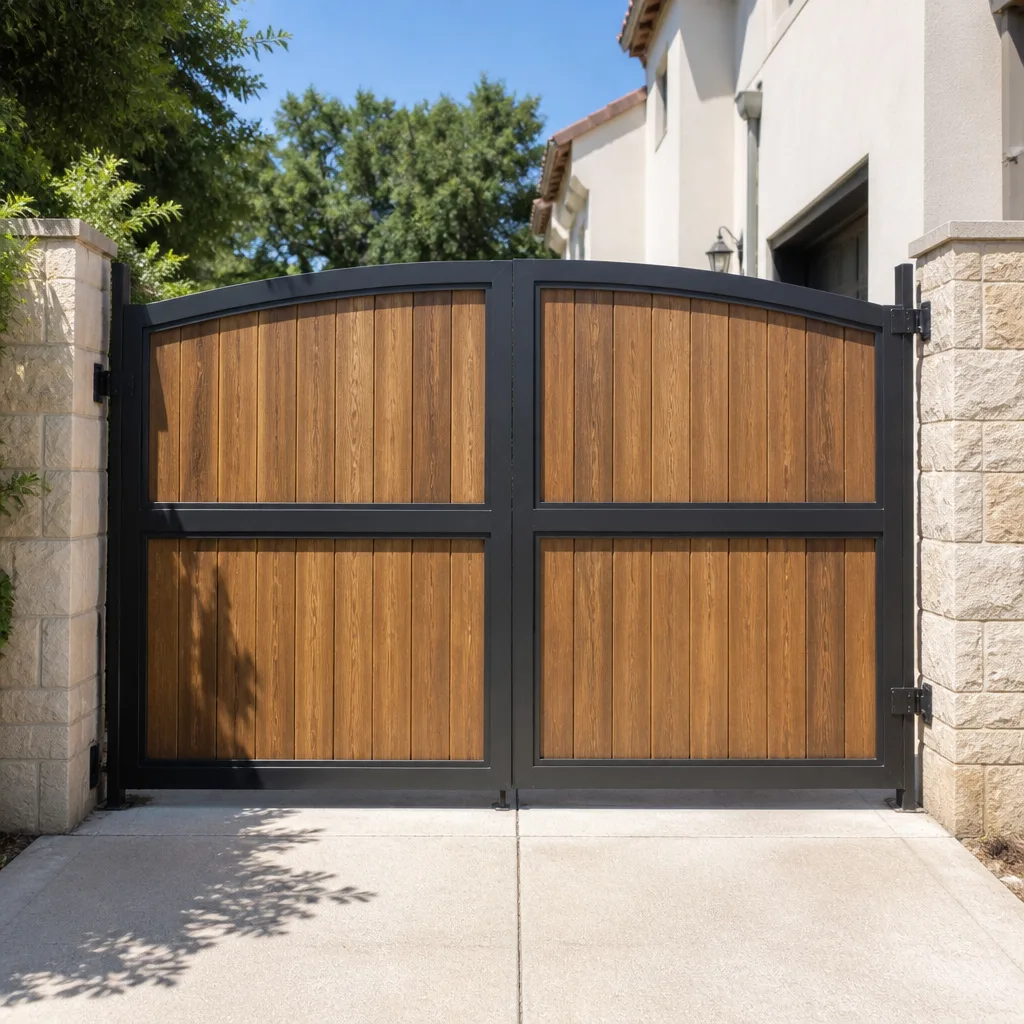 Wood & steel frame
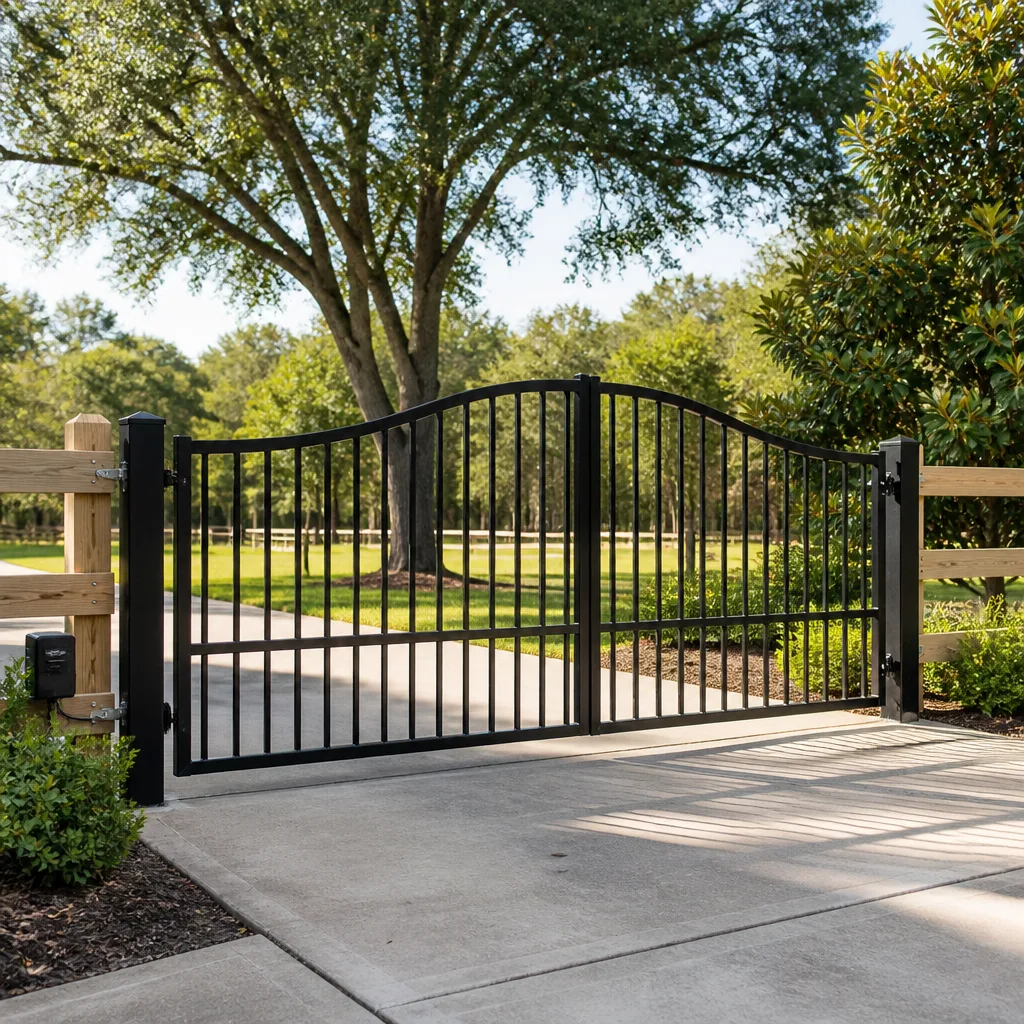 Farm & ranch
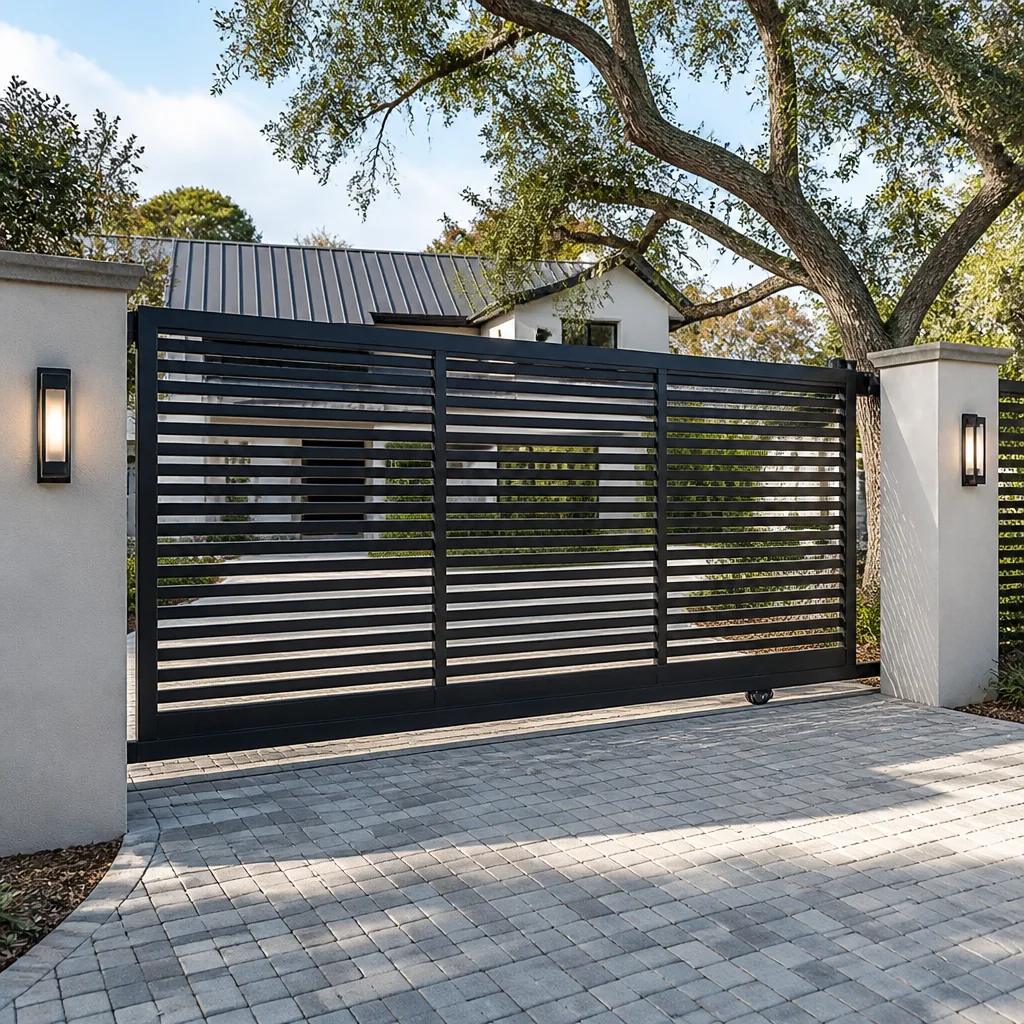 Sliding driveway gates
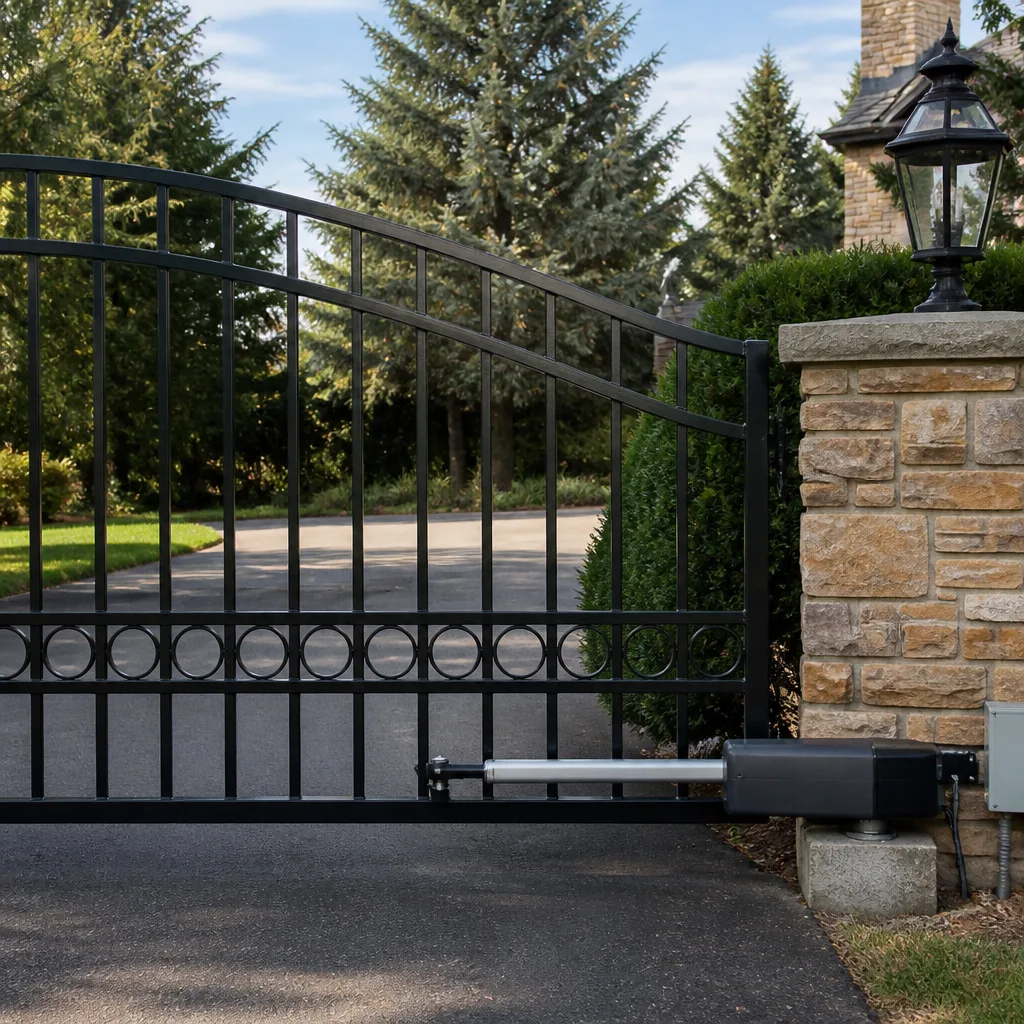 LiftMaster operators
Free on-site gate assessment - hinges, posts, and your LiftMaster or Nice gate operator checked before anything is quoted
The assessment is free and the quote is the invoice.
Get your free estimateGate Repair Troubleshooting in Spring Valley: Common Problems and How to Fix Them
The most costly gate repair isn’t the one with the biggest part attached to it. It’s the one where the wrong part gets replaced. A motor that gets swapped out because a limit switch slipped a quarter inch, or a control board replaced because a photo-eye was fogged with dust, leaves you with a lighter wallet and the same dead gate. Gates are simple machines with a handful of failure points, and almost every problem announces itself with a specific symptom before it fails completely. This guide shows you how to read those symptoms accurately in Spring Valley, so you can sort a real motor failure from a loose bracket, a summer binding issue from a dying gearbox, and a job you can handle from one that needs a technician.
Quick Answer
Most gate problems in Spring Valley trace back to one of four causes: a misaligned safety sensor, a limit switch that has drifted out of position, a power or battery issue, or mechanical binding from heat expansion and worn hardware. Learn to read the symptom (grinding, reversing mid-travel, beeping without moving, drifting open overnight) and you’ll usually know which of those four is responsible before anyone opens a panel. Anything involving spring tension, the electrical board, or a heavy panel that isn’t tracking correctly should be handed to a trained gate technician.
Styles & brands we work with
- Wrought iron
- Wood & steel frame
- Farm & ranch
- Sliding driveway gates
- LiftMaster operators
Table of Contents
- Symptom to Cause: Reading What Your Gate Is Telling You
- How Spring Valley’s Heat Changes Gate Behavior
- The Three Things to Check Before Touching Any Component
- DIY-Safe Fixes vs. Leave-It-to-a-Technician Problems
- How to Describe the Problem Before You Call
- Brand-Specific Quirks: Linear, Viking, Ghost Controls, DoorKing
- Seasonal Patterns and When to Schedule a Check
Symptom to Cause: Reading What Your Gate Is Telling You
Every gate operator has a small set of inputs: power, a command to move, a limit switch telling it where to stop, and safety devices telling it when to reverse. When one input goes bad, the symptom is usually consistent. That consistency is your best diagnostic tool, and it’s why we ask homeowners in Spring Valley to describe not just what the gate does, but when and how often. A gate that reverses every time it hits the same spot is telling you something very different from a gate that reverses randomly.
Here’s how the most common symptoms map to their likely causes:
- Reverses mid-travel, every time, at the same point: almost always a safety sensor issue. The photo-eye is misaligned, dirty, or the reflector has shifted. On sliding gates, it can also be the safety edge making contact with a small obstruction.
- Beeps but won’t move: the operator sees a command but is refusing to act. Check the safety loop first, then the limit switch position, then the control board’s diagnostic LEDs.
- Grinding or rattling during travel: mechanical binding. Worn rollers, a dry track, a bent hinge, or a gearbox with low lubricant. Grinding gets worse under load, so listen on a hot afternoon.
- Drifts open overnight or creeps past its stop: the limit switch has slipped, or the control board’s travel memory has drifted. Common on older Linear and Viking operators where the limit cam loosens over time.
- Stops at the same spot every time, both directions: power supply issue. Low voltage, a failing battery in a solar setup, or a tripped breaker that resets and trips again.
- Won’t respond to the remote but the keypad works: receiver or remote pairing problem, not a motor problem. Nearly always less expensive than it looks.
Keep a small log for a week. Note the time of day, the temperature if you can, and what the gate did right before it failed. That log is worth more to a technician than any description given over the phone, and it cuts diagnostic time considerably. For a full rundown of the repair process once a cause is confirmed, see our Gate Repair Spring Valley page.
How Spring Valley’s Heat Changes Gate Behavior
Gates in Spring Valley work in a climate that punishes metal and electronics differently than coastal or northern markets. Summer afternoons push gate components through expansion cycles that reveal problems that stay hidden in cooler months. A gate that runs perfectly in March can bind in July, and the symptom looks identical to a failing motor.
Here’s what actually happens. Steel and aluminum panels expand with heat. On a swing gate, the expansion pushes the leaf against the hinge side of the frame, and a gate that had a millimeter of clearance in spring is now dragging. On a sliding gate, the track expands and the wheels ride slightly higher or lower depending on where along the run the gate sits. The operator sees resistance and either slows, grinds, or trips its obstruction sensor and reverses. None of that is a motor problem, but a homeowner who hears grinding on a hot afternoon often assumes the operator is dying.
Electronics feel the heat too. Control boards in a black housing mounted on a sun-facing wall can run substantially hotter than the ambient air. Older capacitors and relays are less reliable at high temperatures, and battery backup units in solar-powered Ghost Controls setups lose capacity faster in sustained heat. That’s why a gate that works fine in the morning fails at 3 p.m. and works again after sunset.
What to do about it:
- Check clearances on the hottest part of the day, not the coolest. If the gate clears easily in the morning but binds at 4 p.m., you’ve found an expansion issue, not a motor failure.
- Lubricate hinges and tracks with a product rated for high-heat conditions. Standard light oils thin out and evaporate in Spring Valley summers.
- Keep the operator housing out of direct sun where possible, or at least keep the vents clear so it can shed heat. Debris in the housing traps warmth.
- Inspect solar panels and battery connections. A drop in battery capacity shows up first as erratic behavior on hot afternoons.
The lesson for Spring Valley gate owners is simple: if the symptom tracks temperature, suspect expansion or heat-related electronics before you suspect the motor. The gate that grinds in July and runs fine in December does not need a new operator. It needs clearance work and lubrication.
The Three Things to Check Before Touching Any Component
Before you open anything, unscrew a panel, or start diagnosing the operator itself, run through three basic checks. In our experience, a good percentage of “dead gate” calls resolve entirely at this stage, and it costs nothing to be sure.
1. Power supply. Confirm the operator has power. Check the breaker that feeds the gate circuit. Look at the LED indicator on the control board or power supply; most operators have one. On solar setups like Ghost Controls driveways, check the charge controller and the battery voltage. If the operator is dark and silent, no diagnostic LED lit, no display, no hum, power is your first suspect. It’s not always a motor.
2. Safety sensor alignment. Photo-eyes, reflectors, and safety edges are the most common cause of a gate that reverses or refuses to close. Wipe both eyes with a clean cloth, look for a misaligned bracket, and check the LED on each sensor (most have one that goes solid when aligned). On sliding gates, look for debris, a fallen branch, or a shifted reflector in the beam path. A sensor that is bumped a quarter inch out of alignment will stop a gate dead.
3. Limit switch position. The limit switches tell the operator where open and closed are. If the gate stops short, overshoots, or drifts past its stop, the limit switch has moved or the control board’s travel memory has slipped. On most residential operators, you can visually inspect the limit cam and see whether it’s at the position it should be. Don’t adjust it yet; just note whether it looks off.
If all three checks pass and the gate still fails, the problem is inside the operator or in the mechanical linkage. That’s where we suggest stopping. We cover what goes wrong from there on our electric gate repair page, including how control boards, gearboxes, and receiver modules fail. A gate specialist with the right diagnostic meter will find the fault in minutes; a homeowner guessing at a control board will spend hours and possibly damage it.
One caveat worth stating plainly: if your gate uses high-tension springs or a counterweight system, do not inspect that mechanism closely, and do not attempt to adjust anything under tension. Springs on a gate can release stored energy with lethal force when handled without training. That part of the system is always a technician’s job.
DIY-Safe Fixes vs. Leave-It-to-a-Technician Problems
Not all gate repairs are equal. Some are ordinary homeowner maintenance. Others are genuinely dangerous. Knowing the difference is one of the most useful skills a gate owner can develop, and it’s the difference between a five-minute fix and an injury.
DIY-safe:
- Cleaning photo-eye lenses and reflectors
- Clearing debris from a sliding gate track
- Lubricating hinges, rollers, and tracks with an appropriate product
- Replacing remote batteries and re-pairing remotes to the operator (with the manual)
- Tightening visible bolts on hinges and brackets (hand tools only, moderate torque)
- Resetting the operator at the breaker if it has locked up
- Trimming vegetation away from the gate’s travel path
Not DIY-safe:
- Adjusting or replacing springs or counterweights under tension
- Working inside the control board enclosure while the operator is powered
- Diagnosing motor windings, capacitors, or relays without a meter and training
- Repairing a safety edge or safety sensor that requires rewiring
- Realigning a heavy commercial panel that has come off its track, as the panel can crush if it shifts
- Repairing or bypassing the operator’s power wiring, breaker, or conduit
- Any repair on a gate where the panel weight is greater than you can safely control with one hand
The line we draw is simple. If the task involves stored energy (springs, counterweights), live electricity, or a panel heavy enough to pin an adult, that’s a technician’s job. If it’s cleaning, lubricating, or tightening hardware with a wrench, most homeowners can handle it. Our specialists work on both residential and commercial gate systems in Spring Valley, so we’ve seen what happens when a homeowner takes on a spring job. It never ends well, and it sometimes ends in an emergency room.
For a gate that reverses, hangs, or moves erratically on a heavy panel, don’t force it. Call a technician. Same-day service is available for repair work, and a specialist will diagnose the problem without putting you near the risky parts.
How to Describe the Problem Before You Call
The single biggest time-waster on a gate repair call is not knowing what the gate is actually doing. A vague “the gate isn’t working” can mean anything from a dead battery to a broken hinge. A specific description cuts diagnostic time and often lets a technician bring the right part on the first visit. Here’s how to prepare a description that actually helps.
- Note the brand. The operator make matters. Linear, Viking, Ghost Controls, and DoorKing all have different diagnostic behaviors, and knowing the brand up front tells us what to expect. The brand is usually printed on a label inside the operator housing or on the control board.
- Note the operator type. Swing or slide, residential or commercial, manual or automated. Automated gates have more diagnostic points (safety loops, sensor wiring, access control) than manual ones.
- Describe the exact symptom. “Reverses at the same point every time” is a completely different diagnosis than “grinds intermittently”. Write down what happens, not what you think is wrong.
- Note when it happens. Time of day, temperature, and consistency. A hot-afternoon-only symptom is a different problem than an all-day symptom.
- Note what changed. Did the gate work yesterday? Did a storm pass through? Was a remote dropped or a battery changed? Did the sensor housing get bumped?
- Check for diagnostic LEDs. Many operators have LED codes that blink or hold a pattern when something fails. Note the pattern. That code tells us where to look first.
- Take a short video. A 15-second phone video of the gate failing is worth more than a five-minute phone description, especially on an intermittent issue.
With that information in hand, a gate specialist can usually identify the likely cause before arriving, which means the first visit is more likely to be the only visit. In our experience, that’s the difference between a repair that takes 45 minutes and one that turns into three trips.
Brand-Specific Quirks: Linear, Viking, Ghost Controls, DoorKing
Gate operators share principles but not personalities. A technician who works across brands every day learns the specific ways each one fails, and that familiarity is what makes a specialist faster than a generalist. Here are a few patterns worth knowing.
Linear. Linear’s residential swing and slide operators are reliable, but their limit switches and control board travel memory drift over time. A gate that stops short on the open cycle or creeps past its close limit is often a Linear with a loose limit cam. The control board diagnostic LEDs are usually helpful here; the pattern tells you whether the limit switch is reporting correctly.
Viking. Viking operators are common on residential driveways, and their limit switches and photo-eye alignment are frequent failure points. Viking boards also have a habit of losing their travel calibration after a power surge or brownout, which looks identical to a mechanical failure until you check the board diagnostics.
Ghost Controls. Ghost Controls is a popular choice for remote driveways and solar setups, and its most common issues come from the power side: battery capacity dropping in summer heat, solar charge controllers failing to hold a charge, and remotes losing pairing after a battery replacement. A gate that works in the morning and fails in the afternoon on a Ghost Controls system is almost always a battery or panel issue, not a motor issue.
DoorKing. DoorKing makes commercial-grade operators, and its access control systems are common on HOA and multi-unit gates in Spring Valley. DoorKing failures are more often in the access control layer (keypads, telephone entry systems, receiver modules) than in the operator itself. When a DoorKing gate won’t respond to any command but the operator powers up normally, the answer is usually in the access layer, not the motor.
We work on all of these brands, along with LiftMaster, FAAC, BFT, Elite, and Mighty Mule. Being gate-only means we’re not splitting our attention across garage doors, fences, and general handyman work, and that’s why we know how a Viking limit cam drifts compared to a DoorKing access module.
Seasonal Patterns and When to Schedule a Check
Gates in Spring Valley don’t fail uniformly across the year. They fail in patterns tied to heat, dust, and the seasonal expansion cycles we covered earlier. If you know the pattern, you can schedule a check before a problem becomes an emergency, which is almost always cheaper and less disruptive than a same-day repair.
Summer. Expansion-related binding, dry tracks, and heat-sensitive electronics are the big issues. If your gate starts grinding in July, don’t assume the operator is dying. Lubricate first, and check clearances during the hottest part of the day.
Dust season. Spring Valley’s spring winds carry fine dust, and that dust gets into every place it can: photo-eye lenses, track rollers, hinge points, and control board vents. A quick wipe-down and a fresh application of lubricant goes a long way. Sensors that fail intermittently for no apparent reason are usually dirty.
Fall and winter. Swing and slide gates tend to run more smoothly in cooler weather, which is a good window to schedule the maintenance you’ve been putting off. Bolts tighten, sensors realign, and worn hardware gets replaced before it becomes a summer failure.
If you’re going to schedule a check, do it once a year and time it for the season that usually gives you trouble. A gate that fails every summer is telling you that something needs clearance work in the spring. A gate that fails every spring is telling you that dust and debris are the issue. Either way, a one-time inspection after the seasonal shift catches the issue before it strands you.
For anyone new to the area, or anyone who’s inherited a gate system and doesn’t know its history, our Spring Valley page covers local service context, and a full inspection is worth it before the first heat wave arrives.
Common Mistakes to Avoid
- Replacing the motor before checking power. A surprisingly large share of “dead operator” calls turn out to be a tripped breaker, a bad battery, or a failed power supply. Check power first, and check it thoroughly.
- Assuming grinding is a motor failure. In Spring Valley summer heat, grinding is more often expansion-related binding or dry rollers than a failing motor. Lubricate and check clearance before you replace anything.
- Ignoring a misaligned sensor. A quarter-inch of drift on a photo-eye stops a gate dead. Clean the lens and check the alignment before you suspect electronics.
- Adjusting springs or counterweights. This is the biggest safety mistake a homeowner can make on a gate. Those parts store lethal force. Leave them alone.
- Tightening the control board connection while powered. Any work inside a live enclosure risks a short or a serious shock. Power down at the breaker first.
- Not writing down the symptom. A gate that “sometimes doesn’t work” is a diagnostic nightmare. Write down the brand, the symptom, the time of day, and the temperature. It saves a technician half their diagnostic time.
- Calling a generalist first. A handyman will figure it out eventually, but a gate specialist already knows how a Linear limit drift differs from a Viking photo-eye issue, and that cuts both diagnostic time and the risk of replacing the wrong part.
See the difference
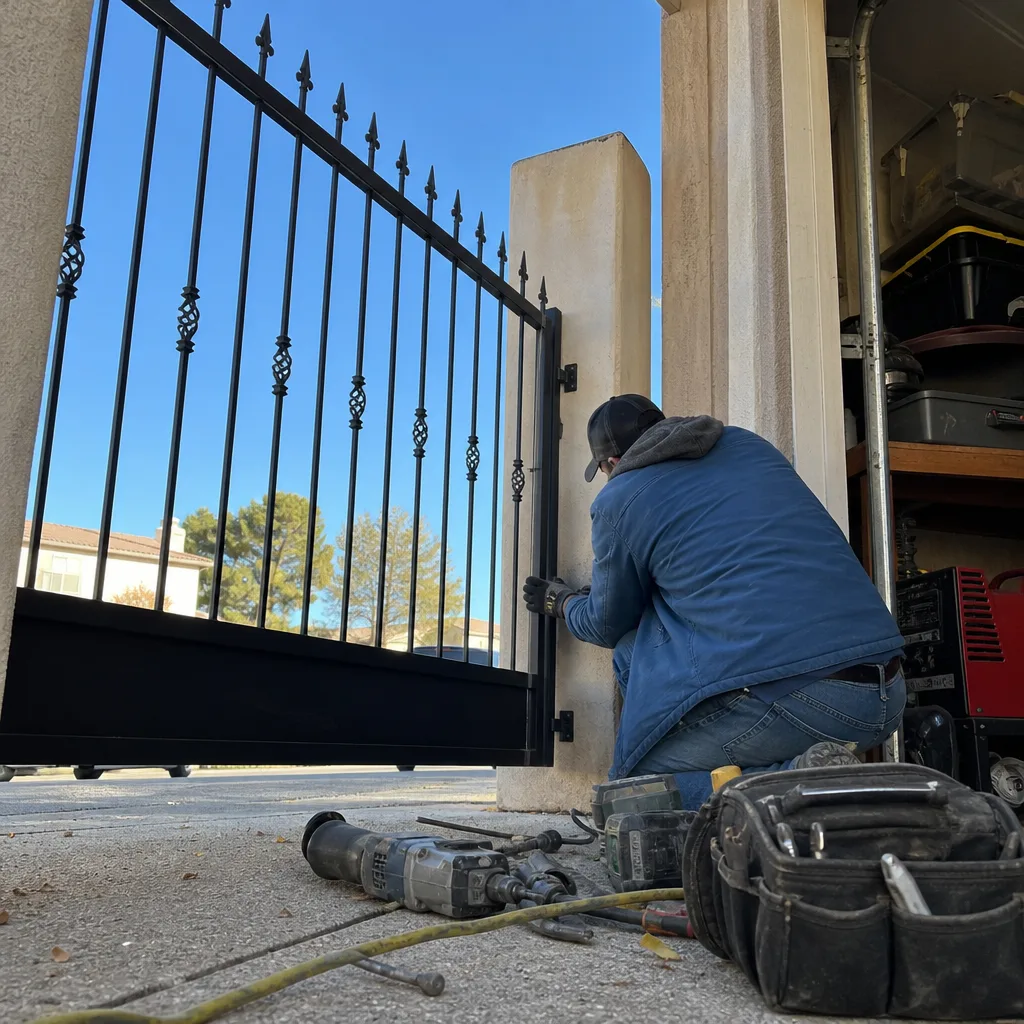
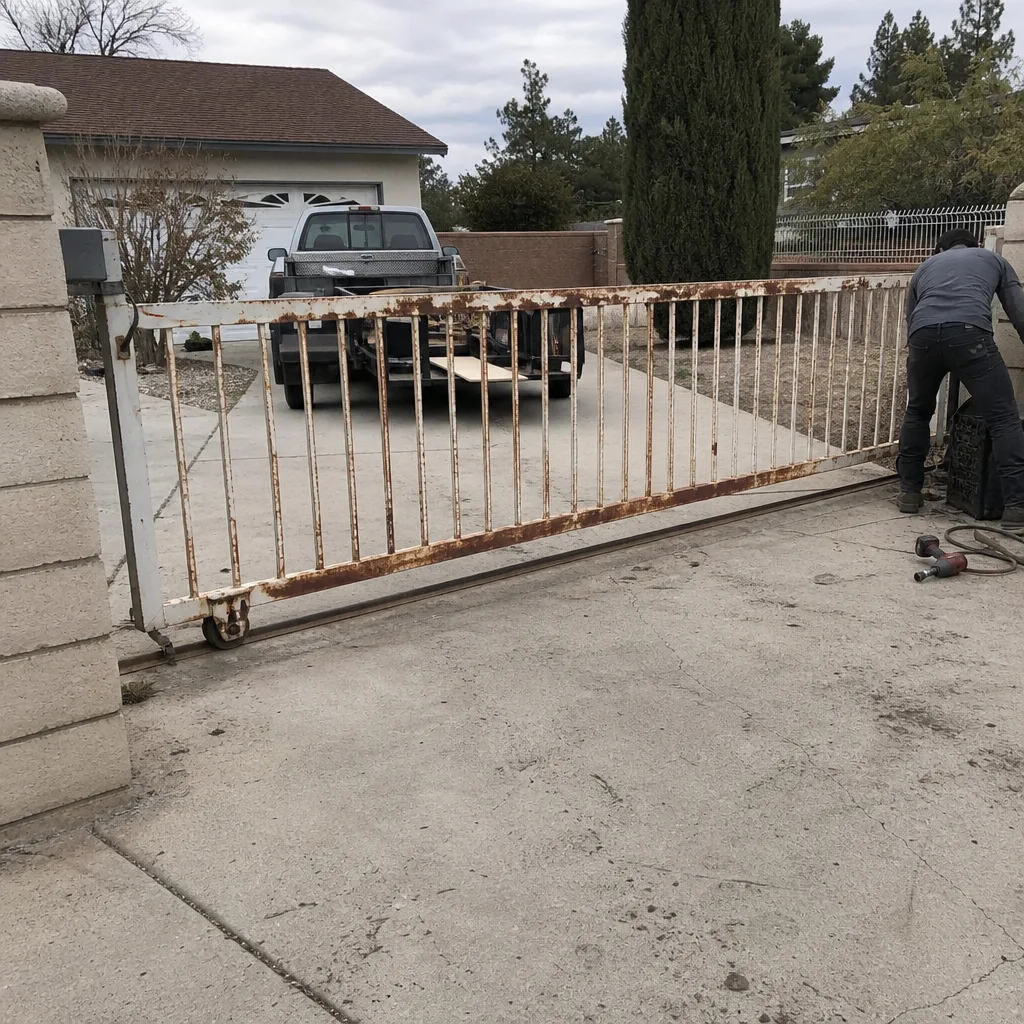 Before
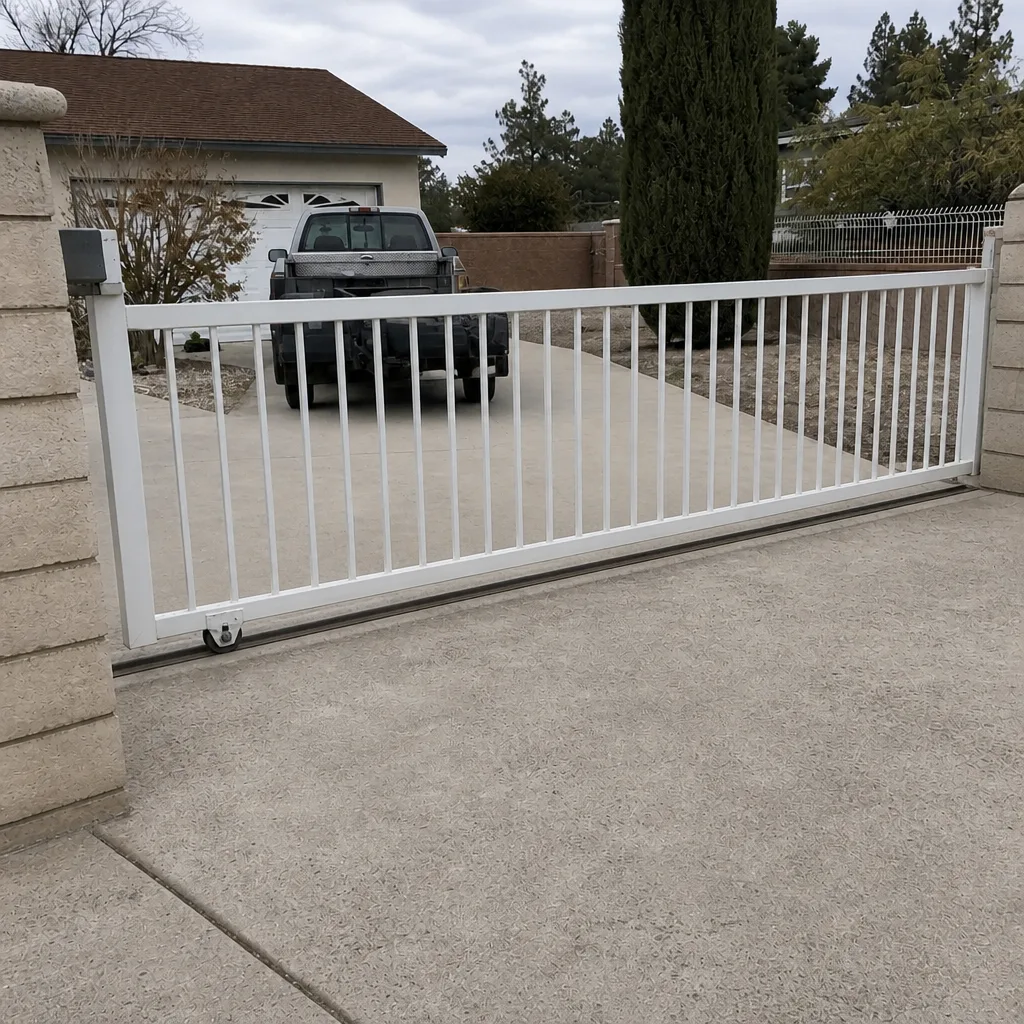 After
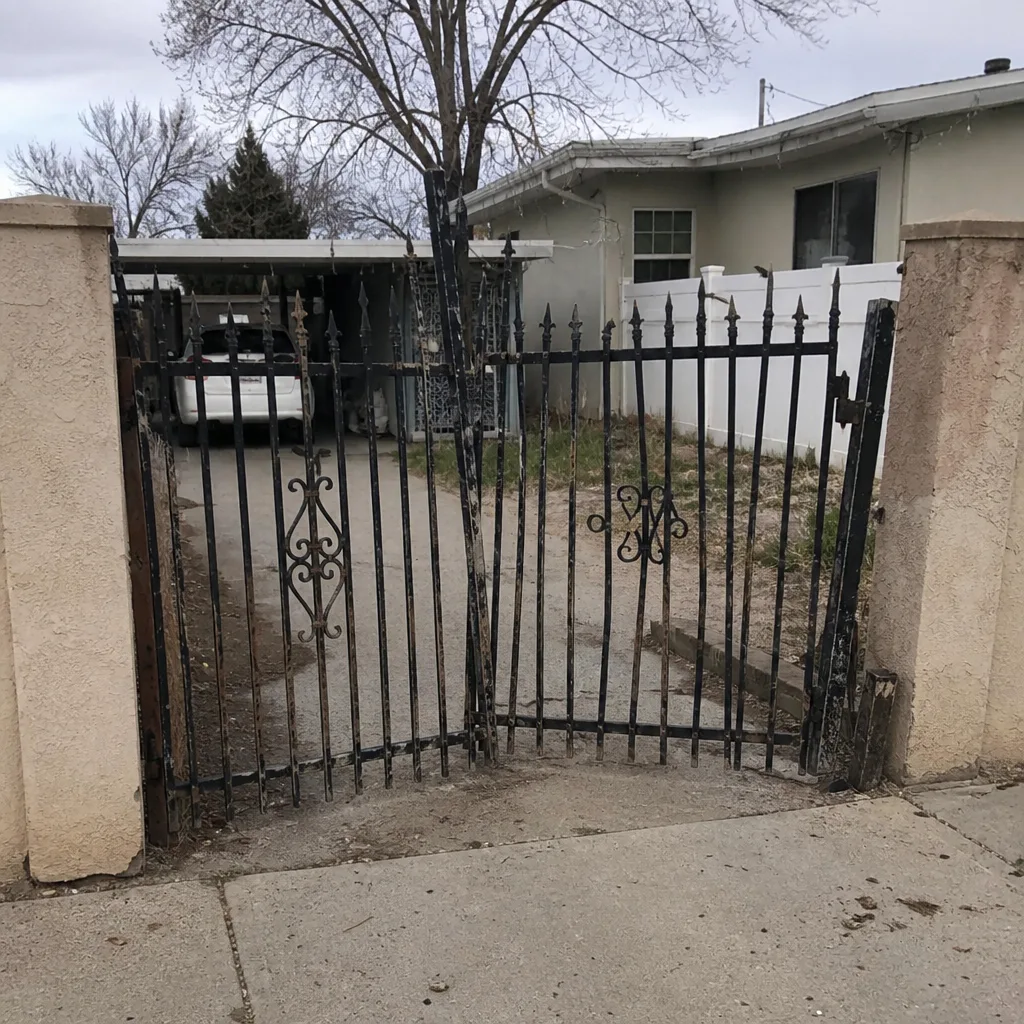 Before
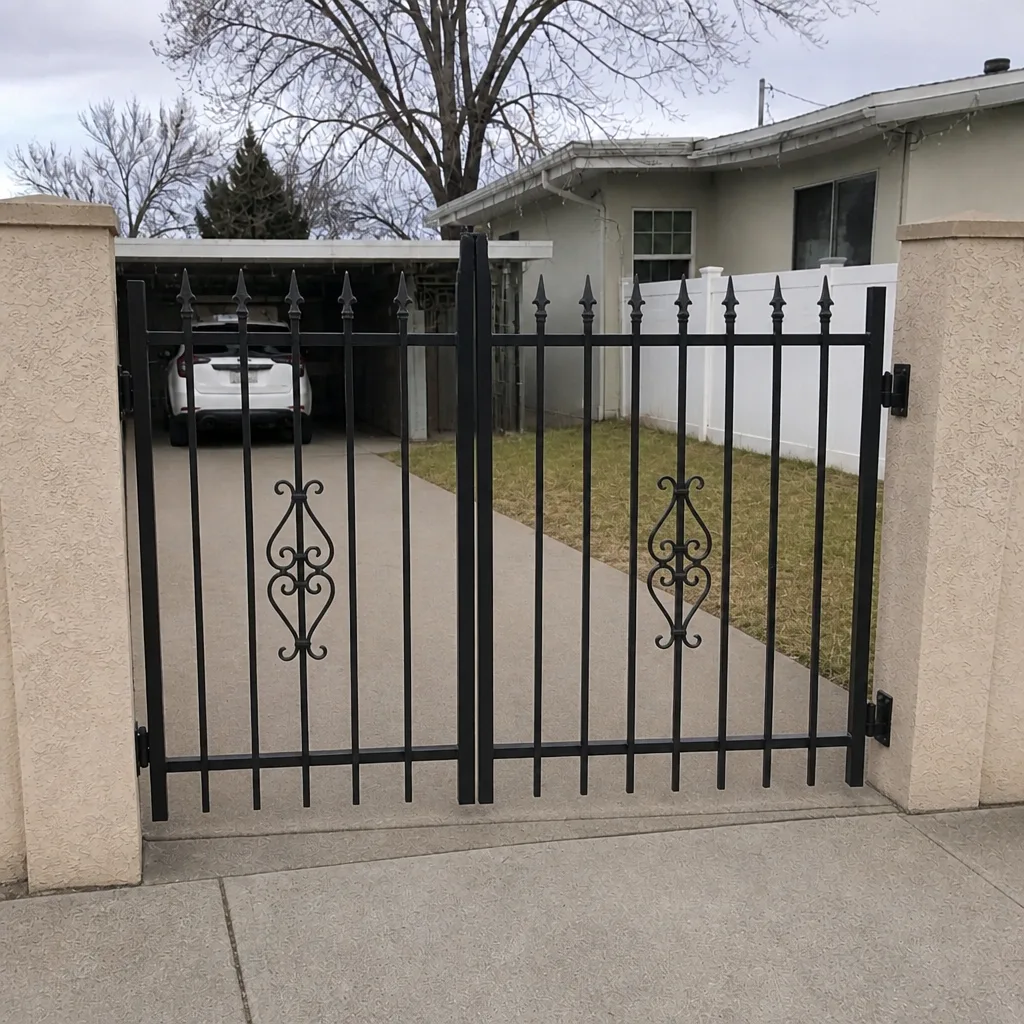 After
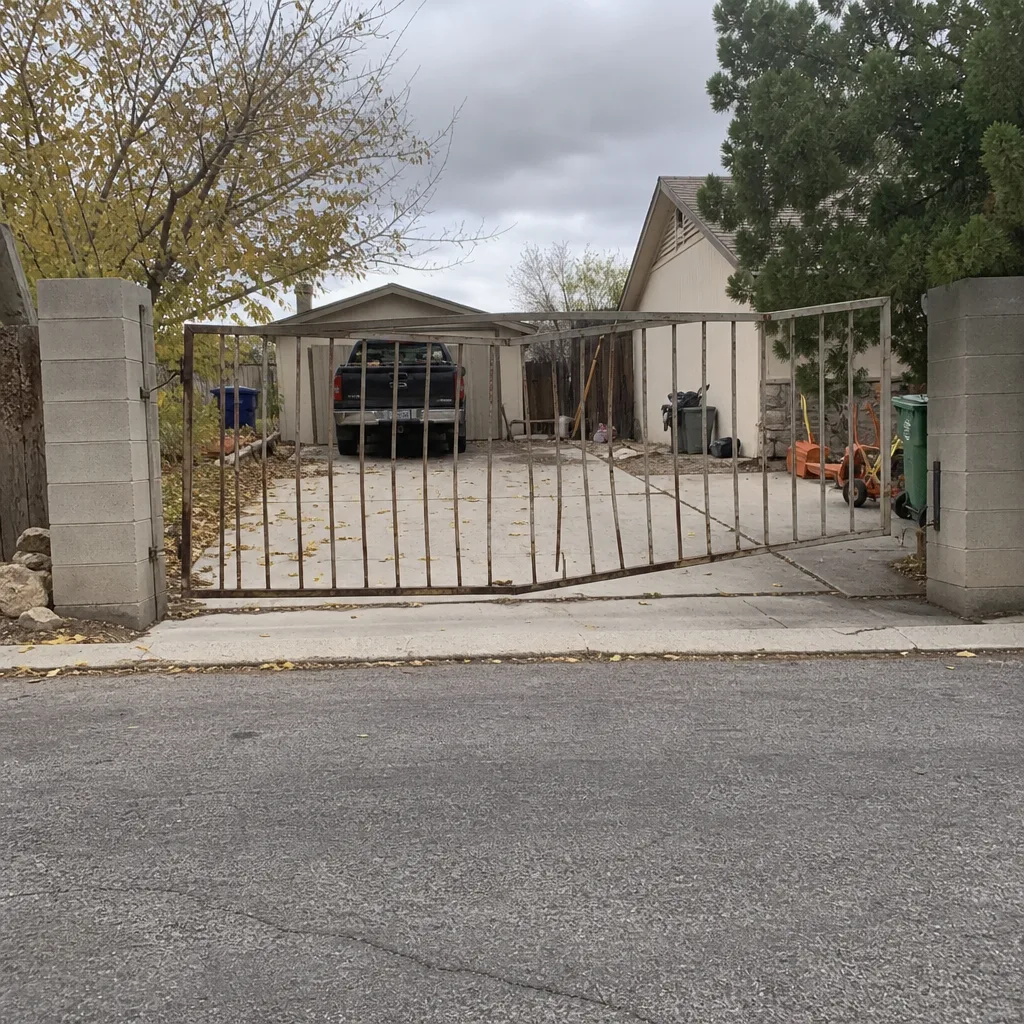 Before
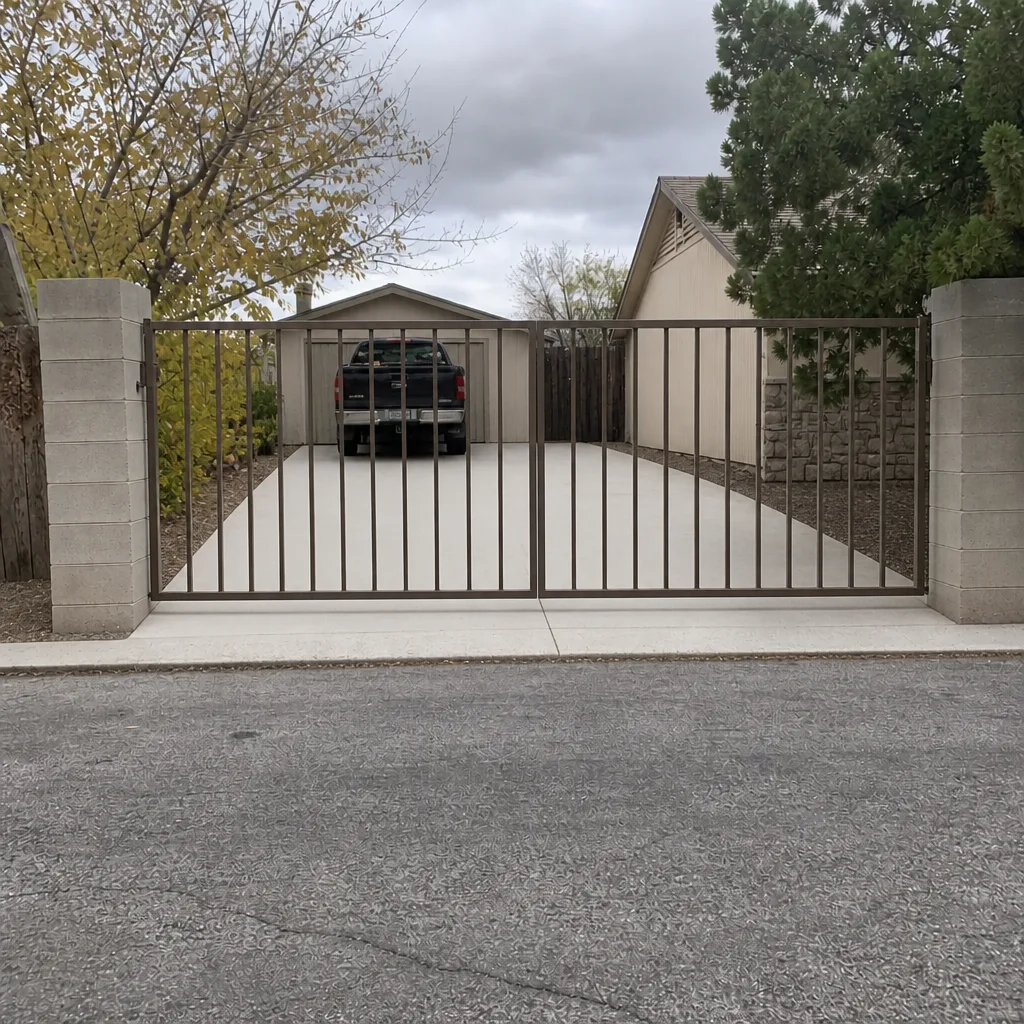 After
When to Call a Professional
Call a professional gate technician when the problem involves springs, counterweights, live electrical work, or a heavy panel that isn’t tracking correctly. Call when the gate reverses or stops in ways that suggest a safety system has failed, because a safety system that’s been bypassed or ignored is a serious risk. Call when you’ve done the three basic checks, power, sensors, limits, and the problem persists, because that points inside the operator. And call when the repair involves any part you’re not sure you can handle safely, even if it looks simple, because a bent hinge or a slipped panel can be much more dangerous than it appears.
Gate Repair Spring Valley offers free estimates in Spring Valley. If you’re not sure whether your gate’s symptom is a DIY fix or a technician job, describe it to us and we’ll tell you honestly. Call (844) 420-8518. We answer 24/7. Fast dispatch from 7am to 7pm, Sunday through Friday. Same-day repair is available, and every price is quoted and agreed before any work starts.
Frequently Asked Questions
Mid-travel reversal is almost always a safety sensor problem. The photo-eye has drifted out of alignment, the lens is dirty, or the reflector has shifted. Clean both lenses and check the alignment LEDs first, then check for debris in the beam path. If the sensor checks out, the safety edge may be making contact with a small obstruction.
Summer grinding is usually expansion-related binding, not motor failure. Metal panels expand in Spring Valley’s heat, clearances shrink, and the gate drags against its frame or track. Lubricate hinges and rollers and check clearances during the hottest part of the day. If the grinding stops when the gate cools, it was expansion, not the operator.
You can visually inspect the limit cam to see whether it’s at the right position, but adjusting the limit switch requires the operator manual and, on some operators, a calibration procedure. On older systems or commercial operators, we suggest leaving the adjustment to a technician. A misadjusted limit switch can drive the gate into the frame and cause further damage.
Three things: power (breaker, LED indicator, battery on solar setups), sensor alignment (clean lenses, check reflector position), and the limit switch position (visually, don’t adjust). If all three check out and the gate still fails, the problem is inside the operator or the linkage, and that’s a technician’s job.
Yes. We work on both residential and commercial gate systems, and our brand fluency runs from light residential operators like Ghost Controls and Mighty Mule to heavier commercial operators like FAAC, BFT, and DoorKing. That range matters for HOA and multi-unit properties where the access control layer is often the real source of the problem.
Most residential repairs are completed in a single visit, and with a clear description of the symptom, many take under an hour. Commercial and access-control repairs can run longer depending on parts availability. We’ll give you a written estimate before any work starts, so there are no surprises.
The Bottom Line
Gate troubleshooting is a skill you can learn. Read the symptom honestly, check power, sensors, and limits before you touch anything inside the operator, and respect the line between a DIY fix and a technician’s job. In Spring Valley, heat and dust are the two forces that drive most failures, and a little attention in the right season prevents most of them. When a symptom points inside the operator, or the panel is heavy or spring-tensioned, call a gate specialist who knows your brand.
Call (844) 420-8518 for a free estimate. We answer 24/7. Fast dispatch from 7am to 7pm, Sunday through Friday. Tell us what your gate is doing, and we’ll tell you what’s likely causing it.
Written by the team at Gate Repair Spring Valley.